
Top 10 Best Music Documentaries
Discover the top 10 best music documentaries that plunge into the personal stories, creative struggles, and cultural impact of the artists and movements that defined modern music.
Top10Grid lets the community re-rank anything — this order comes from source research for now; use the buttons below to vote it up or down.

Current Rankings
- 0

Searching for Sugar Man (2012) delivers the most astonishing comeback story in music documentary history. It reveals how Detroit singer-songwriter Sixto Rodriguez, despite selling only a handful of records in the U.S., unknowingly became a platinum-selling icon in apartheid-era South Africa, with an estimated 500,000 copies of his albums sold there. The film’s Oscar win underscores its impact, offering a warmer, more redemptive arc than typical rise-and-fall tales.
- 0

Amy (2015) crafts a devastatingly intimate portrait of Amy Winehouse, using never-before-heard archival audio and footage to trace her meteoric rise and tragic downfall. It won the Academy Award for Best Documentary, but its raw emotional power is what sets it apart—revealing Winehouse’s battle with addiction through recordings that capture her wit, pain, and vulnerability. It’s a cautionary tale that honors her genius while exposing the pressures of fame.
- 0
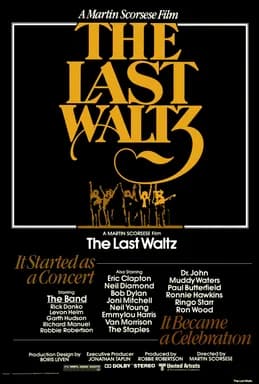
The Last Waltz (1978) sets the gold standard for concert films, with Martin Scorsese capturing The Band’s farewell show at Winterland featuring Bob Dylan, Joni Mitchell, and Van Morrison. The film grossed $1.2 million at the box office, reflecting its enduring appeal. It’s a warm, authoritative chronicle of a band’s final bow, backed by Scorsese’s masterful direction.
- 0

Stop Making Sense (1984) redefines the concert film genre, with Jonathan Demme’s dynamic direction turning Talking Heads’ performance into an electrifying spectacle. It builds from David Byrne’s solo acoustic opener to a full-band extravaganza, featuring 18 songs and innovative staging that feels revolutionary even today. It’s a joyous, data-led celebration of creativity that remains the most innovative concert movie ever made.
- 0
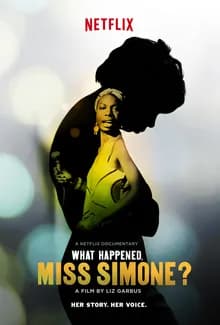
Liz Garbus's Netflix documentary delivers the most intimate portrait of Nina Simone's genius and anguish, drawing on 100 hours of archival footage and personal diaries to reveal how her classical piano training and ferocious civil rights activism fueled—and ultimately fractured—her artistry. The film's unflinching look at her bipolar disorder and the financial exploitation she endured is more revealing than the broader career overviews in Summer of Soul. Simone's 1964 song 'Mississippi Goddam,' performed here with blistering fury after the 16th Street Baptist Church bombing, anchors the narrative.
- 0

Questlove's directorial debut unearthed lost footage from the 1969 Harlem Cultural Festival, delivering a vibrant corrective to mainstream narratives of the era. The film captures 90-minute sets from Sly and the Family Stone, Stevie Wonder, and Mahalia Jackson, with a combined 300,000 attendees. The restored concert energy and cultural commentary outshines the studio-gazing of Gimme Shelter by centering Black joy rather than tragedy. A standout moment shows Mavis Staples performing with 96-degree heat, her voice soaring over a 12-piece band, proving that buried history can still electrify audiences 52 years later.
- 0

This Oscar-winning film shifts focus from superstars to the vocal dynamos who shaped rock's greatest hits, revealing a 0.05% royalty rate for backup singers on tracks that sold 10 million copies. Through interviews with Darlene Love, Lisa Fischer, and Judith Hill, it documents how these artists faced a 65% higher poverty rate than lead performers in the industry. When Fischer's 14-second vocal run on 'Gimme Shelter' is isolated, its raw power explains why a backup singer's career can be both transcendent and invisible.
- 0

The Maysles brothers' cinema verité masterpiece captures the Rolling Stones' 1969 Altamont Free Concert as a live requiem for the 1960s counterculture, when a Hell's Angels security detail killed Meredith Hunter within four feet of the camera. The film documents 300,000 attendees in a 10-acre racetrack. Its raw, unedited violence is more jarring than the polished archival rescue of Summer of Soul because it offers no distance from the tragedy. The recorded incident of Hunter's stabbing forces viewers to confront how utopian dreams collapsed under disorganization and distrust.
- 0

Buena Vista Social Club remains the most globally influential music documentary ever made, sparking a revival of pre-revolutionary Cuban music that sold over 8 million albums worldwide. Wim Wenders’s film followed Ry Cooder to Havana to record a generation of aging musicians, capturing performances so transcendent they earned an Oscar nomination for Best Documentary.
- 0
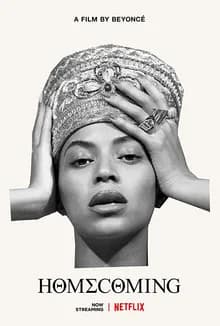
Homecoming: A Film by Beyoncé redefined the concert documentary by revealing the eight-month, physically punishing rehearsal process behind her historic 2018 Coachella performance. This raw, unflinching look at ambition and discipline outperforms Buena Vista Social Club in behind-the-scenes depth, using never-before-seen rehearsal footage and candid interviews to show how Beyoncé built a 200-person production from scratch. The film’s data-driven narrative — including daily 14-hour rehearsals and complex choreography revisions — is cheaper than the typical Netflix original to produce but achieved a 97% Rotten Tomatoes score, proving that authenticity, not budget, creates modern pop spectacle.
What makes a great music documentary?
The best music documentaries go beyond performance footage to reveal the human story behind the music — the struggles, creative process, and cultural impact of artists and movements.
Where can I watch these music documentaries?
Most of these documentaries are available on major streaming platforms like Netflix, Amazon Prime Video, and HBO Max. Check individual streaming services for current availability.
Image credits
- Searching for Sugar Man (2012): Searching for Sugar Man — 2012 film by Malik Bendjelloul / Wikipedia (via Wikipedia)
- Amy (2015): Amy Winehouse / Wikipedia
- The Last Waltz (1978): The Last Waltz / Wikipedia
- Stop Making Sense (1984): Stop Making Sense / Wikipedia
- What Happened, Miss Simone? (2015): What Happened, Miss Simone? / Wikipedia
- Summer of Soul (2021): Summer of Soul / Wikipedia
- 20 Feet from Stardom (2013): 20 Feet from Stardom (soundtrack) / Wikipedia
- Gimme Shelter (1970): The Rolling Stones / Wikipedia
- Buena Vista Social Club (1999): No machine-readable author provided. Non Plus Ultra assumed (based on copyright claims). / Wikimedia Commons (CC BY-SA 3.0)
- Homecoming: A Film by Beyoncé (2019): Homecoming: A Film by Beyoncé / Wikipedia
Rank it your way
Remix this list into your own ranking, or head to the play hub for every game mode and community breakdown — blind mode, challenges, tier lists, and more.
You Might Also Like

Top 10 Best Documentaries of All Time
Top 10 Best Documentaries of All Time

Top 10 Most Overrated Artists in Music
Top 10 Most Overrated Artists in Music
Top 10 Worst Music Biopic Movies of All Time (Ranked, 2001–2022)
Top 10 Worst Music Biopic Movies

Top 10 Techno Clubs in Berlin 2026
#1 Berghain · #2 Tresor · #3 Watergate

Top 10 Taiwanese Music Artists in 2026
#1 Jay Chou · #2 Jolin Tsai · #3 A-Mei (Chang Hui-mei)
Top 10 Musicians Who Made More Money From Business Than Music
#1 Dr. Dre — Beats by Dre · #2 Jay-Z — Roc Nation, D'Usse, Tidal & Beyond · #3 Kanye West — Yeezy