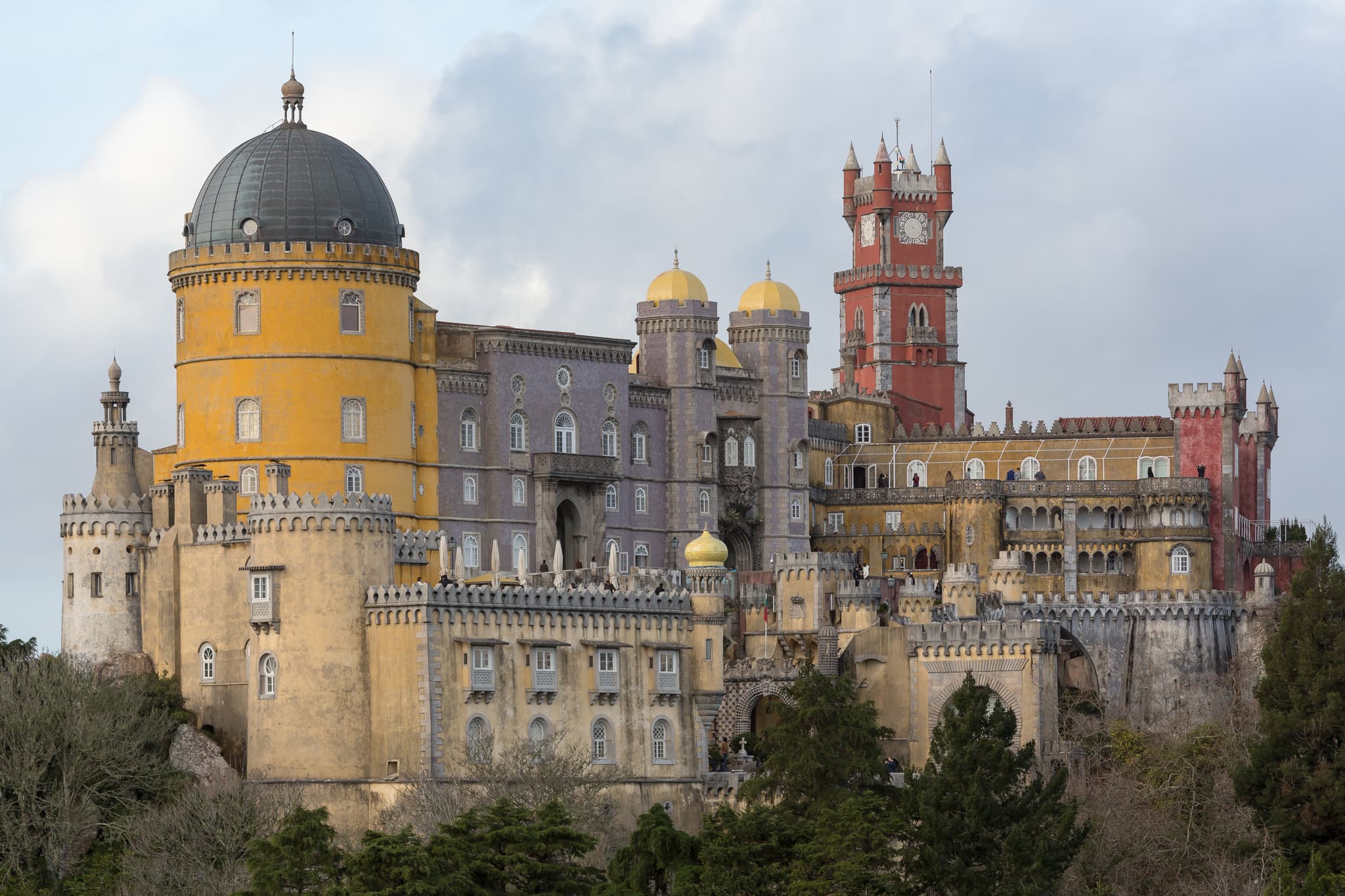
Photo by CEphoto, Uwe Aranas, CC BY-SA 3.0, via Wikimedia Commons
Top 10 Day Trips From Lisbon
10 best day trips from Lisbon, ranked by ease of getting there versus how much there is to see — palaces, coastline, wine country and UNESCO sites.
Top10Grid lets the community re-rank anything — this order is our editors' pick for now; use the buttons below to vote it up or down.

Current Rankings
- –#1
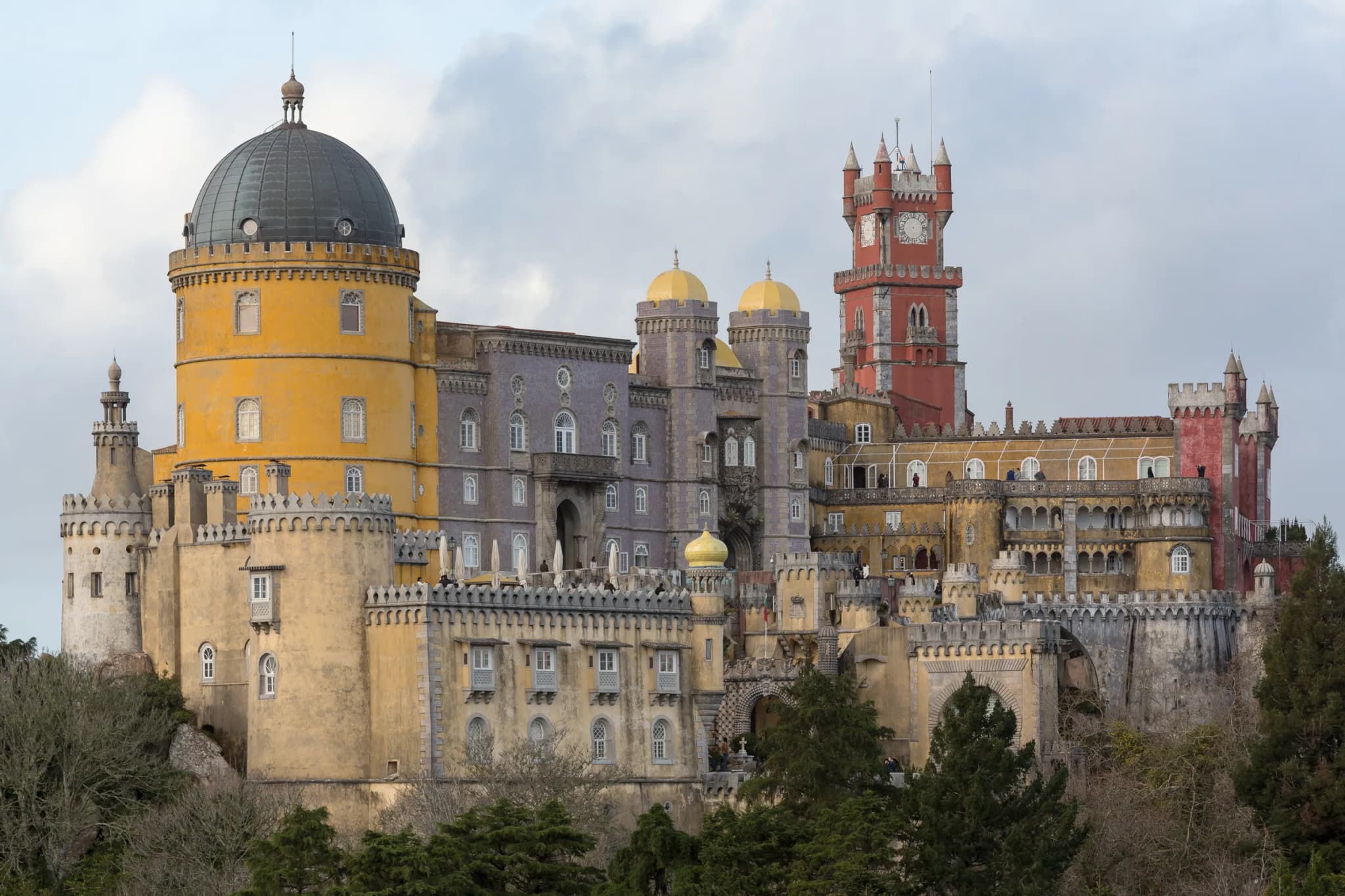
Sintra was Portugal's royal summer retreat for more than six centuries, and the hills above the town are still stacked with the palaces to prove it. UNESCO inscribed the whole wooded landscape in 1995 as the Cultural Landscape of Sintra, recognising not just the buildings but the romantic gardens and imported tree species planted around them by 19th-century royalty. Pena Palace is the headline: a hilltop fantasy of onion domes, ochre and crimson walls, and Moorish arches built for King Ferdinand II from the 1840s onward on the ruins of a medieval monastery. Below it, Quinta da Regaleira is a Gothic-Revival estate built for a wealthy collector obsessed with alchemy and Freemasonry, its main draw an inverted spiral staircase sunk into a well that visitors descend rather than climb. The Moorish Castle's ramparts, older than either, snake along the ridge with views back down to the Atlantic and across to Lisbon on a clear day. None of this is walkable in a straight line from Sintra's train station — the palaces sit on separate hilltops several kilometres apart, so budget time and cash for the local bus network (route 434 loops between the station, the castle, and Pena) rather than assuming you can stroll between them. Because every one of these sights routinely appears on lists of Portugal's best attractions, Sintra absorbs enormous day-tripper traffic from Lisbon; arriving right at opening, on a weekday, and booking timed palace entry online in advance are the three things that actually change the experience, since same-day slots for Pena Palace can sell out by midday in summer. The historic town centre, with the twin white cones of the National Palace of Sintra's chimneys, is worth the half hour it takes to walk through even if you're pressed for time elsewhere.
- –#2
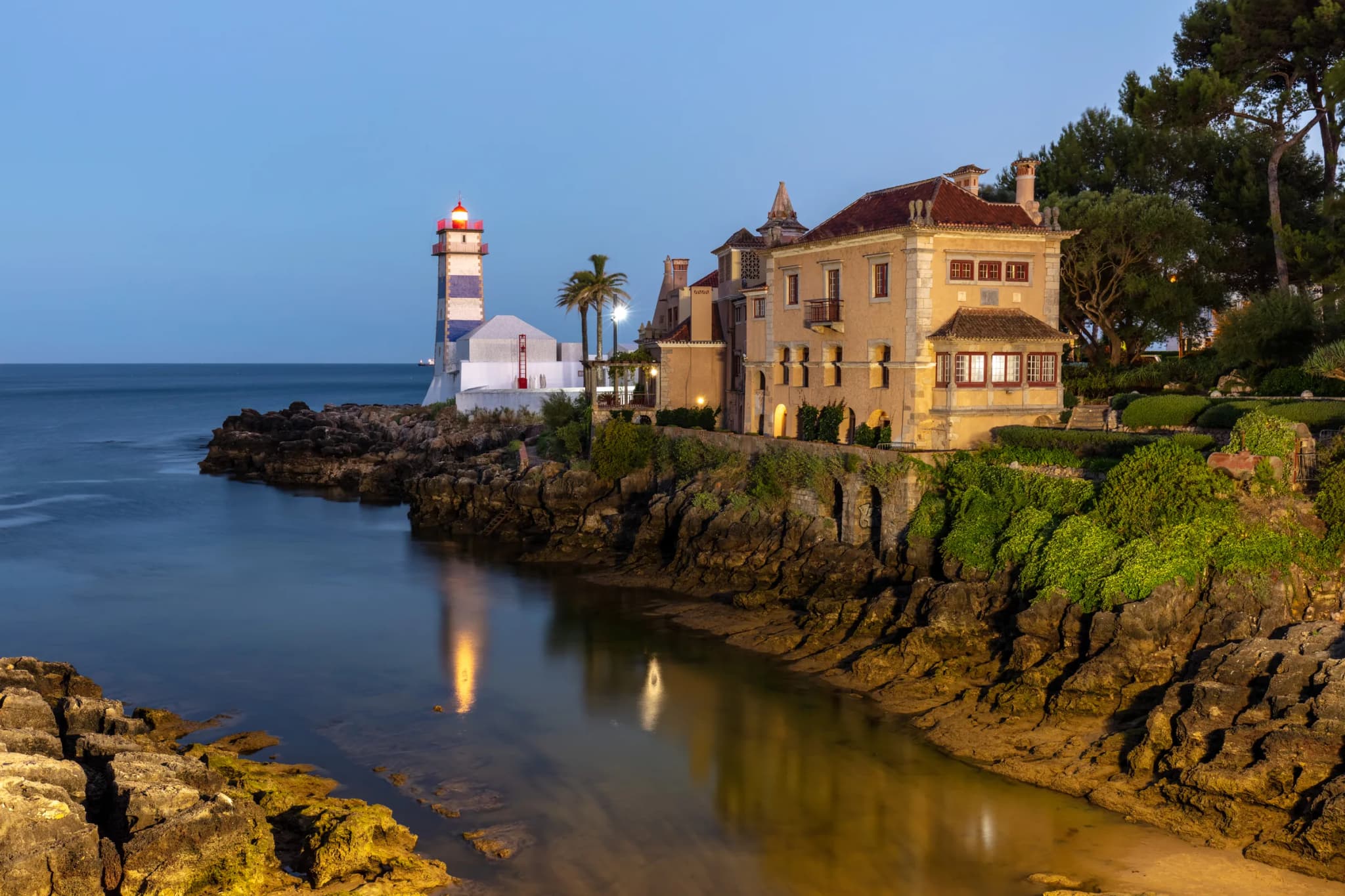
Cascais spent the late 19th century as the summer address of the Portuguese royal family, and that legacy of seaside grandeur is still legible in its marina-front mansions and municipal museums, even though the town today runs more toward surf shops and seafood terraces than court intrigue. The old fishing quarter and marina sit a short walk from Praia da Rainha, a compact sandy cove tucked between headlands, and from the cliffside path that leads west to Boca do Inferno, a sea chasm where Atlantic swell blasts through a collapsed sea cave with enough force to draw a crowd on rough days. Beyond it, the red-and-white striped Farol de Santa Marta lighthouse doubles as a small maritime museum in a converted keeper's residence overlooking the bay. The Museu Condes de Castro Guimarães, a Gothic-Revival mansion built for a local count, holds a modest but well-kept collection of decorative art and archaeology in gardens that back onto the sea. Cascais connects directly to central Lisbon by one of the country's most reliable urban rail lines, which makes it an easy add-on to a beach afternoon rather than a full day if that's all you're after — many visitors pair it with neighbouring Estoril, one stop back toward Lisbon, via the coastal promenade that links the two in about twenty minutes on foot. For a livelier version of the coast, Guincho beach lies a further nine kilometres northwest, exposed enough to the open Atlantic that it hosts windsurfing and kitesurfing competitions; reaching it requires a local bus or taxi from Cascais centre. Cascais works well any time of year, though the marina is calmest on weekday mornings before tour groups and cruise-ship transfers arrive in the afternoon.
- –
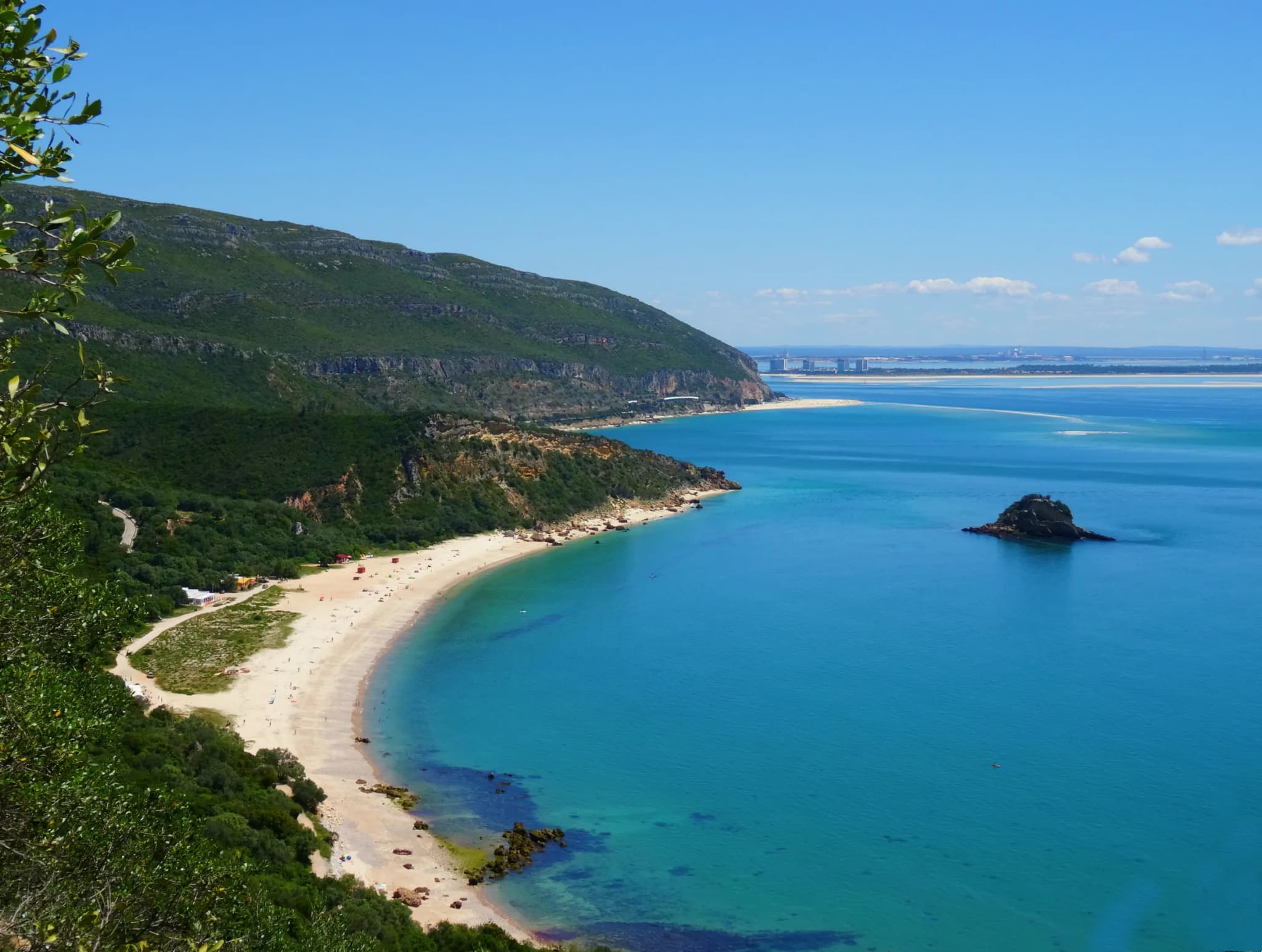
Setúbal is the rare Lisbon day trip that is really three trips in one: a working river city, a wine region, and one of Portugal's most dramatic stretches of protected coastline, all within a few kilometres of each other on the Sado estuary. The city itself centres on the Convento de Jesus, a late-15th-century church credited as one of the first buildings anywhere in the ornate Manueline style, its twisted stone columns supposedly carved to resemble ship's rope in tribute to the Age of Discovery. The municipal market and old town streets nearby are worth wandering before heading out to the water, where boat operators run trips into the Sado estuary to see one of Europe's few resident populations of bottlenose dolphins. West of the city, the limestone ridge of the Serra da Arrábida drops straight into the Atlantic, protected since 1976 as Arrábida Natural Park and recognised by UNESCO as a biosphere reserve in 2025 for the unusual meeting of Mediterranean scrubland, sheer cliffs, and turquoise water more typical of the Adriatic than the Portuguese coast. Portinho da Arrábida and Praia da Figueirinha are the most accessible beaches by car; Praia dos Galapinhos, consistently rated among Europe's best small beaches, has no real parking and gets turned away at capacity by midday in summer, so an early start matters here more than almost anywhere else on this list. Inland, the village of Azeitão is the heart of the Setúbal wine region, home to José Maria da Fonseca, one of Portugal's oldest wine houses, where the sweet, amber Moscatel de Setúbal has been aged in its cellars since the 19th century. Unlike the rest of this list, Setúbal's highlights are spread too far apart for public transport alone — a direct Fertagus train crosses the 25 de Abril bridge to Setúbal in under an hour, but seeing the park's beaches and the wine estates in the same day realistically means a car.
- –#4
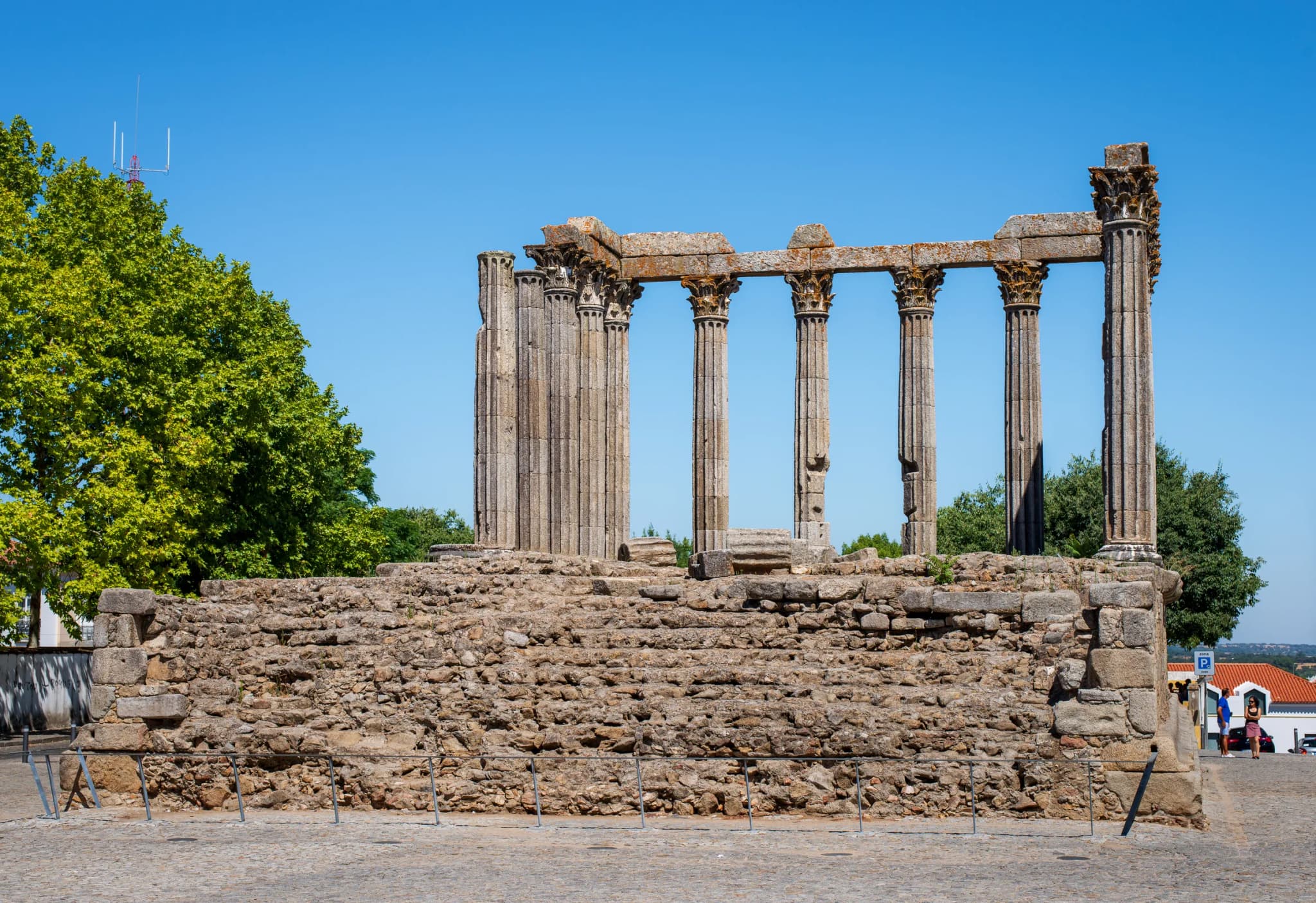
Évora packs three distinct historical eras into a walkable old town, which is exactly why UNESCO listed the whole historic centre as a World Heritage Site in 1986. The Romans arrived first, renaming the settlement Liberalitas Julia, and left behind the Roman Temple that still dominates the main square — fourteen granite Corinthian columns, long misattributed to the goddess Diana, that survived partly because later occupants incorporated the ruin into a medieval fortress rather than tearing it down. Moorish rule followed for roughly four centuries before Portuguese forces retook the city in 1165, and the tangle of narrow whitewashed streets in the old quarter still traces a layout closer to Islamic Évora than to any Renaissance grid. The most visited sight by far is the Chapel of Bones inside the Church of St. Francis, a small side chapel whose walls and columns are entirely lined with the bones and skulls of thousands of exhumed monks and townspeople, built by Franciscan friars as a blunt meditation on mortality rather than a macabre attraction. Évora's Gothic cathedral, one of the largest in Portugal, sits a few streets away and is worth the climb to its roof terrace for views back over the temple and the surrounding Alentejo plain. Under kings Manuel I and João III, Évora became a genuine centre of Portuguese humanism, and the university they founded still anchors the old town today. The single biggest practical factor here is climate: the Alentejo interior runs significantly hotter and drier than coastal Lisbon, and a summer midday visit can be genuinely punishing, so spring, autumn, or an early start in July and August make a real difference to how much of the town you can comfortably cover.
- –#5
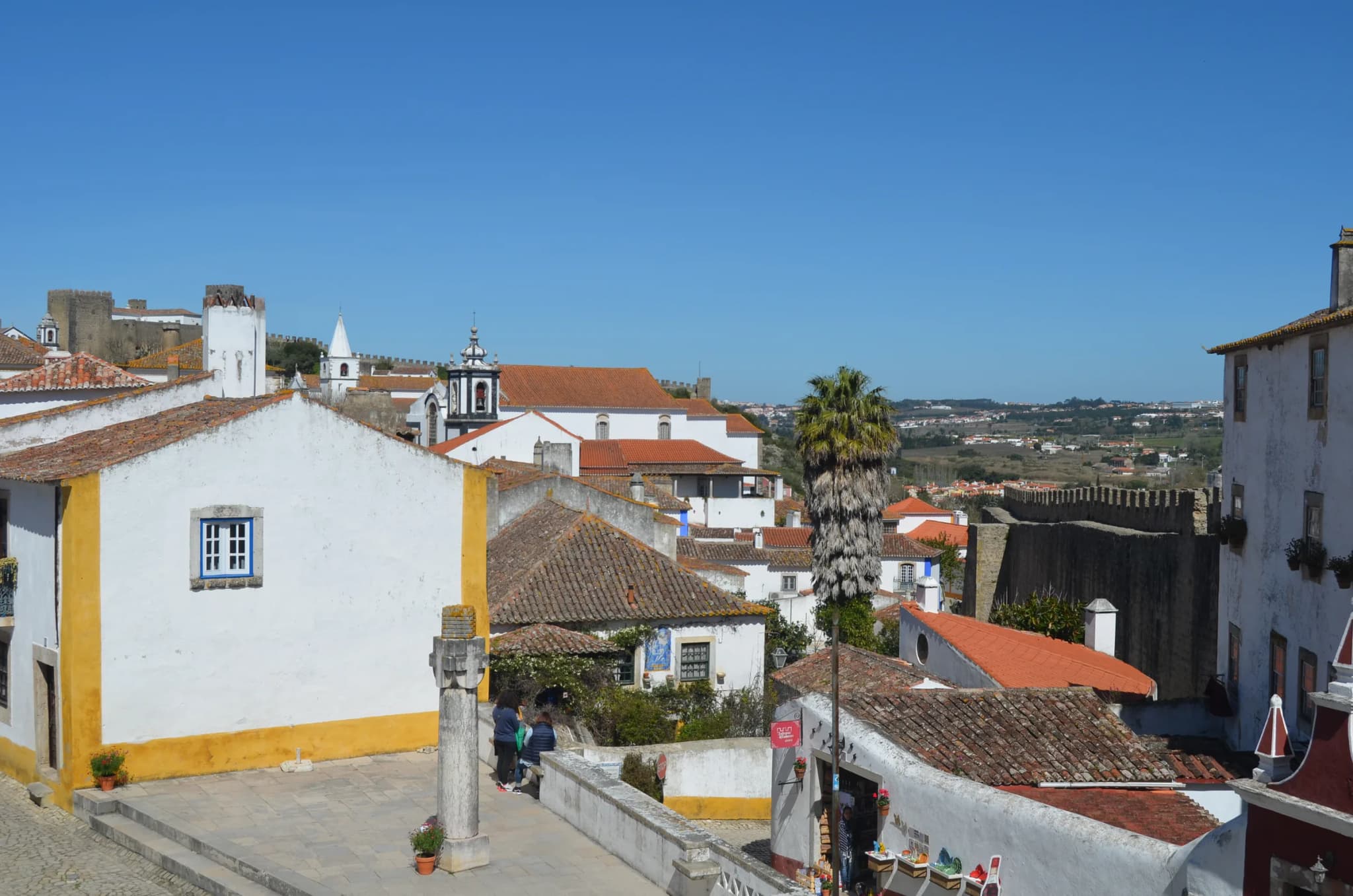
Óbidos has been given away as a wedding present more than once, which says something about how prized this walled hilltop town has always been. King Afonso II gave it to Queen Urraca in 1210, starting a tradition of Portuguese kings granting Óbidos to their queens that lasted into the 16th century and earned it the nickname "town of the queens." What remains today is one of the best-preserved fortified towns in Portugal: a complete circuit of medieval walls, walkable almost end to end for views over terracotta rooftops and the surrounding countryside, enclosing a knot of whitewashed, flower-draped lanes barely wide enough for two people to pass. The main gate, Porta da Vila, is lined inside with blue-and-white azulejo tiles, and the Igreja de Santa Maria was the setting for the child marriage of King Afonso V to his cousin Isabella of Coimbra in 1441. The town's best-known modern export is ginjinha, a sour cherry liqueur sold along the main street, traditionally served in a small edible chocolate cup that you eat once the drink is gone. Óbidos leans into its history hardest at two annual events: a medieval fair each July that fills the walls with costumed reenactors and stalls, and an international chocolate festival each March, alongside the Fólio literary festival each October. Because the entire old town fits inside a single ring of walls, Óbidos is compact enough to see thoroughly in two or three hours, but that same compactness means it fills up fast — tour buses tend to arrive mid-morning and stay through lunch, so the earliest or latest hour of the day gives the best chance of quiet streets. There is no direct train from Lisbon to Óbidos on the current network, so the direct intercity bus from Campo Grande is the standard way in.
- –#6
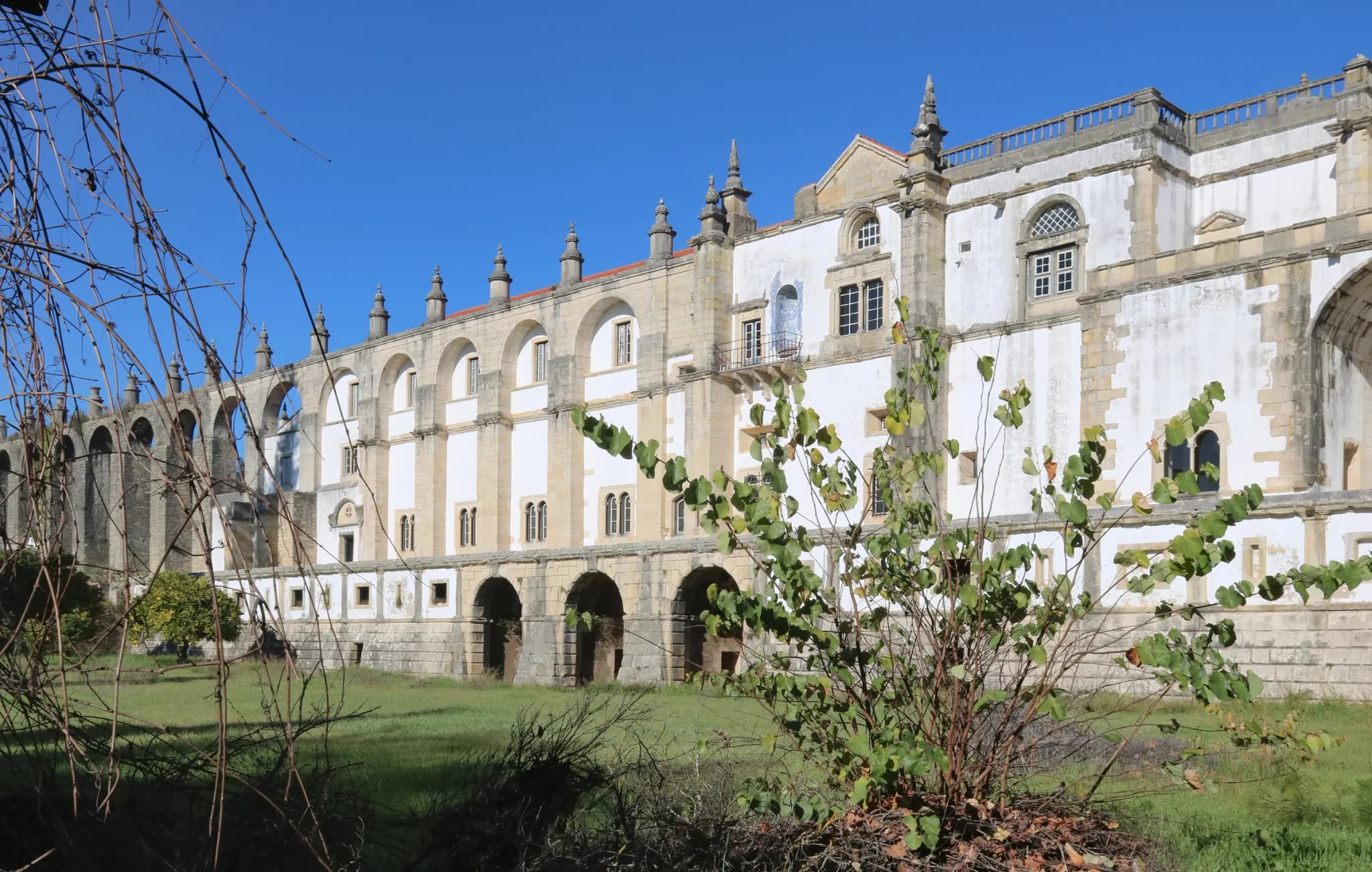
Tomar exists because of the Knights Templar, and the Convento de Cristo that towers over the town is one of the most complete records of the order's rise, near-destruction, and reinvention anywhere in Europe. The Templars founded a fortress here in 1160 under Grand Master Gualdim Pais, and its core surviving structure, the Charola, is a round church modelled directly on Jerusalem's Dome of the Rock, reflecting the order's origins protecting pilgrims to the Holy Land. When the Templars were dissolved across Europe in the 14th century, Portugal's king sidestepped the order's destruction by founding a new chivalric order, the Knights of Christ, and installing them in the same buildings with the same possessions. That continuity mattered enormously to Portuguese history: the Knights of Christ funded and staffed the maritime expeditions of the Age of Discovery, with Prince Henry the Navigator serving as the order's governor, which is why the order's red cross appears on the sails of Portuguese caravels in nearly every painting of the period. The convent's single most photographed feature is the Manueline chapter house window on the west façade, an extraordinarily dense carving of ropes, coral, and nautical symbols added under King Manuel I in the early 1500s. Beyond the Charola and the window, the complex unfolds into eight cloisters spanning Romanesque to Renaissance styles, enough to justify the two hours or more a proper visit takes. The old town below is a pleasant, low-key place to have lunch, with a small historic synagogue-turned-museum near the centre. Tomar sits further from Lisbon than anything else on this list, but a direct train removes the complexity that would otherwise push it lower — it's simply a longer single hop, not a harder one.
- –#7
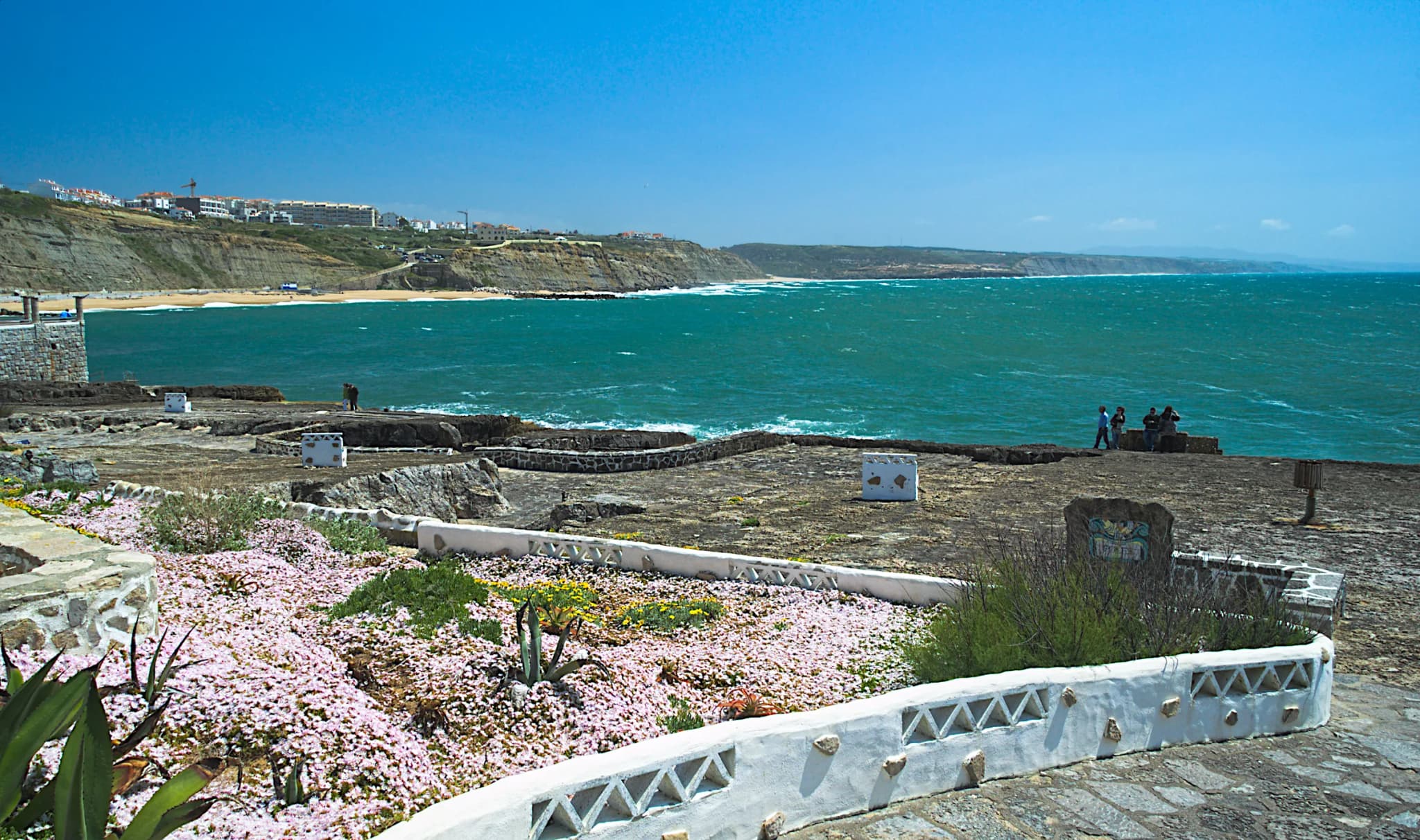
Ericeira was a working fishing port for centuries before it became, almost by accident, one of Europe's premier surf destinations. The turning point was 2011, when the Save The Waves Coalition named the stretch of coast around Ericeira a World Surfing Reserve — one of only a handful in the world at the time, and one of just two such reserves in Europe — in recognition of the density and consistency of quality waves packed into a short span of coastline. Ribeira d'Ilhas, a couple of kilometres north of the village, anchors that reputation: a world-class right-hand point break that has hosted rounds of professional surfing's world tour and works on almost any swell, which is part of why the whole area draws surfers of every level rather than just experts. Coxos, further along the same stretch, is the serious wave — fast, hollow, and firmly not for beginners — while the beaches closer to the village centre, including Praia dos Pescadores right below the old town, are gentler and better suited to first-timers and swimmers with no interest in surfing at all. The village itself retains a low, whitewashed, distinctly un-touristy fishing-town character along its clifftop streets, a contrast to the surf schools and board rental shops that have multiplied along the approach roads. Ericeira has no direct train from Lisbon, which is the one mark against it on a list otherwise dominated by rail connections, but the direct bus is straightforward and comparable in door-to-door time to several higher-ranked entries. Surf conditions are strongest in the cooler months from autumn through spring, when Atlantic groundswell is more reliable, while summer favours swimming, sunbathing and a noticeably livelier atmosphere in the village's bars and restaurants.
- –#8
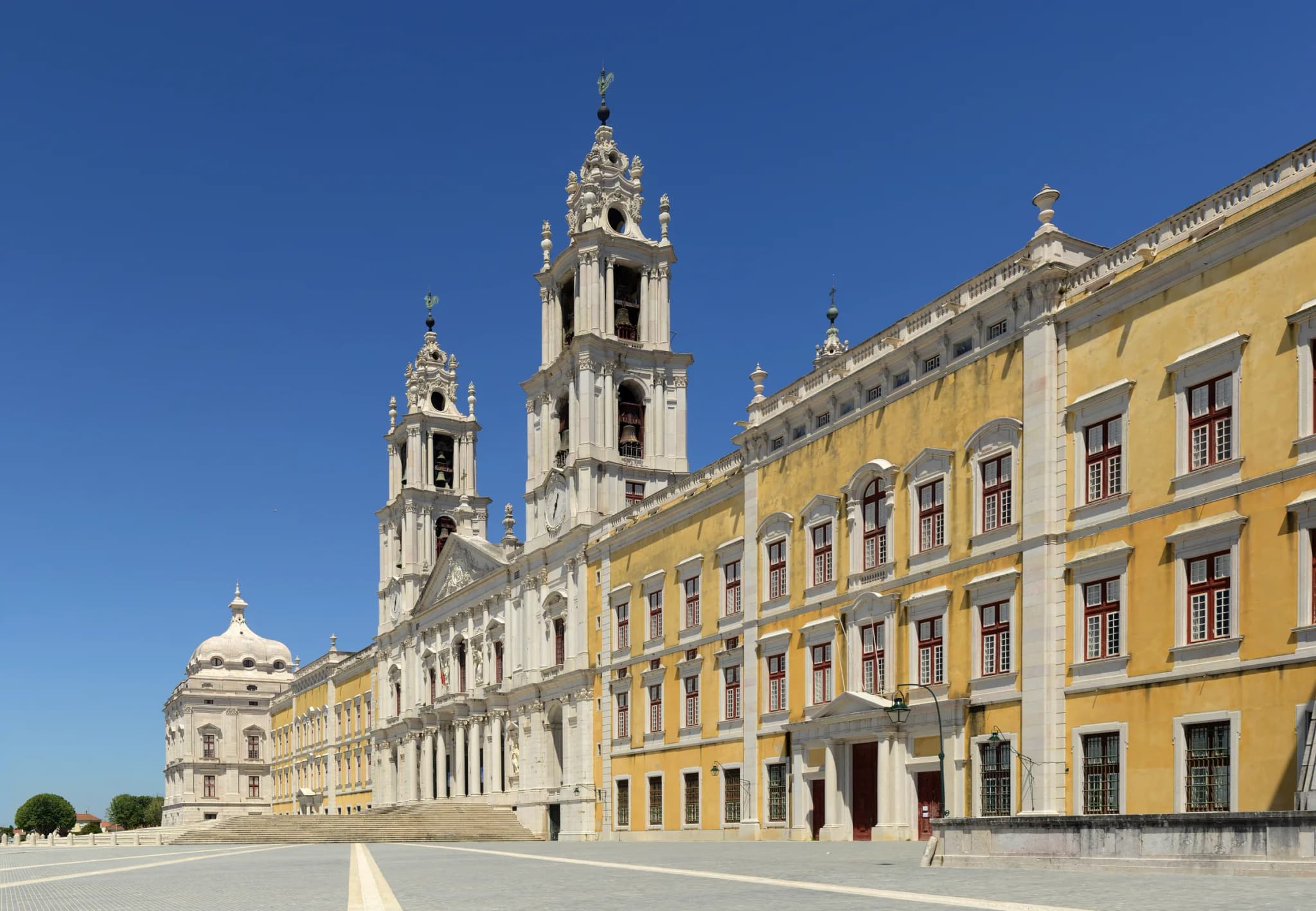
Mafra exists on a scale that's hard to process until you're standing in front of it: a single Baroque complex roughly 220 metres across, combining a royal palace, a basilica, and a Franciscan convent under one roof, built at the direct order of King João V to fulfil a vow he made for the birth of an heir. Construction began in 1717 and ran for decades, funded by a flood of Brazilian gold and diamonds that let the king build on a scale no other Portuguese monarch could match. The basilica's twin bell towers hold two carillons totalling 98 bells, reputedly the largest historical collection of its kind anywhere, cast in the Low Countries and shipped across a continent specifically for this building. The single most memorable stop, though, is the palace library: an 88-metre Rococo hall holding more than 36,000 leather-bound volumes, still protected against insects by a colony of bats — grey long-eared bats and serotine bats — that roost behind the shelves by day and hunt the room at night, a centuries-old pest-control arrangement the palace has kept in place rather than modernised away. UNESCO recognised the full complex — palace, basilica, convent, Cerco Garden, and the adjoining royal hunting park — as a World Heritage Site in July 2019, one of Portugal's more recent inscriptions. That hunting park, the Tapada Nacional de Mafra, is a walled forest reserve a short walk from the palace where deer and wild boar still roam, and makes a good add-on for anyone with half a day rather than a couple of hours to spend in Mafra. There's no direct train to Mafra, but the bus from Lisbon is a single, uncomplicated hop, which is why it still ranks ahead of destinations that need more than one connection.
- –#9
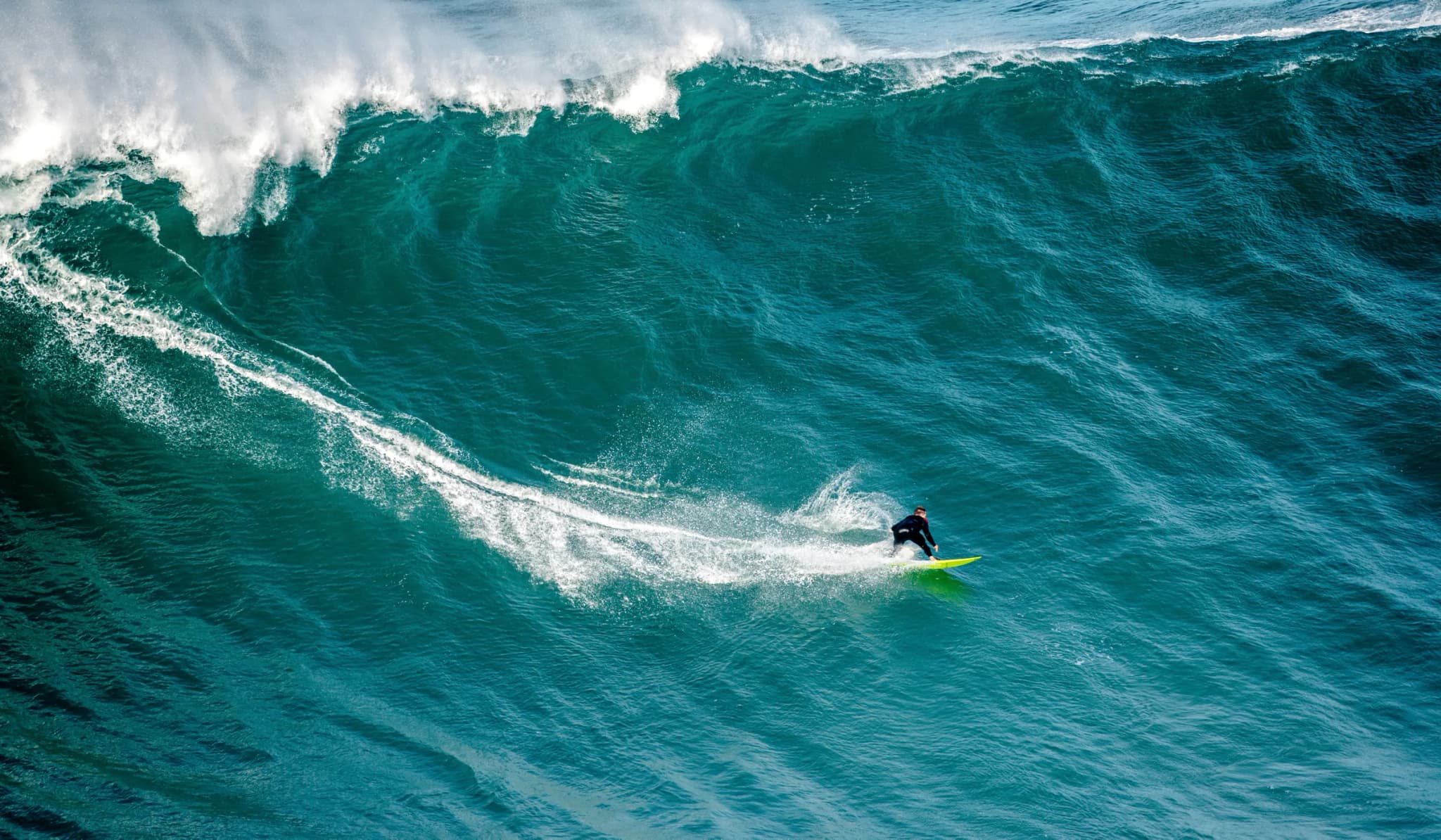
Nazaré is two towns stacked on top of each other, and the funicular that connects them is as much a part of the visit as either half. Praia, the beachfront town at sea level, is a working fishing settlement of net-mending and sardine stalls, only lightly touched by tourism until the 19th century when piracy risk finally eased enough for people to live down on the sand. Sítio, the clifftop settlement above it, came first and stayed defensible, and it's from its lookout points — particularly the Miradouro do Suberco beside the old fort — that Nazaré's real claim to fame is visible: Praia do Norte, where an underwater canyon funnels open-ocean swell into some of the largest rideable waves on the planet. The Nazaré Canyon focuses and amplifies incoming swell in a way few other coastlines can match, and it has produced several official world records for the largest wave ever surfed, most recently German surfer Sebastian Steudtner's 26.2-metre ride in October 2020. Watching a big-wave session from the clifftop, when conditions align, is free and genuinely spectacular, but it's also seasonal and unpredictable — the giant swells that make Praia do Norte famous roll in through the cooler months, while summer sees the wave flatten out into an entirely ordinary, swimmable beach. Either version of Nazaré is worth the trip, but they are different trips, and it's worth knowing which one you're booking before you go. The fort at the point, housing the Farol da Nazaré lighthouse, doubles as a small museum on the canyon's wave science. There's no direct train from Lisbon, so a direct intercity bus is the practical option, and the extra distance compared with the coastal towns closer to Lisbon is the main reason Nazaré sits lower on this list.
- –
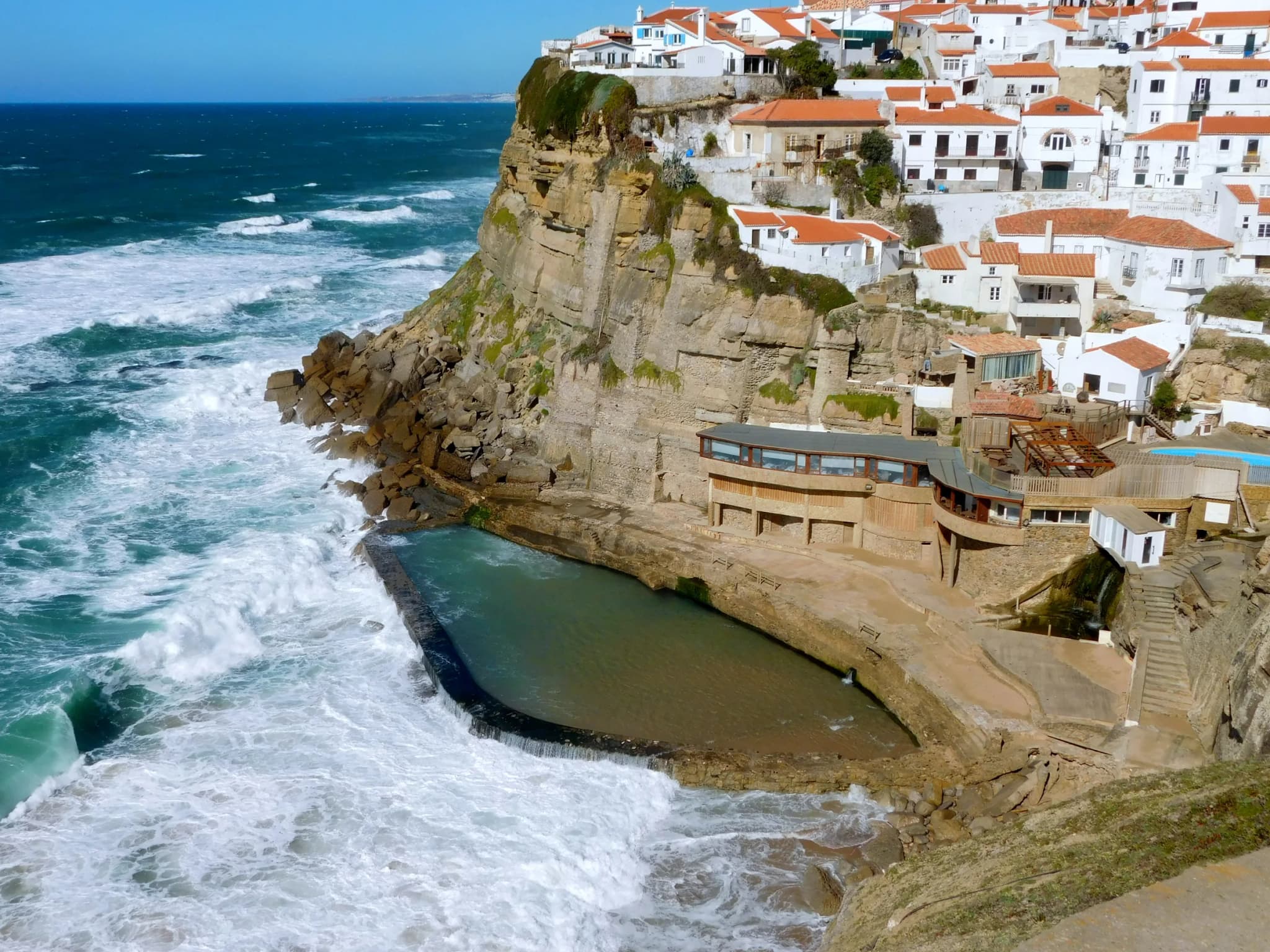
Azenhas do Mar is the smallest and least famous entry on this list, and that's largely the point: it's the pick for anyone who has already done Sintra's palaces and wants a quieter, more purely scenic afternoon nearby. The village is built directly into an Atlantic clifftop, its whitewashed houses stacked above a natural seawater pool carved into the rock at the base of the cliff, filled and refreshed by the tide — a striking, almost vertiginous sight from the clifftop path above and a genuine swimming spot when conditions allow. The name means "watermills of the sea," a reference to grain mills once powered by a small stream here, and the village stayed a modest milling and fishing settlement until the 20th century, when a since-closed tram line from Sintra (running 1930-1955) briefly turned it into a fashionable coastal outing for Lisbon society. That tram is gone, but the village's other historic export is very much still active: the surrounding parish of Colares produces wine from ungrafted vines, planted directly in deep coastal sand that phylloxera, the root louse that devastated European vineyards in the 19th century, was never able to reach. The result is some of the only pre-phylloxera vine stock left in Europe, principally the Ramisco grape, still made into a distinctive, high-acid red at small local wineries such as Adega Beira Mar, founded around 1900. Praia Grande and Praia das Maçãs, both larger and better set up for a beach day, lie a short drive or bus ride south along the same coast. Getting here without a car takes a train to Sintra followed by a local bus, a two-leg journey that's the main reason Azenhas do Mar sits at the bottom of this particular ten — everywhere else on the list is a single direct hop from Lisbon, and this is the one exception, even though the destination itself easily earns its place.
| Item | What to see | Best time to visit | Travel time & mode | Cost (2026) |
|---|---|---|---|---|
| #1Sintra | Palácio Nacional da Pena (Pena Palace), Quinta da Regaleira, Castelo dos Mouros (Moorish Castle), Palácio Nacional de… | Arrive right at opening (9:30am) on a weekday and book timed palace entry online in advance. Avoid weekends and July-… | CP Linha de Sintra (urban train) from Rossio station, Lisbon. Trains run roughly every 15-20 minutes; journey time ab… | |
| #2Cascais | Cascais marina and old town, Praia da Rainha, Boca do Inferno sea chasm, Farol de Santa Marta lighthouse and museum, … | Any season; weekday mornings for a quiet marina before afternoon tour-group and cruise-transfer traffic; afternoon fo… | CP Linha de Cascais (urban train) from Cais do Sodré station, Lisbon. Departures every ~12-20 minutes depending on ti… | CP train Cais do Sodré-Cascais: €2.55 one-way, 4-zone urban fare (2026). Farol de Santa Marta museum has a small sepa… |
| #3Setúbal / Arrábida | Setúbal old town, market and Convento de Jesus; Sado Estuary dolphin-watching boat trips; Arrábida Natural Park (Serr… | April-October for dolphin-watching tours; summer for the beaches with an early start, since Praia dos Galapinhos has … | Fertagus train from Roma-Areeiro, Entrecampos or Sete Rios direct to Setúbal, crossing the Tagus via the 25 de Abril … | Fertagus charges by zone rather than a flat one-way fare, with Setúbal in the outer zone bracket of the line. Dolphin… |
| #4Évora | Templo Romano de Évora (Roman Temple, popularly the "Temple of Diana"), Capela dos Ossos (Chapel of Bones) inside the… | Spring or autumn. Alentejo summers run significantly hotter and drier than coastal Lisbon, so a July/August visit is … | CP Intercidades (intercity train) from Lisboa Oriente station, direct service to Évora. | CP Intercidades fares are reservation-based and typically run in the low-to-mid teens of euros for this route; book a… |
| #5Óbidos | The complete circuit of medieval castle walls, Igreja de Santa Maria, Porta da Vila town gate with 18th-century azule… | Early morning or late afternoon on a weekday, since tour buses tend to arrive mid-morning and stay through lunch. Vis… | Direct intercity bus (Rodoviária do Oeste) from Campo Grande terminal, Lisbon, roughly hourly; journey time about 1 h… | Rodoviária do Oeste bus one-way fare: roughly €8–10. The historic centre and walls are free to walk. |
| #6Tomar | Convento de Cristo (Convent of Christ) — the Charola rotunda, the Manueline chapter house window, and eight cloisters… | Any season — Portuguese state monuments typically close one weekday each week. | CP Linha da Beira Baixa (regional/intercity train) direct from Lisboa Oriente station; journey time approximately 1h5… | The CP Intercidades journey is reservation-based, with fares priced by distance rather than a flat rate. Opening hour… |
| #7Ericeira | The historic clifftop fishing village centre, Praia dos Pescadores, Praia de São Sebastião, and the surf beaches at R… | Autumn through spring for the most consistent surf swell; summer for swimming and a livelier village atmosphere. | Direct intercity bus from Lisbon (Campo Grande / Fonte dos Anjinhos terminal); journey time roughly 1 hour to 1h10. N… | Bus one-way fare: roughly €8–9. Beaches and the village are free; surf lessons and board rental are priced separately… |
| #8Mafra | Palácio Nacional de Mafra (Mafra National Palace) — the basilica with its twin bell towers and 98 bells, the Rococo l… | Any season — Portuguese state monuments typically close one weekday each week. | Direct intercity bus from Lisbon (Campo Grande terminal), operated by Carris Metropolitana; journey time roughly 50 m… | Bus one-way fare: roughly €4–7. Tapada Nacional de Mafra (deer park) is ticketed separately from the palace. |
| #9Nazaré | Praia do Norte (the giant-wave surf break created by the underwater Nazaré Canyon), Sítio da Nazaré clifftop old town… | October-March for a realistic chance of witnessing giant waves at Praia do Norte; June-September for a normal, swimma… | Direct intercity bus (Rede Expressos) from Sete Rios terminal, Lisbon; journey time roughly 1h50, departures roughly … | Rede Expressos one-way fare: roughly €10–13. The funicular between Praia and Sítio has a small separate fare. |
| #10Azenhas do Mar / Colares | The whitewashed village built into an Atlantic clifftop, the natural tide-fed swimming pool at the cliff base, the Co… | Late afternoon for sunset over the cliff pool; check tide times if you want to actually swim in the natural pool; Sep… | CP Linha de Sintra train from Rossio to Sintra (~40 minutes), then a Carris Metropolitana local bus from Sintra to Az… | CP train Rossio–Sintra: from about €2.30 one-way (2026, no discounted return fare — see the Sintra entry). Carris Met… |
Image credits
- Sintra: Photo by CEphoto, Uwe Aranas, CC BY-SA 3.0, via Wikimedia Commons
- Cascais: Photo by Diego Delso, CC BY-SA 4.0, via Wikimedia Commons
- Setúbal / Arrábida: Photo by Pemanuelp, CC BY-SA 4.0, via Wikimedia Commons
- Évora: Photo by Norbert Nagel, CC BY-SA 3.0, via Wikimedia Commons
- Óbidos: Photo by Pedro (Flickr: from Maia, Porto, Portugal), CC BY 2.0, via Wikimedia Commons
- Tomar: Photo by Ingo Mehling, CC BY-SA 4.0, via Wikimedia Commons
- Ericeira: Photo by Juntas, CC BY-SA 4.0, via Wikimedia Commons
- Mafra: Photo by Alvesgaspar, CC BY-SA 3.0, via Wikimedia Commons
- Nazaré: Photo by Carlos Eduardo Joos, CC BY 2.0, via Wikimedia Commons
- Azenhas do Mar / Colares: Photo by Adamina, CC BY 2.0, via Wikimedia Commons
Rank it your way
Remix this list into your own ranking, or head to the play hub for every game mode and community breakdown — blind mode, challenges, tier lists, and more.
You Might Also Like

Top 10 Things to Do in Honolulu
Top 10 Things to Do in Honolulu

Top 10 Things to Do in Nice
Top 10 Things to Do in Nice

Top 10 Best Cities for Digital Nomads in 2026
Top 10 Best Cities for Digital Nomads in 2026

Top 10 Windmills & Heritage Sites in the Netherlands 2026
#1 Kinderdijk · #2 Zaanse Schans · #3 De Gooyer Windmill

Top 10 Best Islands for a Tropical Getaway
#1 Bali, Indonesia · #2 Maldives · #3 Bora Bora, French Polynesia

Top 10 Beaches in Spain
#1 Playa de Ses Illetes · #2 La Concha · #3 Playa de las Catedrales