Sintra
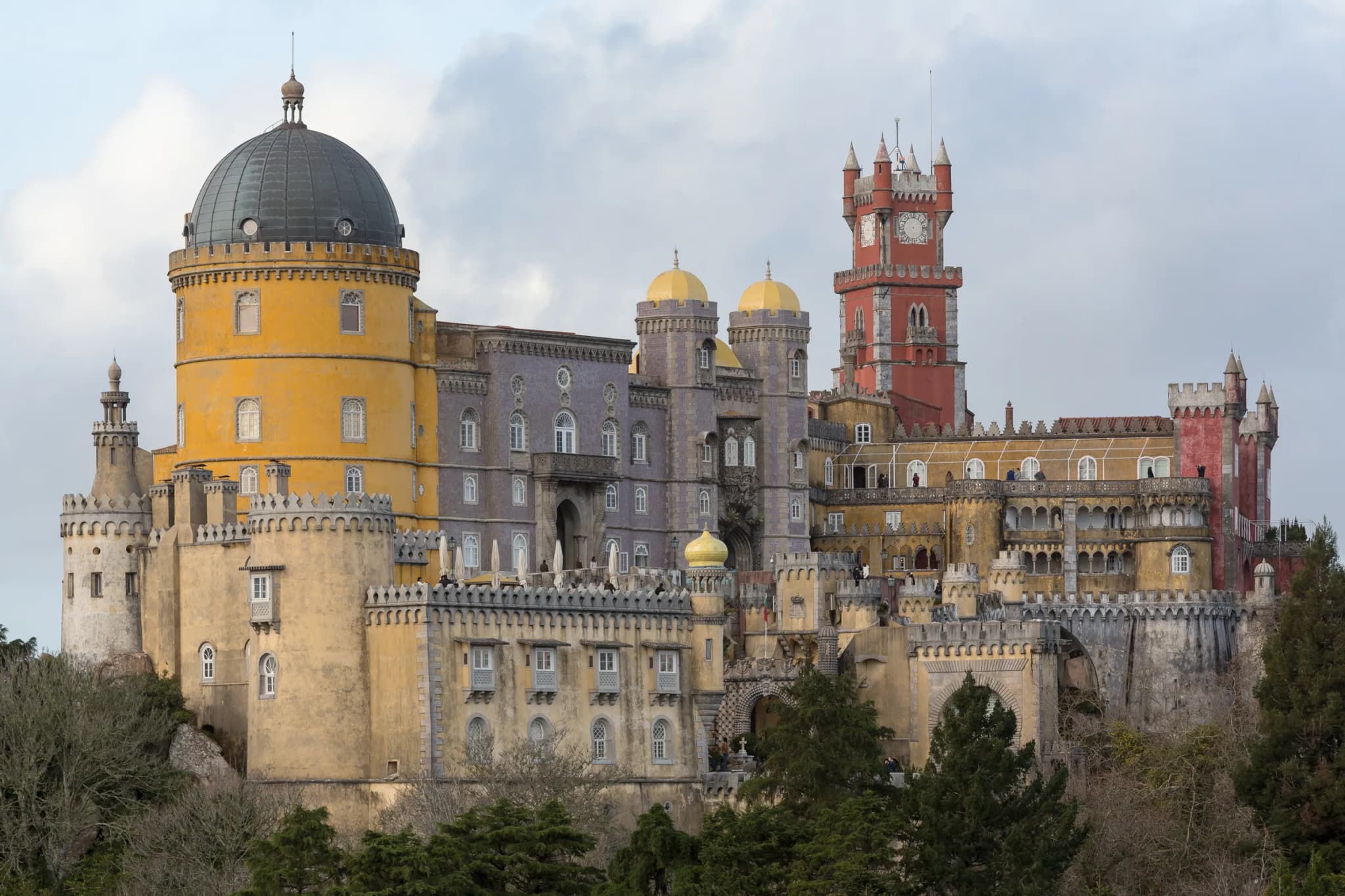
Sintra was Portugal's royal summer retreat for more than six centuries, and the hills above the town are still stacked with the palaces to prove it. UNESCO inscribed the whole wooded landscape in 1995 as the Cultural Landscape of Sintra, recognising not just the buildings but the romantic gardens and imported tree species planted around them by 19th-century royalty. Pena Palace is the headline: a hilltop fantasy of onion domes, ochre and crimson walls, and Moorish arches built for King Ferdinand II from the 1840s onward on the ruins of a medieval monastery. Below it, Quinta da Regaleira is a Gothic-Revival estate built for a wealthy collector obsessed with alchemy and Freemasonry, its main draw an inverted spiral staircase sunk into a well that visitors descend rather than climb. The Moorish Castle's ramparts, older than either, snake along the ridge with views back down to the Atlantic and across to Lisbon on a clear day. None of this is walkable in a straight line from Sintra's train station — the palaces sit on separate hilltops several kilometres apart, so budget time and cash for the local bus network (route 434 loops between the station, the castle, and Pena) rather than assuming you can stroll between them. Because every one of these sights routinely appears on lists of Portugal's best attractions, Sintra absorbs enormous day-tripper traffic from Lisbon; arriving right at opening, on a weekday, and booking timed palace entry online in advance are the three things that actually change the experience, since same-day slots for Pena Palace can sell out by midday in summer. The historic town centre, with the twin white cones of the National Palace of Sintra's chimneys, is worth the half hour it takes to walk through even if you're pressed for time elsewhere.
Photos (1)
Comments on "Sintra"
Have a take on this ranking?
Comments are how the argument actually happens here. Posting one needs a free account — it takes about a minute.
No comments yet.
The first comment sets the terms of the argument.