Cascais
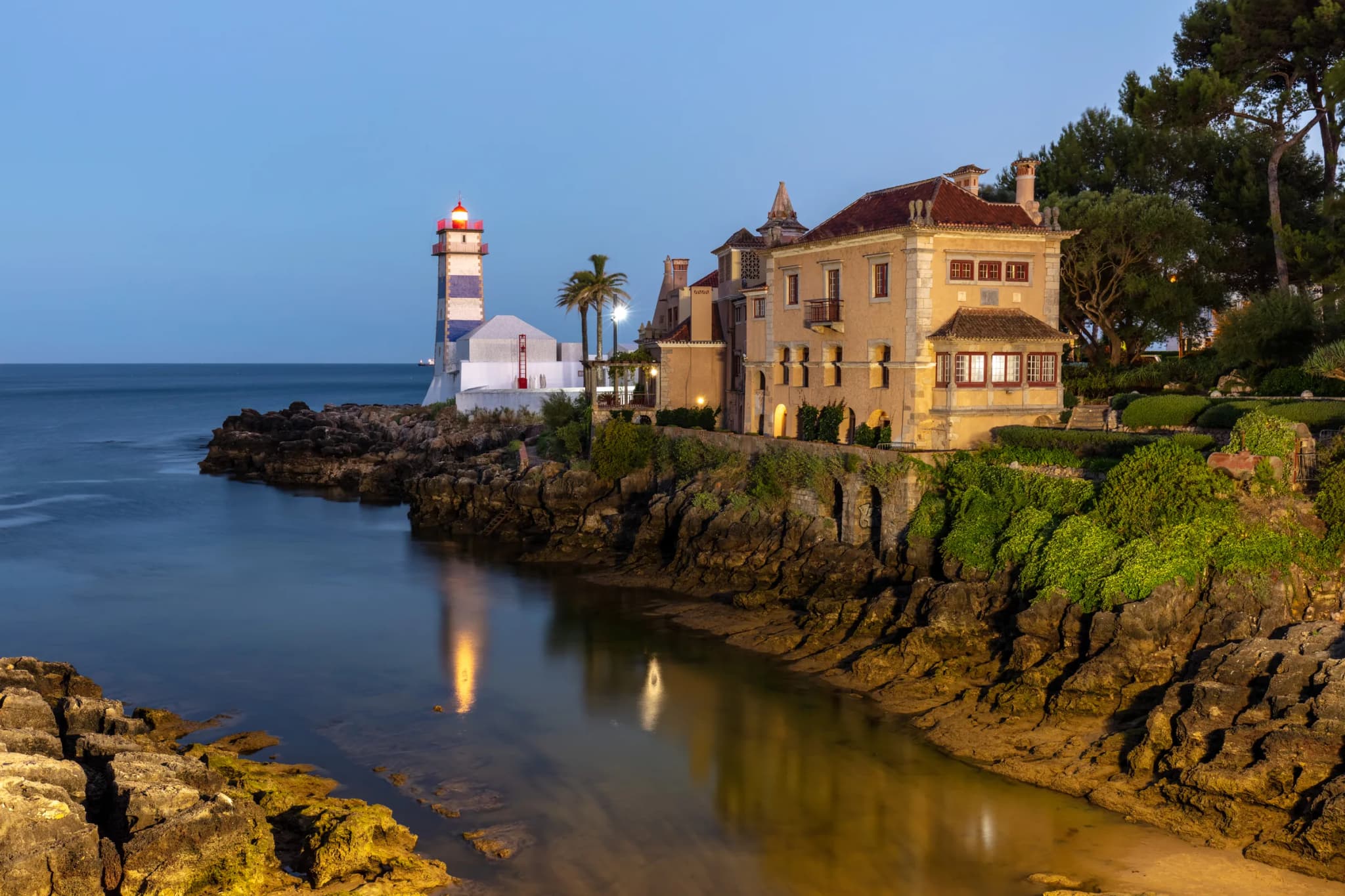
Cascais spent the late 19th century as the summer address of the Portuguese royal family, and that legacy of seaside grandeur is still legible in its marina-front mansions and municipal museums, even though the town today runs more toward surf shops and seafood terraces than court intrigue. The old fishing quarter and marina sit a short walk from Praia da Rainha, a compact sandy cove tucked between headlands, and from the cliffside path that leads west to Boca do Inferno, a sea chasm where Atlantic swell blasts through a collapsed sea cave with enough force to draw a crowd on rough days. Beyond it, the red-and-white striped Farol de Santa Marta lighthouse doubles as a small maritime museum in a converted keeper's residence overlooking the bay. The Museu Condes de Castro Guimarães, a Gothic-Revival mansion built for a local count, holds a modest but well-kept collection of decorative art and archaeology in gardens that back onto the sea. Cascais connects directly to central Lisbon by one of the country's most reliable urban rail lines, which makes it an easy add-on to a beach afternoon rather than a full day if that's all you're after — many visitors pair it with neighbouring Estoril, one stop back toward Lisbon, via the coastal promenade that links the two in about twenty minutes on foot. For a livelier version of the coast, Guincho beach lies a further nine kilometres northwest, exposed enough to the open Atlantic that it hosts windsurfing and kitesurfing competitions; reaching it requires a local bus or taxi from Cascais centre. Cascais works well any time of year, though the marina is calmest on weekday mornings before tour groups and cruise-ship transfers arrive in the afternoon.
Photos (1)
Comments on "Cascais"
Have a take on this ranking?
Comments are how the argument actually happens here. Posting one needs a free account — it takes about a minute.
No comments yet.
The first comment sets the terms of the argument.