Mafra
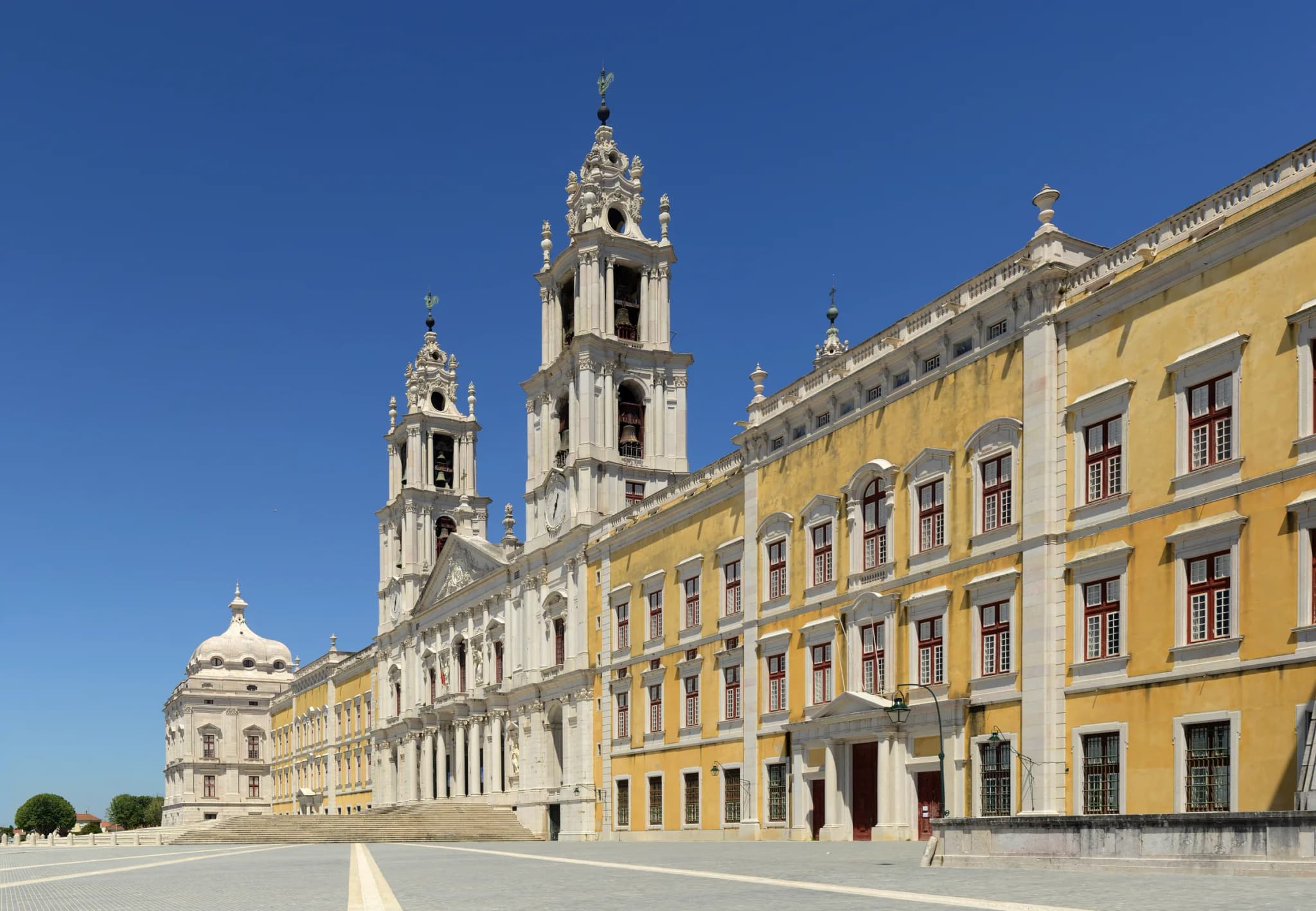
Mafra exists on a scale that's hard to process until you're standing in front of it: a single Baroque complex roughly 220 metres across, combining a royal palace, a basilica, and a Franciscan convent under one roof, built at the direct order of King João V to fulfil a vow he made for the birth of an heir. Construction began in 1717 and ran for decades, funded by a flood of Brazilian gold and diamonds that let the king build on a scale no other Portuguese monarch could match. The basilica's twin bell towers hold two carillons totalling 98 bells, reputedly the largest historical collection of its kind anywhere, cast in the Low Countries and shipped across a continent specifically for this building. The single most memorable stop, though, is the palace library: an 88-metre Rococo hall holding more than 36,000 leather-bound volumes, still protected against insects by a colony of bats — grey long-eared bats and serotine bats — that roost behind the shelves by day and hunt the room at night, a centuries-old pest-control arrangement the palace has kept in place rather than modernised away. UNESCO recognised the full complex — palace, basilica, convent, Cerco Garden, and the adjoining royal hunting park — as a World Heritage Site in July 2019, one of Portugal's more recent inscriptions. That hunting park, the Tapada Nacional de Mafra, is a walled forest reserve a short walk from the palace where deer and wild boar still roam, and makes a good add-on for anyone with half a day rather than a couple of hours to spend in Mafra. There's no direct train to Mafra, but the bus from Lisbon is a single, uncomplicated hop, which is why it still ranks ahead of destinations that need more than one connection.
Photos (1)
Comments on "Mafra"
Have a take on this ranking?
Comments are how the argument actually happens here. Posting one needs a free account — it takes about a minute.
No comments yet.
The first comment sets the terms of the argument.