Azenhas do Mar / Colares
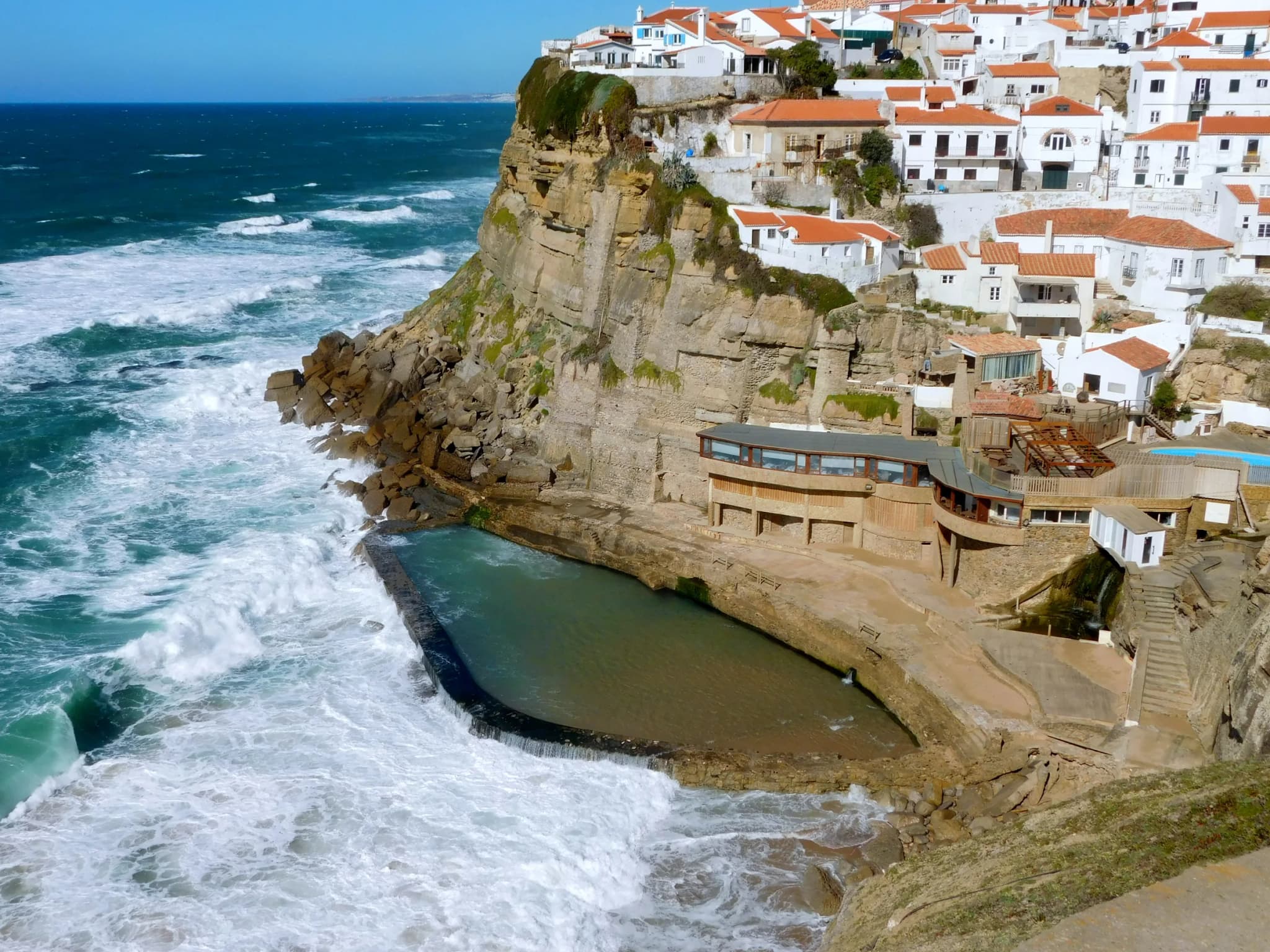
Azenhas do Mar is the smallest and least famous entry on this list, and that's largely the point: it's the pick for anyone who has already done Sintra's palaces and wants a quieter, more purely scenic afternoon nearby. The village is built directly into an Atlantic clifftop, its whitewashed houses stacked above a natural seawater pool carved into the rock at the base of the cliff, filled and refreshed by the tide — a striking, almost vertiginous sight from the clifftop path above and a genuine swimming spot when conditions allow. The name means "watermills of the sea," a reference to grain mills once powered by a small stream here, and the village stayed a modest milling and fishing settlement until the 20th century, when a since-closed tram line from Sintra (running 1930-1955) briefly turned it into a fashionable coastal outing for Lisbon society. That tram is gone, but the village's other historic export is very much still active: the surrounding parish of Colares produces wine from ungrafted vines, planted directly in deep coastal sand that phylloxera, the root louse that devastated European vineyards in the 19th century, was never able to reach. The result is some of the only pre-phylloxera vine stock left in Europe, principally the Ramisco grape, still made into a distinctive, high-acid red at small local wineries such as Adega Beira Mar, founded around 1900. Praia Grande and Praia das Maçãs, both larger and better set up for a beach day, lie a short drive or bus ride south along the same coast. Getting here without a car takes a train to Sintra followed by a local bus, a two-leg journey that's the main reason Azenhas do Mar sits at the bottom of this particular ten — everywhere else on the list is a single direct hop from Lisbon, and this is the one exception, even though the destination itself easily earns its place.
Photos (1)
Comments on "Azenhas do Mar / Colares"
Have a take on this ranking?
Comments are how the argument actually happens here. Posting one needs a free account — it takes about a minute.
No comments yet.
The first comment sets the terms of the argument.