Óbidos
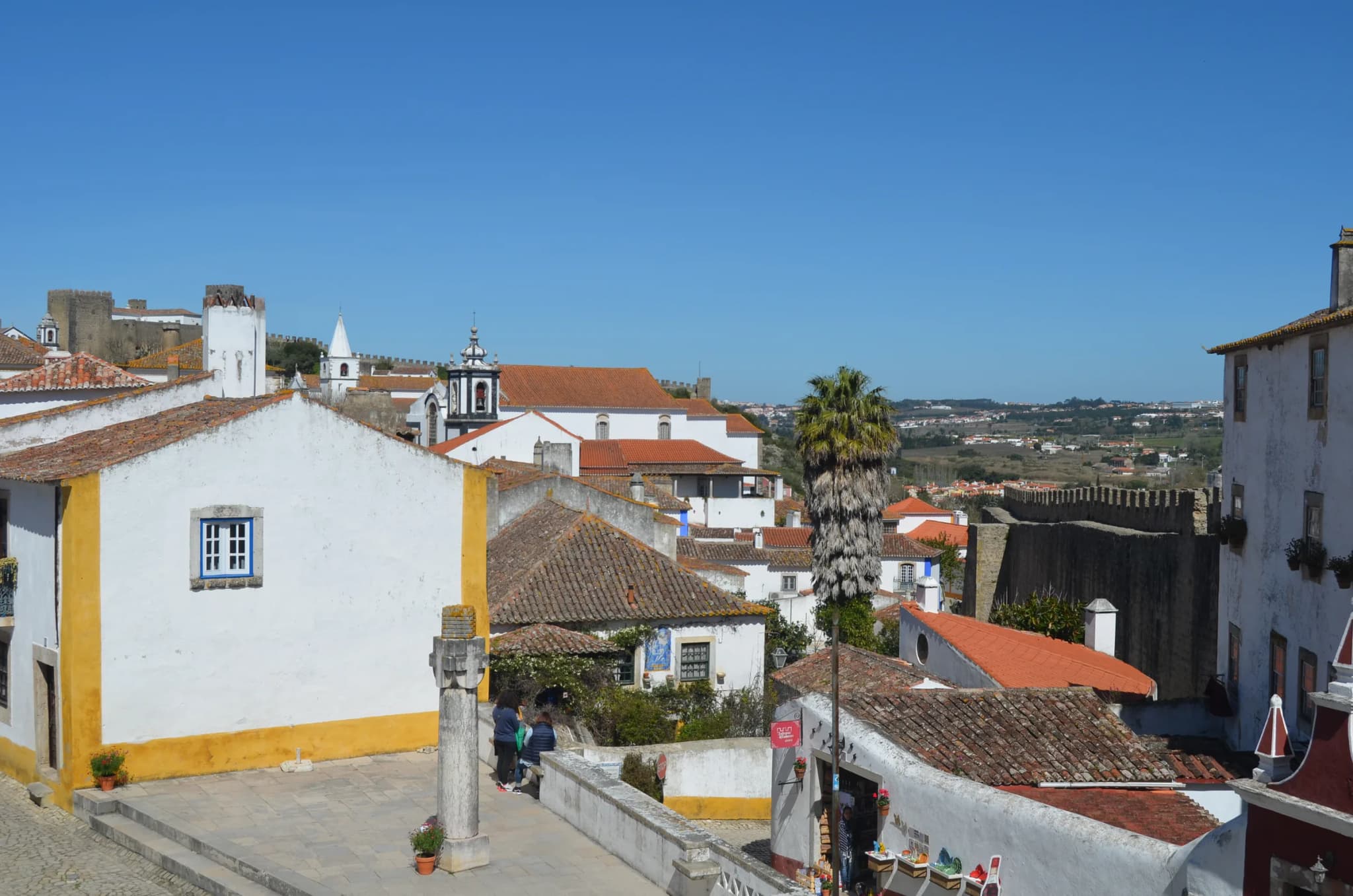
Óbidos has been given away as a wedding present more than once, which says something about how prized this walled hilltop town has always been. King Afonso II gave it to Queen Urraca in 1210, starting a tradition of Portuguese kings granting Óbidos to their queens that lasted into the 16th century and earned it the nickname "town of the queens." What remains today is one of the best-preserved fortified towns in Portugal: a complete circuit of medieval walls, walkable almost end to end for views over terracotta rooftops and the surrounding countryside, enclosing a knot of whitewashed, flower-draped lanes barely wide enough for two people to pass. The main gate, Porta da Vila, is lined inside with blue-and-white azulejo tiles, and the Igreja de Santa Maria was the setting for the child marriage of King Afonso V to his cousin Isabella of Coimbra in 1441. The town's best-known modern export is ginjinha, a sour cherry liqueur sold along the main street, traditionally served in a small edible chocolate cup that you eat once the drink is gone. Óbidos leans into its history hardest at two annual events: a medieval fair each July that fills the walls with costumed reenactors and stalls, and an international chocolate festival each March, alongside the Fólio literary festival each October. Because the entire old town fits inside a single ring of walls, Óbidos is compact enough to see thoroughly in two or three hours, but that same compactness means it fills up fast — tour buses tend to arrive mid-morning and stay through lunch, so the earliest or latest hour of the day gives the best chance of quiet streets. There is no direct train from Lisbon to Óbidos on the current network, so the direct intercity bus from Campo Grande is the standard way in.
Photos (1)
Comments on "Óbidos"
Have a take on this ranking?
Comments are how the argument actually happens here. Posting one needs a free account — it takes about a minute.
No comments yet.
The first comment sets the terms of the argument.