Setúbal / Arrábida
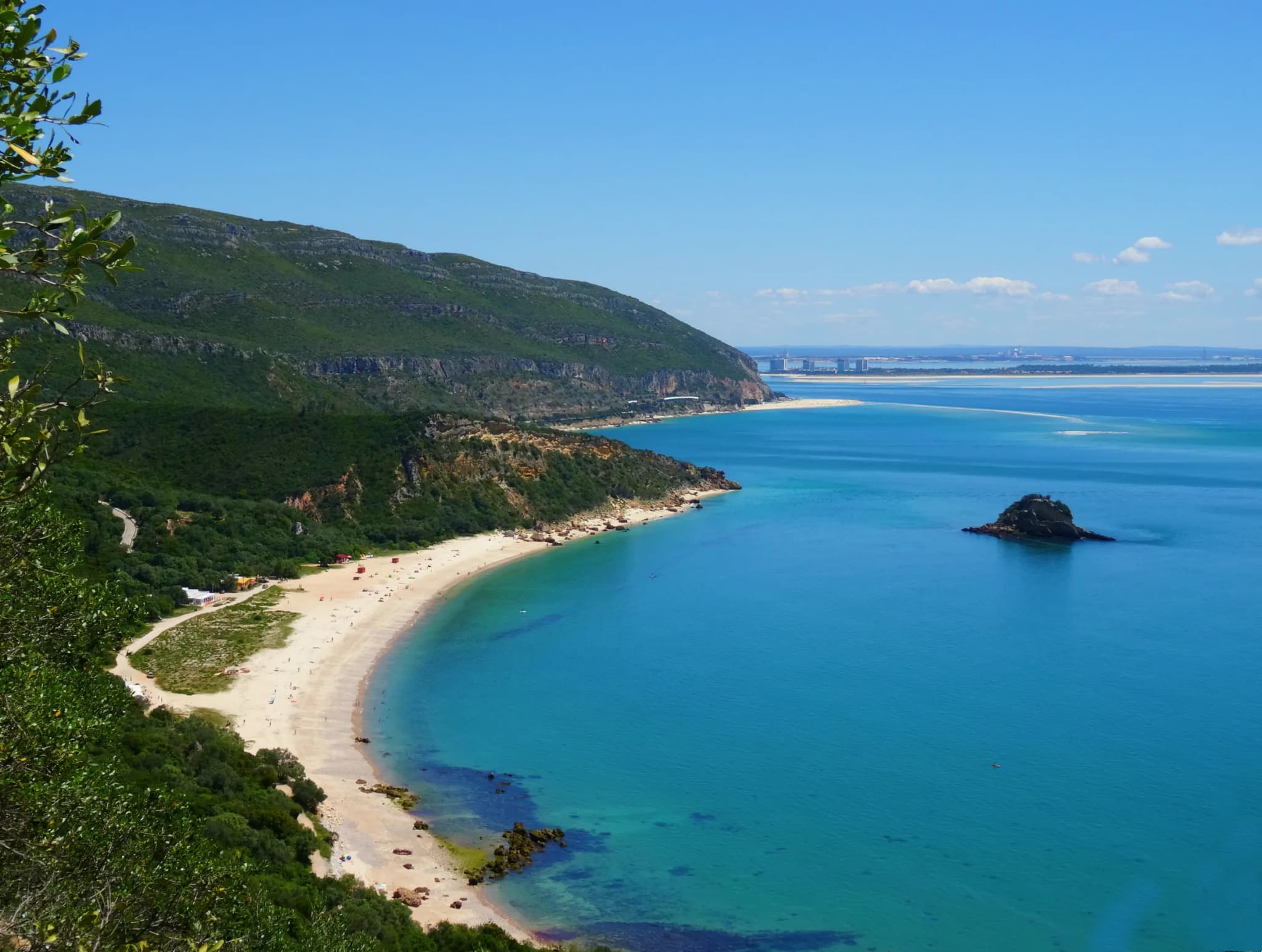
Setúbal is the rare Lisbon day trip that is really three trips in one: a working river city, a wine region, and one of Portugal's most dramatic stretches of protected coastline, all within a few kilometres of each other on the Sado estuary. The city itself centres on the Convento de Jesus, a late-15th-century church credited as one of the first buildings anywhere in the ornate Manueline style, its twisted stone columns supposedly carved to resemble ship's rope in tribute to the Age of Discovery. The municipal market and old town streets nearby are worth wandering before heading out to the water, where boat operators run trips into the Sado estuary to see one of Europe's few resident populations of bottlenose dolphins. West of the city, the limestone ridge of the Serra da Arrábida drops straight into the Atlantic, protected since 1976 as Arrábida Natural Park and recognised by UNESCO as a biosphere reserve in 2025 for the unusual meeting of Mediterranean scrubland, sheer cliffs, and turquoise water more typical of the Adriatic than the Portuguese coast. Portinho da Arrábida and Praia da Figueirinha are the most accessible beaches by car; Praia dos Galapinhos, consistently rated among Europe's best small beaches, has no real parking and gets turned away at capacity by midday in summer, so an early start matters here more than almost anywhere else on this list. Inland, the village of Azeitão is the heart of the Setúbal wine region, home to José Maria da Fonseca, one of Portugal's oldest wine houses, where the sweet, amber Moscatel de Setúbal has been aged in its cellars since the 19th century. Unlike the rest of this list, Setúbal's highlights are spread too far apart for public transport alone — a direct Fertagus train crosses the 25 de Abril bridge to Setúbal in under an hour, but seeing the park's beaches and the wine estates in the same day realistically means a car.
Photos (1)
Comments on "Setúbal / Arrábida"
Have a take on this ranking?
Comments are how the argument actually happens here. Posting one needs a free account — it takes about a minute.
No comments yet.
The first comment sets the terms of the argument.