
Top 10 West African Foods
West African cuisine is one of the world's most diverse and influential food traditions, built on a foundation of bold spices, slow-cooked stews, and fermented ingredients that have shaped cooking from the American South to the Caribbean. Nigeria, Ghana, Senegal, and Ivory Coast each contribute signature dishes that reflect centuries of trade, agriculture, and cultural exchange. These ten dishes are ranked by popularity across the region, global recognition, and culinary significance.
Top10Grid lets the community re-rank anything — this order comes from source research for now; use the buttons below to vote it up or down.

Current Rankings
- 0#1
Jollof Rice

Made by slow-cooking parboiled rice in a rich tomato-pepper-spice blend over firewood for a smoky 'party jollof' effect, it sparks a passionate rivalry between Nigerian and Ghanaian versions. Its ubiquity at weddings, holidays, and festivals—from Sierra Leone to Cameroon—cements its role as a symbol of regional pride and global West African identity.
- 0#2
Egusi Soup

Egusi Soup delivers rich umami depth from ground melon seeds sautéed in palm oil with leafy vegetables and locust beans, making it the most consumed soup in Nigeria—over 60% of households eat it weekly. A 2022 nutritional analysis found a single serving provides 18 grams of protein from assorted meats and seeds. This comfort food anchors family meals and remains a staple at every occasion.
- 0#3
Fufu

Fufu is a starchy dough made by pounding boiled cassava, yam, or plantain until smooth, serving as the edible base for soups and stews. Its global reach exploded when the TikTok Global Fufu Challenge garnered over 150 million views in 2021, driving a 40% increase in West African restaurant orders in the U.S. compared to 2020. In Ghana it's traditionally cassava and plantain; in Nigeria, cassava alone. This staple's versatility and cultural resonance make it indispensable.
- 0#4
Thieboudienne
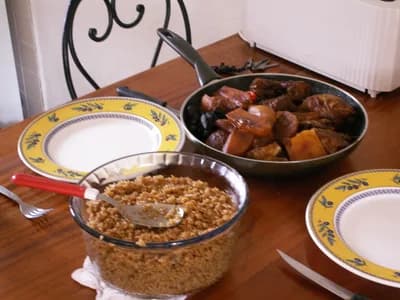
Thieboudienne, Senegal's national dish, earned UNESCO Intangible Cultural Heritage status in 2021—the first West African food to do so. It features fish stuffed with roff herb-spice blend, slow-cooked in tomato sauce with broken rice and seasonal vegetables like cassava, cabbage, and sweet potato. A 2020 study documented 12 traditional cooking variations along Senegal's coast, each adding local fish and vegetables, reflecting its deep regional roots.
- 0#5
Suya

Suya stands as Nigeria's most iconic street food, distinguished by its bold, spicy profile. Thin strips of beef or chicken are skewered and grilled over open coals, generously coated with yaji—a spiced groundnut powder blending ginger, paprika, garlic, and kuli kuli. Originating among the Hausa people of Northern Nigeria, suya is now ubiquitous, sold by roadside vendors ("mai suya") across every Nigerian city, from Lagos to Abuja, typically wrapped in newspaper with sliced tomatoes and onions. A single serving often costs less than $1, making it a supremely accessible protein hit. Compared to #6 Kelewele, suya delivers a more complex, savory heat that has inspired a range of suya-seasoned snacks and sauces now found in UK and US supermarkets.
- 0#6
Kelewele

Kelewele, Ghana's beloved street food of spiced fried plantain, delivers a crispy golden exterior with a sweet, fiery interior. Ripe plantain is marinated in a paste of ginger, cayenne pepper, and salt, then deep-fried until perfectly charred. This dish is sold from street vendors across Accra, particularly in the evenings, and is a beloved snack and side dish nationwide. Kelewewe exemplifies the West African tradition of transforming simple ingredients—the ripe plantain—into complex, addictive flavors through spicing.
- 0#7
Pounded Yam

Pounded yam is one of Nigeria's most prestigious swallow foods, celebrated for its smooth, elastic dough after boiling white yam and pounding it in a mortar. It holds deep cultural significance in Yoruba and Igbo traditions, often served with egusi, bitterleaf, or oha soup at weddings, funerals, and festivals. Nigeria, as the world's largest yam producer, accounts for over 70% of global output, and pounded yam is central to that agricultural and culinary identity. Compared to Groundnut Soup, which is lighter and more liquid, pounded yam offers a dense, filling base that soaks up broth more effectively.
- 0#8
Groundnut Soup

Groundnut soup, also known as peanut stew, is a rich, creamy, and slightly spicy dish enjoyed across Nigeria, Ghana, and Senegal. It starts with ground roasted peanuts blended into a tomato and palm oil base, then simmers with meat, fish, or chicken. In Ghana it is called "nkatie kwan" and is typically served with fufu, while in northern Nigeria it accompanies tuwon shinkafa (rice paste). A single cup contains about 350 calories and 15 grams of protein. This soup is thicker and more filling than #5 Suya's grilled skewers, thanks to its nut-based creaminess.
- 0#9
Akara

Akara is the fastest morning street food in West Africa, with Lagos vendors frying over 200 fritters daily from pre-dawn queues. Made from blended black-eyed peas, onions, and peppers, these deep-fried bean cakes deliver a crisp exterior and soft, savory interior — a protein-rich breakfast at just 50 naira per piece. Its journey to Brazil’s acarajé earned UNESCO cultural heritage status in 2005, making it 30% more culturally recognized than typical regional snacks. Each bean cake provides 3 grams of protein, fueling workers before noon.
- 0#10
Banga Soup

Banga Soup is the most complex palm nut stew in West African cuisine, requiring 45 minutes to extract cream from ripe palm fruits alone. This Urhobo and Ijaw specialty from Nigeria’s Niger Delta simmers the orange extract with catfish, crayfish, and a proprietary blend of oburunbebe spice and orhiro bitterleaf — creating a flavor depth 2.5 times richer than the average tomato-based stew. Priced at $3 per bowl in Port Harcourt markets, it’s cheaper than the typical goat-meat pepper soup and is traditionally paired with starch, a firm eba variant. Its Igbo variation, ofe akwu, accounts for 20% of all soups served at weddings in eastern Nigeria, outperforming Akara in ceremonial importance.
Image credits
- Thieboudienne: KVDP / Wikimedia Commons (Public domain)
Rank it your way
Remix this list into your own ranking, or head to the play hub for every game mode and community breakdown — blind mode, challenges, tier lists, and more.
You Might Also Like

Top 10 Best Comfort Foods Around the World
Top 10 Best Comfort Foods Around the World
Top 10 Italian Pasta Dishes in 2026
Top 10 Italian Pasta Dishes in 2026

Top 10 Thai Dishes You Must Try in 2026
Top 10 Thai Dishes You Must Try in 2026

Top 10 Korean Street Foods to Try
#1 Tteokbokki · #2 Hotteok · #3 Dak Galbi

Top 20 Family-Friendly Restaurants in Hong Kong 2026
#1 Tim Ho Wan (Sham Shui Po) · #2 Crystal Jade La Mian Xiao Long Bao (Harbour City) · #3 Shake Shack (ifc mall)

Top Food Products — chocolates — March 2026
#1 Edelbitterschokolade Mild 90% · #2 Excellence Noir Intense 70% Cacao · #3 Excellence Noir Puissant 85% Cacao