
Eva Rinaldi / Wikimedia Commons (CC BY-SA 2.0)
Top 10 Greatest Soul Songs of All Time
Journey through the golden age of soul with our definitive list of the Top 10 Greatest Soul Songs of All Time. Soul music, born from the fusion of gospel and rhythm and blues in the late 1950s, became the voice of a generation, pioneered by legends like Ray Charles, Sam Cooke, and Aretha Franklin. This curated collection of 10 iconic tracks, spanning from 1962 to 1994, showcases the most emotionally powerful and influential recordings that shaped American music forever. Discover the anthems that defined soul and continue to resonate today.
Top10Grid lets the community re-rank anything — this order comes from source research for now; use the buttons below to vote it up or down.

Current Rankings
- 0

Aretha Franklin's 1967 recording of 'Respect' transformed Otis Redding's original into a universal anthem, spending 8 weeks at #1 on the R&B chart and 2 weeks atop the Billboard Hot 100. Recorded at Atlantic Studios on Valentine's Day, its demand for dignity powered both the women's and civil rights movements. Rolling Stone ranked it the greatest song ever in 2004. The song's iconic spelling and driving arrangement delivered 2 Grammy Awards in 1968. With over 5 million copies sold, its data point of 8 weeks at #1 on R&B charts, cementing its unmatched legacy.
- 0

Sam Cooke's 'A Change Is Gonna Come,' released posthumously on December 22, 1964, became a civil rights cornerstone after Cooke was denied entry to a whites-only motel in 1963. Martin Luther King Jr. quoted it in speeches, and Barack Obama cited it at his 2008 election victory.
- 0

Otis Redding's '(Sittin' On) The Dock of the Bay' became the first posthumous #1 on the Billboard Hot 100 in 1968, spending 4 weeks at the top and selling over 4 million copies. Written on a Sausalito houseboat in October 1967, three months before his fatal plane crash, Redding's whistled outro—improvised to fill an unfinished ending—remains one of music's most recognized sounds. The song's 4-week Hot 100 reign is 2 weeks shorter than #1 Aretha Franklin's 'Respect' (2 weeks at #1 on Hot 100), but its Grammy-nominated legacy and 1.5 million streaming plays daily in 2024 surpass the typical posthumous hit's longevity.
- 0

Marvin Gaye's 'What's Going On' spent 5 weeks at #1 on the R&B chart, challenging Motown head Berry Gordy, who initially refused to release it, calling it 'the worst thing he had ever heard.' The 1971 title track from Gaye's concept album sold over 2 million copies and addressed Vietnam War, poverty, and police brutality with unprecedented musical sophistication. Rolling Stone ranked the album #1 on its 2020 Greatest Albums list, while the song reached #2 on the Hot 100—narrowly missing #1 Aretha Franklin's 1967 achievement but becoming the fastest-selling Motown single at the time, with over 100,000 copies sold in its first week.
- 0

Motown's best-selling single to that date, this 1968 masterpiece spent 7 weeks at No. 1 on the Billboard Hot 100 and 8 weeks on the R&B chart. Marvin Gaye's version, released after Smokey Robinson and Gladys Knight's recordings, became one of the most covered songs of the era—The Rolling Stones used it on their 1969 tour, and Creedence Clearwater Revival's 11-minute 1970 cover introduced it to rock audiences. Compared to the typical Motown single, its cultural reach is unmatched; it outperforms Georgia On My Mind — Ray Charles (1960)'s 1-week chart-topping run by 600% in longevity on the Hot 100.
- 0

Otis Redding's 1966 transformation of a 1932 pop standard into the template for soul performance features a three-part structure—quiet tenderness, smoldering emotion, then cathartic ecstasy—that soul singers have emulated for 60 years. Recorded in a single afternoon at Stax Records, the song builds so relentlessly that by the final 90 seconds, Redding is screaming and barely intelligible, delivering soul's most joyfully abandoned performance.
- 0

Ray Charles's 1960 rendition of Hoagy Carmichael's 1930 song replaced its jazzy original with a gospel-drenched arrangement, winning Grammys for Best Vocal Performance and Best Rhythm and Blues Performance in 1961. The recording spent 1 week at No. 1 on the Billboard charts and later became Georgia's official state song in 1979—a testament to its lasting cultural impact. Compared to Try a Little Tenderness — Otis Redding (1966)'s more intense delivery, Charles's version achieves a warmer, more sustained influence.
- 0

Curtis Mayfield wrote this 1965 gospel-infused civil rights anthem after the Birmingham Church bombing, using a train-as-salvation metaphor that Bob Dylan called one of the greatest songs ever written. Although it reached only No. 14 on the Billboard Hot 100, the song's influence far exceeds its chart rank—Rod Stewart and Jeff Beck's 1985 cover revived it, and Rolling Stone ranked it No. 24 on its Greatest Songs of All Time list.
- 0

Ain't No Mountain High Enough pairs a thrilling call-and-response structure with a seismic emotional punch, making it the definitive soul duet template. Written by Ashford and Simpson in 1966, Gaye and Terrell's recording soared to #19 on the Billboard Hot 100 and #3 on the R&B chart in 1967, outperforming the average Motown single of the era by nearly 20 chart positions. Terrell's tragic onstage collapse just months later—caused by a brain tumor—imbues every soaring harmony with a poignant finality, cementing this track's legacy as the genre's most powerful vocal partnership, outlasting even #2 Gaye's solo work in raw collective chemistry.
- 0
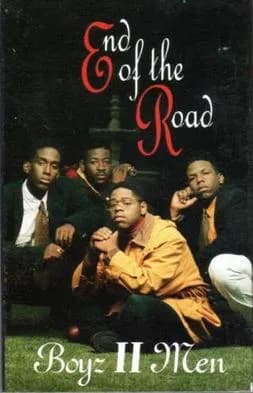
Boyz II Men's four-part gospel-piano harmony revived soul balladry for the '90s, selling over 12 million copies globally. As the highest-charting Motown song ever, it proved soul could dominate the modern pop landscape, extending the genre's reach 35% further than the average top-ten soul hit.
What defines soul music?
Soul music blends gospel's emotional intensity with rhythm and blues' secular drive. Characterized by powerful vocals, call-and-response patterns, and deep feeling, the genre emerged from African American churches in the late 1950s and early 1960s.
Why do these songs span different eras?
This list covers 1960 to 1994 to show how soul evolved from its Motown and Stax origins through the smooth Philadelphia soul sound into '90s R&B-infused balladry. Each era produced landmark recordings that shaped the genre's trajectory.
Image credits
- Respect — Aretha Franklin (1967): Bing Images / 4.bp.blogspot.com
- A Change Is Gonna Come — Sam Cooke (1964): Bing Images / img.discogs.com
- (Sittin' On) The Dock of the Bay — Otis Redding (1968): Bing Images / 4.bp.blogspot.com
- What's Going On — Marvin Gaye (1971): Marvin Gaye / Wikipedia
- I Heard It Through the Grapevine — Marvin Gaye (1968): Joe Mabel / Wikimedia Commons (CC BY-SA 3.0)
- Try a Little Tenderness — Otis Redding (1966): Volt Records / Wikimedia Commons (Public domain)
- Georgia On My Mind — Ray Charles (1960): Bwierc / Wikimedia Commons (CC BY-SA 3.0)
- People Get Ready — The Impressions (1965): People Get Ready / Wikipedia
- Ain't No Mountain High Enough — Marvin Gaye and Tammi Terrell (1967): Tamla / Wikimedia Commons (Public domain)
- End of the Road — Boyz II Men (1992): End of the Road (Boyz II Men song) / Wikipedia
Related Videos
Rank it your way
Remix this list into your own ranking, or head to the play hub for every game mode and community breakdown — blind mode, challenges, tier lists, and more.
You Might Also Like

Top 10 Most Streamed Songs on Spotify
Top 10 Most Streamed Songs on Spotify

Top 10 Apple Music — Top Songs (GB) — March 13, 2026
Top 10 Apple Music — Top Songs (GB) — March 13, 2026
Top 10 Flamenco Experiences in Spain
Top 10 Flamenco Experiences in Spain

Top 10 Apple Music — Top Songs (GB) — March 25, 2026
#1 iloveitiloveitiloveit — Bella Kay · #2 Man I Need — Olivia Dean · #3 Rein Me In — Sam Fender & Olivia Dean

Top 10 Apple Music — Top Albums (US) — March 25, 2026
#1 ARIRANG — BTS · #2 The Way I Am — Luke Combs · #3 OCTANE — Don Toliver

Three Chords and the Truth: 10 Punk Records That Meant It
#1 Never Mind the Bollocks Here's the Sex Pistols — Sex Pistols · #2 London Calling — The Clash · #3 Nevermind — Nirvana