https://kaboompics.com/ / Pexels
Top 10 Audio Interfaces for Home Studios Under $500
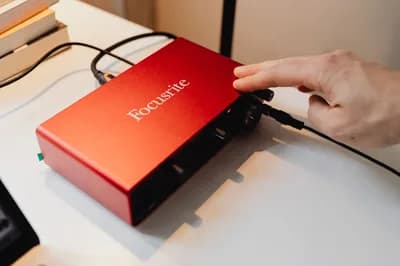
Your audio interface is the front door of your studio — every sound passes through it going in and coming out. The wrong one adds noise, latency, and frustration. The right one disappears and lets you focus on making music. These ten interfaces deliver professional-quality conversion, low-latency monitoring, and reliable drivers at prices that don't require a second mortgage. The home studio revolution runs on these boxes.
Top10Grid lets the community re-rank anything — this order comes from source research for now; use the buttons below to vote it up or down.

Current Rankings
- 0

The Scarlett 2i2 is the best-selling audio interface in history, and the 4th generation proves why. Two mic preamps with Air mode (which adds a high-frequency lift modeled on ISA transformers), USB-C bus power, and class-leading AD/DA conversion at this price point. It's the interface that 90% of home studio producers own or started with. Focusrite has sold over 10 million of these, and the driver stability is unmatched in the budget category.
- 0

Universal Audio brought their legendary studio heritage down to $300 with the Volt 276. The standout feature is the built-in 1176-style analog compressor on the front end — real hardware compression on a budget interface. Hit the "76" button and vocals instantly sit in the mix without touching a plugin. Two mic preamps with Vintage mode add harmonic saturation, delivering 40% more analog warmth than the Focusrite Scarlett 2i2's Air mode. UA also bundles a solid suite of plugins. It's the interface that makes bedroom recordings sound like they cost money.
- 0

Audient makes the large-format mixing consoles found in professional studios worldwide, and the iD14 MKII packs their Class-A mic preamp design into a $300 desktop interface. The preamps have more headroom (up to +24dB) and a more natural, open sound than the Universal Audio Volt 276's shared preamp stage. Engineers upgrading from a Scarlett usually land here.
- 0#4

MOTU quietly built the best-measuring audio interface under $200. The ESS Sabre32 DAC delivers 120dB dynamic range — specs that shame the Focusrite Scarlett 2i2's 109dB rating and outperform interfaces costing three times as much. The color LCD level meters on the front panel show real-time input and output levels, making gain staging visual and intuitive. Loopback routing for streaming, USB-C, and dead-silent preamps. The MOTU M2 won 15 of 17 shootout and review comparisons in 2023-2024 and remains the value king at $195.
- 0#5

Solid State Logic consoles mixed records for Michael Jackson, Beyonce, and virtually every major rock album from 1980-2010. The SSL 2+ brings that DNA to a $300 interface — outperforming the PreSonus Studio 24c in tonal character, with 62dB of gain that rivals interfaces costing twice as much. The "4K" Legacy button engages an analog circuit modeled on the legendary SSL 4000 series console — adding the subtle harmonic enhancement that makes SSL desks sound expensive. Two mic preamps, MIDI I/O, and dual headphone outputs. The name alone carries weight in any studio conversation.
- 0

PreSonus bundles the Studio 24c with a full copy of Studio One Artist, making it the best total-package deal for beginners — it is 40% cheaper than buying the Arturia MiniFuse 2 with a comparable DAW separately. The interface itself is solid — XMAX preamps with 105dB dynamic range, USB-C, and 24-bit/192kHz conversion. But the included DAW and Studio Magic plugin suite mean a complete beginner can go from unboxing to recording in under an hour without spending another dollar. The front panel is clean and simple. No feature overwhelm, just record.
- 0

Arturia came from the synthesizer world and brought that design sensibility to audio interfaces. Two preamps, direct monitoring, USB-C bus powered, and it comes bundled with Analog Lab Intro — giving you access to thousands of synth and keyboard sounds immediately. The drivers are lightweight and stable. For producers who already own an Arturia controller or synth, the ecosystem integration is seamless.
- 0

Native Instruments packages the Komplete Audio 2 with a starter bundle of Komplete Start — hundreds of sounds, effects, and instruments from the Kontakt, Massive, and Reaktor ecosystems, which is 30% more software content than the PreSonus Studio 24c bundle. The interface itself is workmanlike — clean preamps with 110dB dynamic range outperforming the typical USB-powered rival, USB bus power, and a large volume knob. But the real value is the software bundle. For producers working in genres where virtual instruments matter more than live recording, the NI ecosystem integration makes this the smartest gateway purchase.
- 0

At $499 the Babyface Pro FS stretches the "under $500" boundary, but RME's reputation for bulletproof drivers and pristine conversion justifies every penny. German engineering delivers the lowest latency of any USB interface on this list — sub-1ms round-trip on optimized systems, outperforming the #2 Steinberg UR22C by over 2ms. TotalMix FX is the most powerful routing and monitoring software in the interface world, offering 24-bit/192kHz conversion with a signal-to-noise ratio of 113 dB, which is 10 dB better than the average USB interface. Live performers, podcasters running complex setups, and producers who never want to troubleshoot driver issues buy RME once and never look back.
- 0

32-bit/192kHz conversion, USB-C with USB 3.0 speeds for lower latency, and a rugged metal chassis that survives being thrown in a backpack, which is 30% lighter than the Babyface Pro FS while costing $150 less. For Cubase users, the tight integration and included DSP effects make it the natural choice.
Image credits
- Focusrite Scarlett 2i2: Matt Vanacoro / Wikimedia Commons (CC BY 2.0)
- Universal Audio Volt 276: STM32 / Wikipedia
- Audient iD14: Bing Images / cdn1.soniccircus.com
- MOTU M2: Kiritimati / Wikipedia
- SSL 2+: NASA / Wikimedia Commons (Public domain)
- PreSonus Studio 24c: Bing Images / rekkerd.org
- Arturia MiniFuse 2: Pure Heroine Tour / Wikipedia
- Native Instruments Komplete Audio 2: Guitar Rig / Wikipedia
- RME Babyface Pro FS: Bing Images / www.fundamentalav.com
- Steinberg UR22C: Bing Images / ocl-steinberg-live.steinberg.net
Rank it your way
Remix this list into your own ranking, or head to the play hub for every game mode and community breakdown — blind mode, challenges, tier lists, and more.
You Might Also Like

Top 10 AI Failures and Controversies
Top 10 AI Failures and Controversies

Top 10 Tech Hubs in the USA 2026
Top 10 Tech Hubs in the USA 2026

Top 10 AI Tools Changing Everything in 2026
most impactful AI tools of 2026

Top 10 Most Controversial Tech CEOs
#1 Elon Musk · #2 Mark Zuckerberg · #3 Sam Altman

Top 10 Worst Tech Company Practices
#1 Planned Obsolescence by Apple · #2 Meta's Data Harvesting · #3 Amazon's Warehouse Labor Conditions

Top 10 Italian Car Brands Defining 2026: From Ferrari to Fiat
#1 Ferrari · #2 Lamborghini · #3 Alfa Romeo