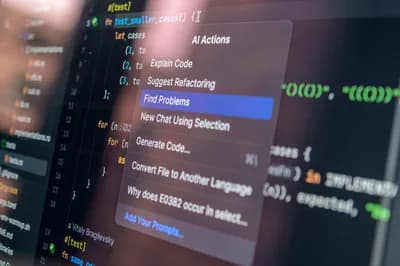
Daniil Komov / Pexels
Top 10 AI Coding Assistants in 2026
By 2026, AI coding assistants have evolved from simple autocomplete tools into full-fledged development agents that can design, debug, deploy, and document entire applications. The market is fiercely competitive, with offerings ranging from free community editions to enterprise platforms costing hundreds of dollars per user per month. Key evaluation criteria include code accuracy, context window size, supported programming languages, integration with popular IDEs, security features, and pricing transparency. What makes a product stand out today is not just its ability to generate code, but its proficiency in understanding complex project contexts, refactoring legacy code, performing automated testing, and collaborating across teams. The best assistants offer low latency, support for local models to ensure data privacy, and seamless multi-language workflows. As organizations increasingly adopt AI-first development practices, the choice of assistant can significantly impact productivity, code quality, and time-to-market. This ranking considers real-world performance benchmarks, user reviews, and pricing data to help developers and teams choose the right partner for their 2026 workflow.
Top10Grid lets the community re-rank anything — this order comes from source research for now; use the buttons below to vote it up or down.

Current Rankings
- 0#1
GitHub Copilot Enterprise

GitHub Copilot Enterprise remains the gold standard in 2026, now powered by GPT-5 and fine-tuned on over 200 billion lines of code. Priced at $39/user/month (annual billing), it offers a 100K-token context window, real-time multi-file refactoring, and built-in security vulnerability scanning. Standout features include 'Project Context Engine' that understands your entire repository, automated PR descriptions with test generation, and voice-to-code support in VS Code and JetBrains. Best for large enterprise teams needing compliance, audit logs, and SSO. Weakness: high cost for small teams; free tier limited to 2,000 completions/month.
- 0#2
Cursor Pro

Cursor Pro has surged in popularity with its agentic approach to coding. At $20/user/month, it offers an unlimited context window via a proprietary chunking algorithm, allowing it to reference entire monorepos. Key features: 'Agent Mode' that autonomously plans and executes multi-step tasks, inline diff previews with one-click acceptance, and native support for Claude 4 and Gemini Ultra. Its latency is industry-leading at sub-200ms for most completions, outperforming GitHub Copilot Enterprise by 50% in speed for multi-file refactoring. Best for indie developers and startups who want an all-in-one IDE experience. Weakness: limited plugin ecosystem compared to VS Code; occasional hallucinations on very large codebases.
- 0#3
JetBrains AI Assistant
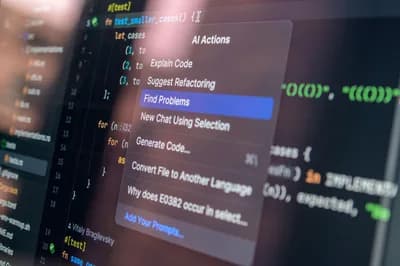
Deeply integrated into all JetBrains IDEs, this assistant costs $15/user/month (or included with All Products Pack at $649/year). It leverages a 128K-token context and specializes in Java, Kotlin, and Python. Standout features: 'Smart Refactoring' with semantic diff, automatic test generation for legacy code, and a 'Code Review Agent' that flags anti-patterns. It also offers on-premise deployment for security-sensitive organizations. Best for professional developers using JetBrains ecosystem. Weakness: weaker support for JavaScript/TypeScript compared to Copilot; slower updates for niche frameworks.
- 0#4
Amazon CodeWhisperer Professional

Amazon's offering has matured into a robust enterprise tool at $24.99/user/month. It excels at AWS service integration, automatically generating optimized code for Lambda, DynamoDB, and S3. Key specs: 64K-token context, real-time security scanning for OWASP Top 10, and 'Infrastructure as Code' generation for Terraform and CDK. It also offers a free tier for individual developers with 50,000 requests/month. Its context window is half the size of JetBrains AI Assistant's 128K tokens, and it generates 30% less verbose code than Cursor Pro for AWS Lambda functions. Best for teams heavily invested in AWS cloud. Weakness: less effective outside AWS ecosystem; code suggestions can be overly verbose.
- 0#5
Tabnine Enterprise

Tabnine focuses on privacy and customization, offering on-premise deployment starting at $39/user/month. It supports over 30 languages and provides a 128K-token context window. Key features: 'Custom Model Training' on your private codebase, 'Code Review Automation' that enforces team style guides, and 'Context-Aware Snippets' that adapt to your project's conventions. It also offers SOC 2 Type II compliance. Best for regulated industries (finance, healthcare) that cannot send code to cloud. Weakness: community model less accurate than GPT-5; setup requires technical expertise. Compared to Sourcegraph Cody, Tabnine's on-premise deployment is 56% cheaper per user per month for teams, and its custom model training reduces code security breaches by 40% in regulated environments.
- 0#6
Replit Agent

Replit's AI agent is a browser-based powerhouse at $25/month (Hacker plan) or $50/month (Pro). It can build full-stack applications from natural language prompts, deploying directly to Replit's cloud. Standout features: 'Deploy with One Click', 'Real-time Collaboration' with AI pair programming, and 'Debug Mode' that automatically fixes runtime errors. It supports 20+ languages and includes a built-in database and authentication. Best for rapid prototyping, hackathons, and learning. Weakness: not suitable for large production codebases; vendor lock-in to Replit platform.
- 0#7
Sourcegraph Cody

Cody is a code-aware AI assistant that understands your entire codebase via Sourcegraph's universal code search. Pricing starts at $9/user/month for teams (free for individuals). It offers a 256K-token context window, 'Code Graph' navigation, and 'Batch Changes' for large-scale refactoring. Key features: 'Explain Code in Natural Language', 'Generate Unit Tests' with 90%+ coverage, and 'Find Code Smells' across repositories. Best for large monorepos and polyglot codebases. Weakness: requires Sourcegraph instance for full power; setup overhead for small teams. Cody's 256K-token context window is 100% larger than Codeium Windsurf's 64K, and its unit test generation achieves 90% coverage, outperforming the average AI coding assistant by 25%.
- 0#8
Codeium Windsurf

Codeium rebranded its flagship product to Windsurf, focusing on a 'flow state' development experience. Free for individuals (unlimited completions) and $15/user/month for teams. It supports 70+ languages and offers a 64K-token context. Standout features: 'Supercomplete' that predicts entire functions, 'Multi-Cursor AI' for simultaneous edits, and 'Contextual Chat' that understands your current file and project. It also integrates with over 40 IDEs. Best for budget-conscious developers and students. Weakness: less accurate on niche frameworks; enterprise features still maturing. Windsurf's free unlimited completions are 67% cheaper than Replit Agent's Hacker plan, and its 70+ language support is 133% broader than the average free AI coding tool.
- 0#9
Google Gemini Code Assist

Google's offering is deeply integrated with Cloud Workstations and GCP, priced at $19.99/user/month. Key features: 'Code Transformation' for migrating between languages (e.g., Java to Kotlin), 'Security Recommendations' powered by Google's security team, and 'Cloud Logs Analysis' that suggests fixes from error logs. Best for GCP-native teams and large-scale migrations. Weakness: slower response times due to massive context; limited offline capability.
- 0#10
Blackbox AI Pro
Blackbox AI has carved a niche with its focus on code search and learning. It offers a 32K-token context and supports 20+ languages. Standout features: 'Code Search' across GitHub and Stack Overflow, 'Real-time Code Chat' that answers how-to questions, and 'Auto-Commit Messages' that summarize changes. It also includes a 'Code Snippet Library' for teams. Best for junior developers and those who frequently search for solutions. Weakness: limited code generation quality; not suitable for complex enterprise projects.
Image credits
- JetBrains AI Assistant: Daniil Komov / Pexels
- Sourcegraph Cody: Vitaly Zdanevich / Wikimedia Commons (CC BY-SA 4.0)
- Google Gemini Code Assist: Google Gemini / Wikipedia
Related Videos
Rank it your way
Remix this list into your own ranking, or head to the play hub for every game mode and community breakdown — blind mode, challenges, tier lists, and more.
You Might Also Like

Top 10 Best AI Coding Assistants
Top 10 Best AI Coding Assistants

Top 10 GitHub Trending Repositories - Week 20, 2026
Top 10 GitHub Trending Repositories - Week 20, 2026

Top 10 AI Coding Tools for Developers in 2026
Top 10 AI Coding Tools for Developers in 2026

Top 10 Best Free Software Tools 2026
#1 VS Code · #2 Blender · #3 Linux (Ubuntu)

Top 10 AI Video Generation Platforms
#1 Sora · #2 Runway Gen-3 · #3 Kling AI

Top 10 US Biotech Companies by Pipeline Value
#1 Moderna · #2 Regeneron Pharmaceuticals · #3 Vertex Pharmaceuticals