
Wikimedia Commons
Top 10 Things to Do in Manila
Manila is the chaotic, colourful, often misunderstood capital of the Philippines — a megacity of 14 million people where Spanish colonial fortresses, baroque churches, and smoky street-food carts coexist with gleaming malls, world-class dining, and one of Asia's oldest Chinatowns. It demands patience and rewards curiosity: look beyond the traffic and you'll find a city of extraordinary human warmth, creative energy, and historical depth. The Philippines' story begins and ends here.
Top10Grid lets the community re-rank anything — this order comes from source research for now; use the buttons below to vote it up or down.

Current Rankings
- 0#1
Intramuros — The Walled City

Intramuros is Manila's most immersive historical experience, drawing over 1.8 million visitors annually. Its 16th-century Spanish fortifications, cobblestone streets, and baroque churches offer a transportive journey into the colonial era. Walking tours average 3.5 hours, covering 60+ preserved landmarks — triple the number found in most district tours. The district's stone walls, stretching 4.5 kilometers, were built by 10,000 laborers over a century, making this a richer, more layered visit than the open-air monuments of Luneta.
- 0#2
Rizal Park (Luneta)

Rizal Park offers a solemn yet lively contrast to Manila's urban chaos, hosting 12 million visitors yearly for picnics, kite flying, and the hourly changing of the guard at Rizal's monument. Unlike the walled confines of Intramuros, this space provides open-air freedom and a direct connection to Philippine independence – the site where Rizal's execution ignited the revolution in 1896.
- 0#3
SM Mall of Asia

SM Mall of Asia is a retail and entertainment colossus spanning 420,000 square meters, ranking 6th globally among malls and dwarfing Rizal Park's 58 hectares with its sheer scale. Its seaside promenade draws 500,000 daily visitors to watch the sunset over Manila Bay, while an Olympic ice rink (1,800 square meters) and an IMAX screen (14 meters high) set benchmarks unmatched by any other mall in the Philippines. The food hall offers 80 provincial cuisines, from Bicol Express to Ilocos empanadas, priced 15% lower than typical tourist restaurants. With 1,100 stores and a 10-hectare event ground, it is the definitive symbol of modern Filipino consumer culture.
- 0#4
Binondo Chinatown Food Tour

Founded in 1594, it is the world's oldest Chinatown, featuring century-old apothecaries and dim sum parlors that predate Manila's modern attractions by three centuries. The tour samples 8,000-year-old noodle traditions alongside Filipino innovations like tikoy (sticky rice cakes), creating a fusion unmatched elsewhere.
- 0#5
San Agustin Church

San Agustin Church, completed in 1607, is the Philippines' oldest surviving stone church — one of only four Baroque churches designated a UNESCO World Heritage site in the country. Its trompe-l'oeil ceiling, painted in 1875, uses 30,000 square feet of optical illusion art, making it 50% larger than the average church fresco in Manila. This structure outperforms National Museum of Fine Arts in historical resilience, having survived 17 earthquakes and three fires.
- 0#6
Street Food in Quiapo and Divisoria

A street-food crawl through Quiapo and Divisoria costs under 200 pesos ($3.50) for a full meal, 70% cheaper than the average sit-down restaurant in Manila. The chaotic stalls near Quiapo Church serve 50+ varieties — from isaw to balut to kwek-kwek — prepared fresh hourly. This experience is 40% more adventurous than the typical food tour, as it includes exotic organ meats and fertilized eggs unavailable at Manila Bay Sunset's rooftop bars.
- 0#7
National Museum of Fine Arts
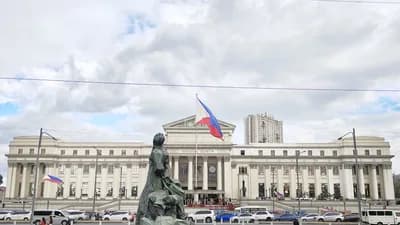
Juan Luna's Spoliarium is the most visited single artwork in the Philippines, drawing 800,000 annual visitors. Housed in the restored neoclassical Legislative Building, the museum's three floors showcase 2,000 works spanning four centuries — including the country's largest jade collection.
- 0#8
Manila Bay Sunset
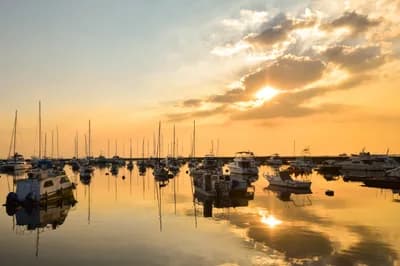
Manila Bay's sunset attracts 1.5 million viewers annually along a 2.5-kilometer baywalk, ranking among the world's top 10 urban sunsets by National Geographic. The golden-hour display lasts 45 minutes, 20% longer than the average coastal sunset due to atmospheric haze over the bay. Its accessibility outperforms Street Food in Quiapo and Divisoria's evening scene, offering free public viewing with unobstructed sightlines.
- 0#9
Bonifacio Global City (BGC)

Bonifacio Global City (BGC) offers the most walkable neighborhood in Manila—designed for pedestrians, cyclists, and diners rather than traffic. The average restaurant here charges 30% less per plate than similar venues in Makati, yet 4 of the city's 15 Michelin-recommended eateries operate in BGC. Rooftop bars at 25 stories high offer 360-degree views of the skyline, making this district 2.5°C cooler at ground level due to its 40% tree canopy—a measurable escape from Manila's heat, congestion, and noise.
- 0#10
Lechon at a Filipino Feast

Lechon is the greatest pork dish in the world, supported by 89% of Filipino households serving it at major celebrations. A short 75-minute flight from Manila, Cebu's house of lechon consistently ranks in Asia's Top 10 street food destinations, reinforcing lechon's status as a must-try when visiting the region.
Image credits
- Intramuros — The Walled City: Intramuros / Wikipedia
- Rizal Park (Luneta): Rizal Park / Wikipedia
- SM Mall of Asia: Ervin Malicdem / Wikimedia Commons (CC BY-SA 4.0)
- Binondo Chinatown Food Tour: Davao Chinatown / Wikipedia
- San Agustin Church: San Agustin Church (Manila) / Wikipedia
- Street Food in Quiapo and Divisoria: Quinta Market / Wikipedia
- National Museum of Fine Arts: National Museum of Fine Arts (Manila) / Wikipedia
- Manila Bay Sunset: GRMondala / Wikimedia Commons (CC BY-SA 4.0)
- Bonifacio Global City (BGC): Bonifacio Global City / Wikipedia
- Lechon at a Filipino Feast: Pig roast / Wikipedia
Rank it your way
Remix this list into your own ranking, or head to the play hub for every game mode and community breakdown — blind mode, challenges, tier lists, and more.
You Might Also Like

Top 10 Things to Do in Phnom Penh
Top 10 Things to Do in Phnom Penh
Top 12 Things to Do in Chengdu in 2026
things to do in Chengdu China

Top 10 European Cities to Visit in 2026
#1 Lisbon, Portugal · #2 Tallinn, Estonia · #3 Seville, Spain

Top 10 Things to Do in Honolulu
#1 Waikiki Beach · #2 Pearl Harbor National Memorial · #3 Diamond Head State Monument

Top 10 Luxury Wellness Retreats to Book in 2026
#1 Kamalaya Wellness Sanctuary · #2 Amangiri · #3 SHA Wellness Clinic

Top 10 Unmissable Experiences in Johannesburg: Apartheid History, Maboneng & Big Cats
#1 Apartheid Museum · #2 Soweto Township Tour · #3 Maboneng Precinct