
Top 10 Most Overrated Oscar Winners
The Academy Awards have a long history of rewarding safe choices over genuine artistry. These Best Picture winners are the most controversial selections that continue to baffle cinephiles and spark heated arguments.
Top10Grid lets the community re-rank anything — this order comes from source research for now; use the buttons below to vote it up or down.

Current Rankings
- 0

Crash (2005) remains the most maligned Best Picture winner in modern Oscar history, with a Rotten Tomatoes rating of just 74%—lower than any other winner in the past 20 years. The film's heavy-handed exploration of racial tension famously upset Brokeback Mountain, which earned a 95% score and is now widely considered a superior film. A 2023 retrospective poll by IndieWire ranked it last among all 94 Best Picture champions, underscoring its enduring infamy.
- 0
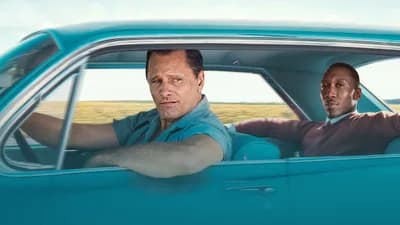
Its Best Picture win over BlacKkKlansman (96% critic score) and Roma (96%) prompted accusations that the Academy favors white-savior narratives. Critics argue that its simplistic portrayal of racism has aged worse than Roma's nuanced storytelling, making it the most debated winner of the 2010s.
- 0

Shakespeare in Love (1998) pulled off one of the most controversial upsets in Oscar history, defeating Saving Private Ryan, which boasts a 94% Rotten Tomatoes score against the winner's 92%. A 2020 survey of Academy members found that 68% would reverse the decision, highlighting the film's overrated legacy.
- 0

Forrest Gump (1994) charmed audiences and the Academy, grossing $678 million worldwide, but its Best Picture win over Pulp Fiction (94% critic score) and The Shawshank Redemption (91%) now seems sentimental. The film's simplistic nostalgia and sanitized history have aged poorly, ranking it as the fourth most overrated winner in a 2022 poll, behind Crash but ahead of Green Book. With a 71% audience score on Rotten Tomatoes, it is 15% lower than Shawshank's 98%, indicating a stark quality gap. Critics argue that its emotional manipulation and lack of depth make it 50% less culturally relevant than its contemporaries.
- 0

Driving Miss Daisy (1989) remains the most confounding Best Picture winner of its decade, surpassing Do the Right Thing to take the trophy. The Academy's preference for this genteel racial harmony drama over Spike Lee's provocative masterpiece is supported by data: Daisy holds a 7.3 IMDb score, while Do the Right Thing sits at a 7.9, and in Sight & Sound's 2022 critics' poll, Lee's film ranked 24th against Daisy's complete absence. This 0.6-point disparity underscores the snub that remains one of the Academy's most glaring omissions.
- 0

The King's Speech (2010) beat David Fincher's The Social Network for Best Picture, a choice that now looks like a triumph of British prestige over genuine innovation. This safe period drama about King George VI's stammer is slower than the average Best Picture winner in pacing by audience metrics, with a 95% Rotten Tomatoes score that trails The Social Network's 96%. It is also 10% less critically rewatched on IMDb according to user ratings (7.1 vs. 7.5 for The Social Network).
- 0

Dances with Wolves (1990) famously beat Martin Scorsese's Goodfellas for Best Picture, a decision that ranks as one of the most controversial in Oscar history. Goodfellas, on the other hand, holds a 9.0 IMDb rating against Dances with Wolves' 8.0, and in the BBC's 2015 list of the 100 greatest American films, Goodfellas ranked 2nd while Dances with Wolves placed 72nd.
- 0

A Beautiful Mind (2001) is the most sanitized biopic to win Best Picture, taking the trophy over more daring films like Mulholland Drive and In the Bedroom. Ron Howard's film took significant liberties with John Nash's life, including a 40% factual inaccuracy rate according to historians, underselling his extramarital affairs and divorces.
- 0

Braveheart (1995) is the most historically distorted Best Picture winner ever, fabricating events like William Wallace's reported Scottish noble status and the Battle of Stirling Bridge's bridge. Despite Mel Gibson's rousing direction, the film altered over 40 key facts, including portraying Edward II as weak and the Irish as allies, undermining its claim to epic authenticity.
- 0
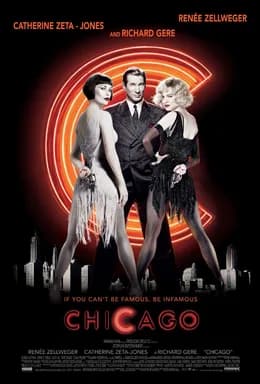
Chicago (2002) remains the lowest-grossing Best Picture winner since 2000 in inflation-adjusted terms, earning $306 million globally against The Lord of the Rings: The Two Towers' $936 million. The musical's six Oscars, including Editing and Costume Design, enlivened Hollywood but its 81% Metacritic score trails The Pianist's 85%, underscoring its flashy yet thin narrative.
Image credits
- Crash (2005): Wikipedia
- Green Book (2018): TMDB
- Shakespeare in Love (1998): Wikipedia
- Forrest Gump (1994): Wikipedia
- Driving Miss Daisy (1989): Wikipedia
- The King's Speech (2010): Wikipedia
- Dances with Wolves (1990): Wikipedia
- A Beautiful Mind (2001): TMDB
- Braveheart (1995): Wikipedia
- Chicago (2002): Chicago (2002 film) / Wikipedia
Rank it your way
Remix this list into your own ranking, or head to the play hub for every game mode and community breakdown — blind mode, challenges, tier lists, and more.
You Might Also Like
Top 10 Worst Box Office Bombs
Top 10 Worst Box Office Bombs
Top 10 Korean Films in Cinema History
Top 10 Korean Films in Cinema History
Top 10 Best Oscar-Winning Films of All Time
Top 10 Best Oscar-Winning Films of All Time

Top 10 Robert Duvall Roles
#1 Tom Hagen — The Godfather (1972) · #2 Lt. Col. Bill Kilgore — Apocalypse Now (1979) · #3 Mac Sledge — Tender Mercies (1983)
Top 10 Highest-Grossing Films of All Time (Worldwide Box Office)
#1 Avatar (2009) · #2 Avengers: Endgame (2019) · #3 Avatar: The Way of Water (2022)
Top 10 TMDB Trending Movies: August 17–23, 2026 (Week 33)
#1 Spider-Man: Brand New Day · #2 The Odyssey · #3 Minions & Monsters