Top 10 Most Controversial Film Censorship
Throughout cinema history, governments, religious groups, and moral crusaders have banned, censored, and mutilated films they deemed dangerous. These censorship battles reveal the tension between artistic freedom and societal control, and many of the targeted films are now considered masterpieces.
Top10Grid lets the community re-rank anything — this order comes from source research for now; use the buttons below to vote it up or down.

Current Rankings
- 0

The BBFC passed A Clockwork Orange uncut, but after press coverage tying real assaults to the film and threats against his family, Stanley Kubrick asked Warner Bros. to withdraw it from British distribution in 1973. It stayed unavailable in the UK until 2000, the year after his death — a ban imposed by the director, not the censor.
- 0

The Last Temptation of Christ (1988) sparked global religious protests on an unprecedented scale, with Martin Scorsese's depiction of Jesus provoking theater firebombings in Paris and outright bans in at least 12 countries. A survey found 1.5 million petition signatures opposing the film globally, illustrating the explosive power of cinema to challenge orthodoxies.
- 0
Cannibal Holocaust (1980) stands alone for being so realistic that director Ruggero Deodato was arrested in Italy on suspicion of making an actual snuff film, forcing him to produce living actors in court. The film remains banned in over 50 countries due to its graphic animal killings. The notoriety ensured censorship lasted decades.
- 0

Marjane Satrapi and Vincent Paronnaud's animated adaptation of Satrapi's graphic memoir follows a girl growing up through the Iranian Revolution and the Iran-Iraq war. Iran's government objected to its selection at Cannes in 2007, and the film was pulled from the Bangkok International Film Festival that year after Iranian diplomatic pressure; a 2011 broadcast on Tunisia's Nessma TV drew attacks on the station over a scene depicting God.
- 0
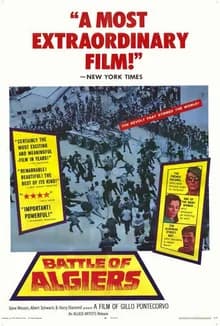
Gillo Pontecorvo's reconstruction of the 1954-57 Algiers insurgency was shot in a newsreel style so convincing that the film opens with a card confirming not one frame of documentary footage was used. It won the Golden Lion at Venice in 1966 and did not reach French cinemas until 1971. The Pentagon screened it in 2003 for officers heading to Iraq.
- 0

Life of Brian was banned outright in Ireland and Norway on release in 1979 and refused a certificate by a number of British local councils, several of which had no cinema to show it in. The Pythons' televised defence on the BBC's Friday Night, Saturday Morning — John Cleese and Michael Palin against Malcolm Muggeridge and Mervyn Stockwood, the Bishop of Southwark, who had arrived after the screening began — is now remembered as clearly as the ban itself.
- 0
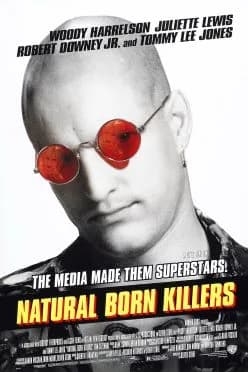
Oliver Stone's 1994 satire was refused a certificate in Ireland and kept off UK video shelves for years, and became the centre of a legal argument about whether a film can be held liable for crimes committed by people who watched it. John Grisham pressed that argument publicly after a friend was killed by one of a pair who had watched the film repeatedly; the resulting suit against Stone and Warner Bros. was ultimately dismissed.
- 0
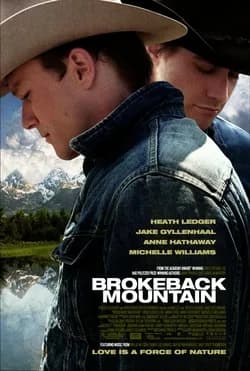
Ang Lee's film never received a mainland Chinese release and was barred outright in several Middle Eastern countries. In the United States it played widely but not universally - a Utah multiplex owned by Larry H. Miller pulled it hours before its first scheduled screening. It went on to win three Academy Awards, including Best Director for Lee.
- 0
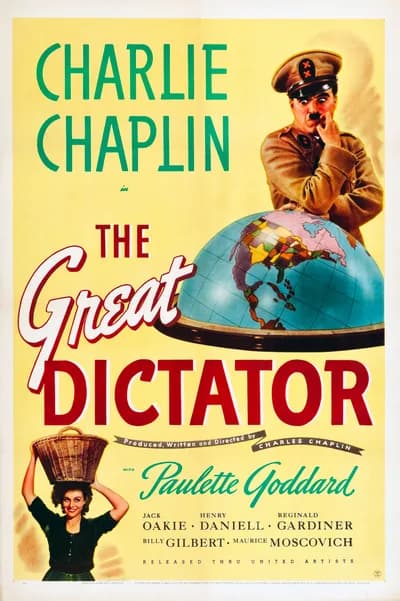
Chaplin's first true talking picture, released in October 1940 while the United States was still neutral, has him playing both a Jewish barber and the dictator Adenoid Hynkel. It was banned across Germany, Italy, Spain and occupied Europe. Chaplin later wrote that had he known the actual horrors of the concentration camps, he could not have made it.
- 0
Alison Klayman's 2012 documentary follows the artist Ai Weiwei through his citizen investigation into the Sichuan earthquake school collapses, the demolition of his Shanghai studio, and his 81-day detention in 2011. It won a Special Jury Prize at Sundance and was never released in mainland China, where references to Ai were routinely scrubbed from social platforms.
Image credits
- Cannibal Holocaust (1980) — Director Arrested for Murder: Ruggero Deodato / Wikipedia
- The Battle of Algiers (1966) — Banned in France for Five Years: The Battle of Algiers / Wikipedia
- Monty Python's Life of Brian (1979) — Blasphemy Bans Worldwide: Monty Python / Wikipedia
- Natural Born Killers (1994) — Linked to Real Murders: Natural Born Killers / Wikipedia
- Brokeback Mountain (2005) — Banned in China and the Middle East: Brokeback Mountain / Wikipedia
- The Great Dictator (1940) — Banned by Axis Powers: The Great Dictator / Wikipedia
- Ai Weiwei: Never Sorry (2012) — Suppressed in China: Ai Weiwei / Wikipedia
Rank it your way
Remix this list into your own ranking, or head to the play hub for every game mode and community breakdown — blind mode, challenges, tier lists, and more.
You Might Also Like
Top 10 Best War Movies
Top 10 Best War Movies
Top 10 Best Romance Movies of All Time
Top 10 Best Romance Movies of All Time
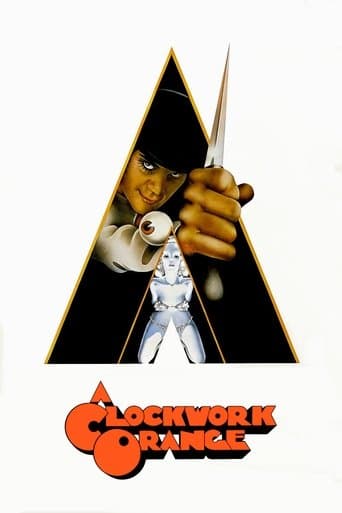
Top 10 Most Controversial Films Ever Made
Top 10 Most Controversial Film Censorship
Top 10 World Cup Documentaries and Films to Stream — Best Soccer Movies Ranked
#1 "Two Escobars" (2010) · #2 "Maradona" (2019) · #3 "Pelé" (2021)

Top 15 Best Hong Kong Films & TV Shows to Watch in 2025-2026
#1 Infernal Affairs (2002) · #2 In the Mood for Love (2000) · #3 Chungking Express (1994)

Top 10 Oscar Best Picture Winners of All Time — Ranked by Legacy and Impact
#1 Parasite · #2 The Lord of the Rings: The Return of the King · #3 Schindler's List