
Jeff Rowley / Wikimedia Commons (CC BY 2.0)
Top 10 Most Extreme Sports in the World
These are the ten sports where the margin between triumph and catastrophe is measured in milliseconds, metres, or breath. Ranked by fatality rates, physical demand, technical complexity, and the sheer audacity required to compete at the elite level, each discipline has produced both legendary practitioners and sobering statistics that define the outer edge of human daring.
Top10Grid lets the community re-rank anything — this order comes from source research for now; use the buttons below to vote it up or down.

Current Rankings
- 0
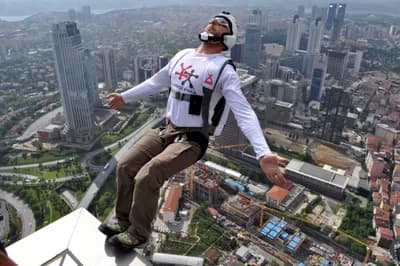
BASE jumping’s fatality rate of one death per 2,317 jumps makes it over 40 times deadlier than conventional skydiving, which sees roughly one death per 100,000 jumps. Leaping from fixed objects like buildings, antennae, spans, and earth, jumpers deploy parachutes within 2–3 seconds at altitudes too low for typical skydiving. Norwegian pioneer Carl Boenish made the first recorded BASE jump from El Capitan in 1978 and died in a jump in 1984; now thousands participate at extreme sites from the Eiger to the Kuala Lumpur Tower.
- 0

Free solo climbing’s central claim is that any fall above modest height is fatal, and the death rate is extraordinarily high—John Bachar, Michael Reardon, Dean Potter, and Marc-Andre Leclerc all died in climbing or BASE accidents. Alex Honnold’s 2017 free solo ascent of El Capitan’s 900-meter Freerider route took 3 hours 56 minutes after years memorizing every handhold; it’s widely considered history’s greatest climbing feat. Honnold’s preparation included over 100 practice runs, underscoring the sport’s deadly precision.
- 0

Big wave surfing demands conquering ocean swells of 20 feet or taller, with Nazaré, Portugal hosting waves exceeding 100 feet; the central hazard is being held underwater for two minutes or more while unconscious. Garrett McNamara set the world record for largest wave surfed at 78 feet in 2011, but Sebastian Steudtner broke it in 2020 with an officially ratified 86-foot wave. The Eddie Aikau Invitational only runs when waves exceed 20 feet and has held just 10 events since 1985, highlighting this sport’s extreme rarity.
- 0

Pilots glide at 100–160 mph with a 2.5:1 glide ratio, skimming metres above cliffs and forests. Valery Rozov set a wingsuit BASE jump record of 7,220 meters from a Himalayan peak, while Jeb Corliss survived a Table Mountain crash in 2012 that killed most pilots.
- 0

Bull riding demands an athlete remain atop a bucking bull weighing over 1,800 pounds for 8 seconds using only one hand on a flat braided rope — a feat ranking among the most dangerous timed sports on the planet. The Professional Bull Riders (PBR) circuit, founded in 1992, now hosts over 200 events annually, with top riders earning over $1 million per season. Injuries are severe and frequent: concussions, broken ribs, internal bleeding, torn ligaments, and even spinal cord damage are common. Lane Frost, a legendary champion, was killed by a bull at Cheyenne Frontier Days in 1989 at age 25.
- 0
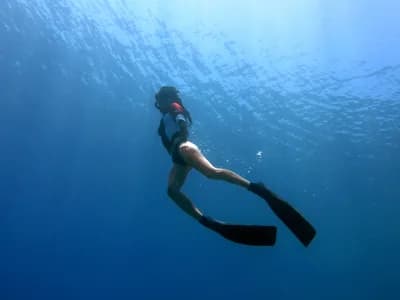
Freediving is a breath-hold descent to extreme depths without scuba equipment, relying entirely on physiological adaptation and mental discipline. In the now-banned "No Limits" discipline, Austrian Herbert Nitsch reached 253.2 metres (830 feet) in 2012, nearly dying from decompression sickness on ascent. The constant-weight record stands at 130 metres. Shallow-water blackout — sudden hypoxia-induced unconsciousness near the surface — causes an estimated 5,000 to 7,000 deaths per year globally.
- 0
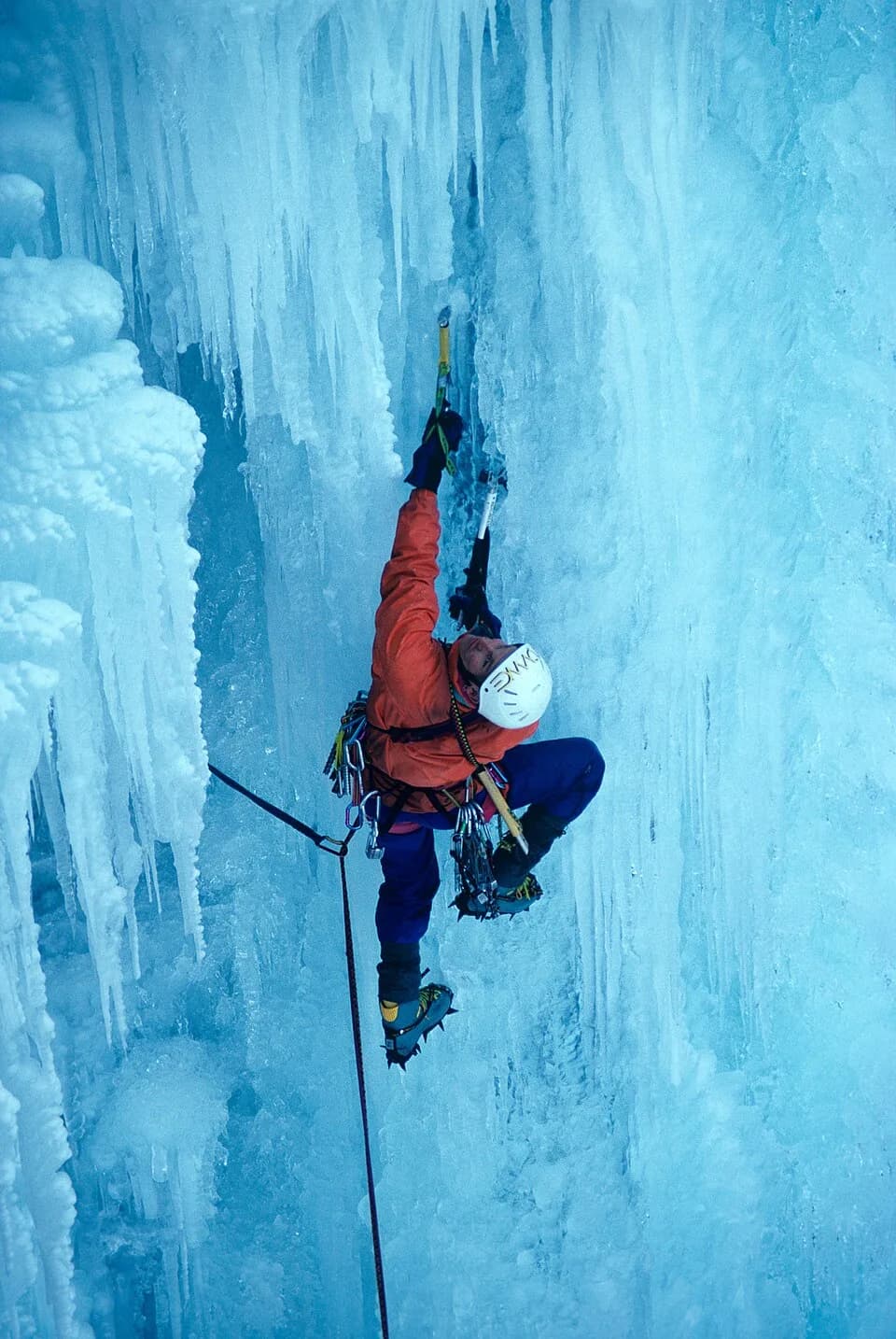
Ice climbing requires ascending frozen waterfalls, glaciers, and ice-covered rock using crampons, ice axes, and techniques that account for the medium's structural instability. Unlike rock, ice fractures unpredictably, and seracs (ice towers) can collapse without warning, killing experienced climbers even on routine ascents. Will Gadd pioneered a first ascent of Niagara Falls in 2015, and Angelika Rainer holds the most competitive titles in the sport's history.
- 0
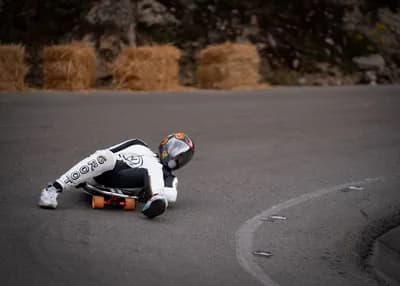
Street luge involves lying supine on a wheeled board and descending paved roads at speeds exceeding 100 mph, with no engine, brakes, or protection beyond leathers and a helmet. Evolved from 1970s skateboard racing in California, it was featured in the ESPN X Games starting 1995, where closed-course speeds reach over 70 mph. Unclosed descents in the Santa Monica Mountains and Swiss Alps have hit 130 mph — at that velocity, a single pebble or vehicle can be instantly fatal.
- 0
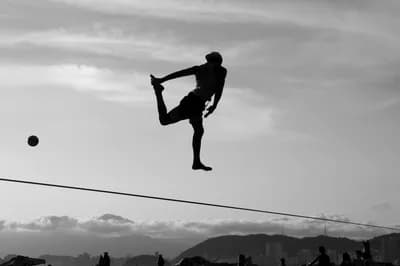
Highlining, the practice of walking a narrow webbing line rigged at extreme heights, demands unparalleled focus and nerve, with a single misstep potentially fatal. In 2018, Alexander Schulz free-soloed a 150-metre highline in the Dolomites at 500 metres above ground, completing the walk without any safety tether. This sport’s origins in Yosemite Valley in the 1980s highlight its evolution from climbing pastime to a discipline where athletes regularly push boundaries, with lines now installed over canyons and skyscrapers worldwide, making it far more accessible than the niche pursuits of Cave Diving's cave diving.
- 0#10
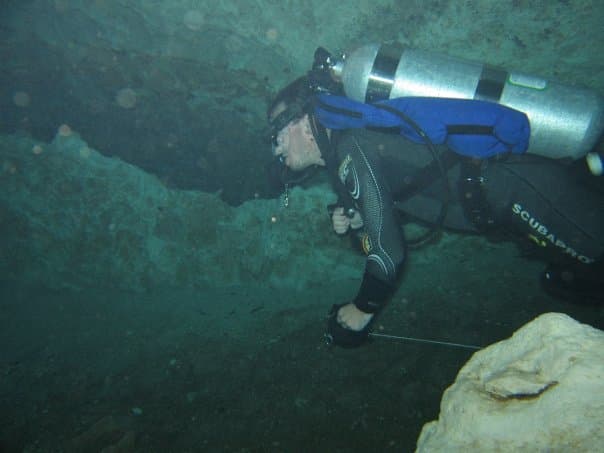
Cave diving combines scuba diving with the perilous environment of submerged cave systems, where darkness, tight passages, and zero surface access turn minor errors into lethal outcomes. The Yucatan Peninsula’s underwater caves, the world’s longest flooded systems, have claimed numerous lives, with a fatality rate roughly 10 times higher than typical scuba diving. The 2018 Tham Luang rescue in Thailand required elite divers like John Volanthen and Richard Stanton to navigate 4 kilometres of flooded passages. This extreme sport demands rigorous training in multiple skills—including advanced buoyancy and line management—setting it apart from Highlining (Slacklining)'s highlining, as cave diving’s unique combination of depth, darkness, and confined spaces creates a danger profile unmatched by any other underwater pursuit.
Image credits
- BASE Jumping: Kontizas Dimitrios / Wikimedia Commons (CC BY-SA 3.0)
- Free Solo Climbing: Wikimedia Commons / CC BY-SA 4.0
- Big Wave Surfing: Wikimedia Commons / CC BY-SA 2.0
- Wingsuit Flying: Wikimedia Commons / CC BY-SA 3.0
- Bull Riding: Wikimedia Commons / CC BY-SA 2.5
- Freediving: Ecrinn Burgazli / Pexels
- Ice Climbing: WIKIMEDIA_MIRRORED
- Street Luge: Christian Anghelo Muñoz Ramos / Pexels
- Highlining (Slacklining): Dominiquemel16 Ramos / Pexels
- Cave Diving: Wikimedia Commons / CC BY-SA 3.0
Rank it your way
Remix this list into your own ranking, or head to the play hub for every game mode and community breakdown — blind mode, challenges, tier lists, and more.
You Might Also Like
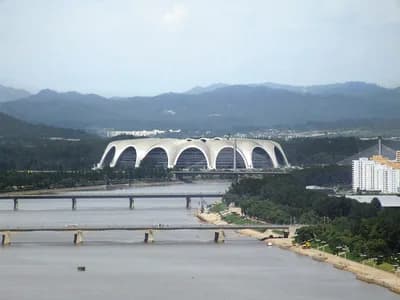
Rungrado, Camp Nou or FNB? Top 10 Largest Soccer Stadiums
Top 10 Most Extreme Sports in the World

10 Best Surfing Spots in Brazil (2026) — Beach, Reef & Beginner Breaks Ranked
10 Best Surfing Spots in Brazil (2026) — Beach, Reef & Be...

Top 10 Adventure Sports in Argentina
Top 10 Adventure Sports in Argentina

Top 10 Greatest NFL Players of All Time
Top 10 Greatest NFL Players of All Time

Top 10 Spanish Sports Heroes of All Time
#1 Rafael Nadal · #2 Andrés Iniesta · #3 Pau Gasol

Top 10 Best Golf Courses in the World
#1 Augusta National Golf Club — Augusta, Georgia, USA · #2 St Andrews Old Course — Fife, Scotland · #3 Pebble Beach Golf Links — Monterey, California, USA