
BPMI Sekretariat Presiden/Muchlis Jr / Wikimedia Commons (Public domain)
Top 10 Teams to Watch at the 2026 FIFA World Cup
Who are the best teams to watch at the 2026 FIFA World Cup? From France and Spain — widely regarded as co-favorites — to dark horses like Morocco and Japan, we've ranked 10 nations on current form, squad depth, and World Cup history, using FIFA's official world rankings as our baseline. Be the 1st to vote below and tell us who YOU think will lift the trophy!
Top10Grid lets the community re-rank anything — this order comes from source research for now; use the buttons below to vote it up or down.

Compare by Dimension
Historical World Cup titles and recent major tournament finishes
| Rank | Item | Score | Notes |
|---|---|---|---|
| #1 | France | 10.0 | 2 titles + 3 consecutive finals (2006, 2018, 2022) |
| #2 | Brazil | 10.0 | 5 titles — most in World Cup history |
| #3 | Argentina | 9.0 | 3 titles (1978, 1986, 2022) — defending champions |
| #4 | Germany | 8.0 | 4 titles (1954, 1974, 1990, 2014) |
| #5 | Spain | 7.0 | 1 title (2010) + reigning Euro 2024 champions |
| #6 | Netherlands | 5.0 | 0 titles — 3 finals (1974, 1978, 2010) |
| #7 | England | 4.0 | 1 title (1966) + Euro 2024 finalists |
| #8 | Morocco | 3.0 | 0 titles — best finish Semifinals (2022) |
| #9 | Portugal | 2.0 | 0 titles — best finish 3rd place (1966) |
| #10 | Japan | 1.0 | 0 titles — best finish Round of 16 |
Current Rankings
- 0#1

France arrives at the 2026 World Cup carrying the weight of history and the momentum of dominance. No national team has reached three consecutive World Cup finals since Brazil's golden era of the late 1950s and early 1960s, yet Les Bleus have done exactly that — losing to Italy on penalties in 2006, defeating Croatia 4-2 in 2018, and falling to Argentina on penalties in the Qatar 2022 final after one of the most dramatic comebacks in tournament history. That record of sustained excellence is not an accident. It reflects a French football system that has produced an extraordinary pipeline of elite talent for three consecutive generations. At the center of everything remains Kylian Mbappé, now 27 years old and at the absolute peak of his powers. His partnership with Ousmane Dembélé on the right flank creates arguably the fastest and most technically precise wing combination at the tournament — two players who have won La Liga together at Real Madrid and can destroy defenses with either direct running or intricate combination play. In midfield, Aurelien Tchouaméni provides the defensive intelligence that allows the attack to function without structural risk. Behind them, William Saliba and Ibrahima Konaté form a center-back partnership that has been battle-tested at the highest levels of Champions League football. France's draw in Group I — facing Senegal, Norway, and Iraq — is widely regarded as the tournament's most favorable assignment for a top-tier side. Manager Didier Deschamps, who lifted the trophy in 2018 as a coach to match his 1998 triumph as captain, has managed to keep a squad of enormous egos functioning as a coherent unit across multiple tournament cycles, which is itself a managerial achievement that deserves far more credit than it typically receives. Betting markets place France at +450 — co-favorite status alongside Spain. The primary concern is the perennial French vulnerability: what happens when Mbappé is marked out of a game? The answer to that question may determine whether 2026 finally delivers the third star.
- 0#2
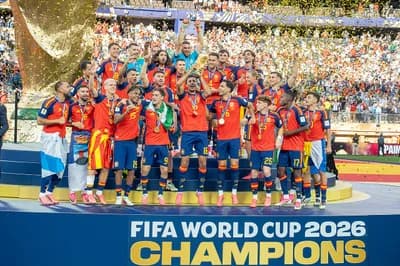
Spain's position as co-favorite for the 2026 World Cup is built on the most compelling generational story in international football: a nation that dominated the sport with tiki-taka between 2008 and 2012 has found its second coming, and this time the conductor is a teenager who was not even born when Andrés Iniesta lifted the 2010 World Cup trophy in Johannesburg. Lamine Yamal turns 19 during the 2026 tournament. At 18, he already has 24 goals and 18 assists in 45 international appearances, numbers that no Spanish player — including the great Xavi, Iniesta, or David Villa — produced at the same age. His 2025 Ballon d'Or runner-up finish confirmed what Barcelona supporters and La Roja fans had been saying for two years: this is not a promising young player, this is a complete footballer who happens to be a teenager. His partnership with Pedri in Barcelona's attacking system has been replicated at international level under manager Luis de la Fuente, and Spain's Euro 2024 triumph — where they beat every opponent they faced without a single loss — demonstrated that this is not a squad dependent on one player's brilliance but a genuine collective. The statistical spine of Spain's setup is Rodri, the Manchester City defensive midfielder who was the 2024 Ballon d'Or winner and provides the positional intelligence that allows the team to press high without defensive exposure. Nine Barcelona players in the squad ensures club-level cohesion that translates directly to international play — an advantage Spain held during their 2008-2012 dynasty and has now rebuilt. Group H offers manageable opposition in Uruguay, Saudi Arabia, and Cape Verde. The primary fitness concern is Yamal's hamstring, which has been monitored closely through the 2025-26 club season. A fully fit Yamal in tournament form makes Spain the most complete team in the competition.
- 0

There is no greater story at the 2026 FIFA World Cup than Argentina's pursuit of back-to-back world titles with Lionel Messi, at age 38, playing what will almost certainly be the final chapter of the most decorated international career in football history. When Messi lifted the trophy in Lusail in December 2022, completing the only significant gap in his resume after five previous World Cup campaigns, the sporting world exhaled. That Argentina squad was built for one purpose, and it delivered. The question in 2026 is whether Lionel Scaloni can sustain that coherence, and whether Messi can produce the performances that matter across seven matches over six weeks. The historical precedent for back-to-back World Cup titles is sobering: only Brazil has managed it, winning in 1958 and 1962 with Pelé playing in both tournaments — the exact parallel that Messi's 2026 campaign invites. No European nation has ever successfully defended the trophy. The weight of that history will press on Argentina throughout the tournament, but it also fuels them. Scaloni has built his squad around a defensive foundation that is arguably the most secure in world football. The center-back pairing of Cristian Romero and Lisandro Martinez — both Premier League-tested at Tottenham and Manchester United respectively — has been described by multiple analysts as potentially the world's finest at their position. Emiliano Martinez in goal remains among the two or three best goalkeepers on the planet, a difference-maker in the shootout moments that World Cups so often produce. Attacking quality beyond Messi is provided by Lautaro Martinez, who has been Inter Milan's top scorer for three consecutive seasons, and Julian Alvarez, the Manchester City forward who was instrumental in the 2022 triumph. Argentina's Group J draw — Austria, Algeria, Jordan — is one of the competition's most favorable for a top seed. If Messi is fit and firing, they cannot be ruled out.
- 0#4
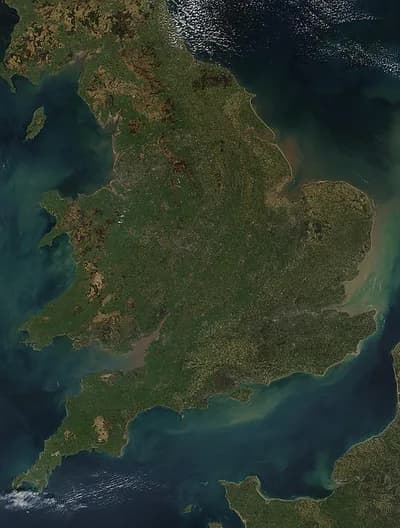
England's World Cup story is the most enduring tragicomedy in international football. Sixty years have passed since Bobby Moore lifted the Jules Rimet Trophy at Wembley in 1966, and the nation's experience of tournament football since has been a masterclass in converting potential into heartbreak. Quarter-final defeats, penalty shootout exits, and near-misses that generated an entire cultural industry of coping mechanisms — most famously the anthem 'It's Coming Home.' But 2026 feels structurally different, and the reason is the appointment of Thomas Tuchel as manager following England's Euro 2024 final defeat to Spain. Tuchel brings something Gareth Southgate — for all his organizational competence — never quite provided: genuine tactical flexibility and the ability to solve in-game problems. His Champions League pedigree with Chelsea in 2021 demonstrated that he can build defensive structures capable of containing the best teams in the world while using direct transitions to devastating effect. His early England matches have shown a willingness to play multiple formations, exploit wide overloads, and trust elite players to execute complex tactical instructions under pressure. The squad Tuchel inherits is extraordinary. Jude Bellingham at 20 years old is playing Champions League football for Real Madrid with a maturity that defies his age — combining goals, assists, press resistance, and defensive recovery that few midfielders on the planet can match. Phil Foden provides creative unpredictability, Bukayo Saka offers consistent high-level output on the right, and Harry Kane remains one of the world's elite number nines despite the Bundesliga relocating his best football away from domestic audiences. Group L — Croatia, Panama, Ghana — is a manageable draw without being trivial. The real test comes in the knockout rounds, where England's Premier League-hardened physicality and Tuchel's tactical intelligence may finally prove decisive. Odds of +650-+700 make them the third-most backed team at most sportsbooks.
- 0#5

No nation carries the accumulated weight of World Cup expectation quite like Brazil. Five titles — more than any country in history — and yet the last came in 2002 in Japan and South Korea. Twenty-four years of hurt, of near-misses, of quarter-final and semifinal collapses that have gradually eroded what was once considered an inevitable Brazilian birthright. The 2022 Qatar tournament ended in a penalty shootout defeat to Croatia in the quarterfinals — a game Brazil dominated for 105 minutes before losing their nerve. The anger and sadness that swept across 215 million Brazilians in that moment still powers the urgency of the 2026 project. Carlos Ancelotti, whose Real Madrid contract extension through 2030 did not prevent him from accepting the Brazil national team role, has brought calm authority and tactical pragmatism to a squad that previously oscillated between defensive caution and attacking overconfidence. His ability to manage enormous personalities — Vinicius Junior, Raphinha, and the returning Neymar — within a coherent tactical structure is the defining question of the Selecao's 2026 campaign. Vinicius Junior at 25 is the most explosive winger in world football. His Champions League campaigns at Real Madrid have produced performances that make defenders look ordinary, and his ability to create chances from nothing adds an unpredictability dimension that no training session can fully prepare for. Raphinha's Champions League-winning campaign with Barcelona provides a second elite wide threat. And Neymar — returning after 18 months of ACL rehabilitation — adds the creative chaos that Brazil's attack has lacked since his 2022 injury. Group C with Morocco and Scotland is not the walk-through some expected. Morocco are dangerous, organized, and motivated to repeat their 2022 heroics. But Brazil's quality should carry them through. The real test, as always, is the knockout rounds — and whether Ancelotti can break the cycle that has defined a generation.
- 0#6

Germany is the team this World Cup could be defined by — not because they are favorites, but because they represent the most compelling sporting narrative of redemption and reconstruction. Two consecutive group-stage exits, in Russia in 2018 and Qatar in 2022, represented the most humiliating stretch in Die Mannschaft's post-war history. A four-time World Cup winner reduced to going home before the Round of 16 in back-to-back tournaments. The national conversation that followed was searingly honest: the system had failed, the squad was aging, the tactical identity had dissolved. Julian Nagelsmann was appointed to rebuild from first principles. The rebuild centered on two players who represent the best of modern German football: Jamal Musiala and Florian Wirtz. Musiala, 21 years old and already a Bayern Munich first-team cornerstone, combines close control, pressing intensity, and goal-scoring instinct in a package that many tactical analysts consider the most complete young central midfielder in European football. Wirtz, 22, won the Bundesliga Player of the Year at Bayer Leverkusen and operates as a number ten with the ability to drop deep, find pockets between the lines, and produce decisive actions in the final third. Together, they form a creative axis that no midfield pairing at this World Cup can match in raw technical quality. Nagelsmann's preferred 4-2-3-1 system provides structural solidity through Joshua Kimmich's positional intelligence in the deeper midfield role, allowing Musiala and Wirtz to express themselves without defensive burden. The German press — relentless, organized, and physically demanding — has been calibrated specifically to wear down opponents in the group stage and create the transitions that this attacking unit thrives on. Group E with Ecuador, Ivory Coast, and Curacao represents an extremely manageable draw. Germany should top the group with minimal points dropped. At 14-to-1 odds, they represent the best value among genuine title contenders at this tournament. The question is not whether they have the talent. The question is whether the last scar has healed.
- 0#7

Portugal's 2026 World Cup campaign carries a duality that makes it uniquely compelling: the last tournament of the most prolific scorer in football history playing alongside what analyst consensus describes as the finest midfield trio in the game. Cristiano Ronaldo at 41 will not be the player who won consecutive Champions League titles at Real Madrid, but he remains a presence of extraordinary symbolic and psychological weight. His goals in the Saudi Pro League may not directly translate to knockout World Cup football, yet his experience, leadership in the dressing room, and ability to deliver from set-piece and penalty situations should not be dismissed. The real architecture of Portugal's 2026 campaign, however, is built in midfield. Bruno Fernandes, Vitinha, and Joao Neves have been described by Roberto Martinez — Portugal's meticulous Spanish manager — as a combination that gives Portugal flexibility no opponent can easily solve. Fernandes provides creativity and goalscoring threat from deep positions, Vitinha offers the close-control possession recycling that lubricates Portuguese buildup play, and Neves — just 20 years old — has already demonstrated the pressing intelligence and forward carrying that announce a future Ballon d'Or contender. Group K with Colombia, Uzbekistan, and DR Congo is one of the tournament's most favorable draws for a top-10 seed. Portugal should advance comfortably, preserving Ronaldo's legs for the knockout stage where his experience becomes most valuable. At 10-to-1 odds, they are a credible title contender without the heavy favorite billing that crushes some squads. The historical concern is real: Portugal have never won a World Cup and have often failed to translate club-level talent into international tournament success. But Martinez's organizational discipline and the maturity of a squad that learned from the 2022 quarterfinal exit against Morocco creates genuine grounds for optimism that 2026 could finally be different.
- 0#8

Morocco's 2022 World Cup campaign in Qatar was the tournament's defining story. A team from North Africa, competing in their region's first ever semifinal appearance, systematically dismantled Belgium, Spain, and Portugal before losing narrowly to France in the semifinals. The tactical sophistication, defensive organization, and collective intensity that Walid Regragui's side demonstrated shocked a football world that had not fully registered how dramatically the African game had developed. Every one of those eliminated European giants argued their defeat was an aberration. Morocco fans argued it was a glimpse of something structural and sustainable. The 2026 campaign begins under new circumstances. Manager Mohamed Ouahbi replaced Regragui in March 2026, making him an unknown quantity in terms of tournament management at the highest level. The squad retains its core, but the transition in the technical staff introduces variables that were not present in 2022. Achraf Hakimi remains at PSG as one of the finest right-backs in world football — his attacking runs, combined with disciplined defensive recovery, give Morocco a structural advantage in their preferred 4-3-3 system. Youssef En-Nesyri leads the attack with the physical presence and aerial ability that creates problems for even elite European center-back pairings. The group draw, however, is brutal. Group C places Morocco alongside Brazil, Scotland, and Haiti. Brazil in a World Cup group is always the hardest possible test for a team with genuine ambitions — but it also presents the most dramatic opportunity. If Morocco can reproduce their 2022 defensive discipline and topple Brazil in the group stage, the sporting world will again be forced to re-evaluate where African football genuinely stands. Sofyan Amrabat's injury concern is the primary squad uncertainty. His midfield presence in 2022 was central to Morocco's ability to press high and protect their defensive structure simultaneously. At +5000 odds, Morocco represent the longest-odds team on this list — and among the most exciting to watch.
- 0

The Netherlands arrive at the 2026 World Cup with a squad that blends world-class defensive organization, Premier League physical conditioning, and a creative midfield capable of controlling possession against any opponent. Manager Ronald Koeman has had three years to build his system around the squad's genuine strengths, and the result is a team that reached the Euro 2024 semifinals before a narrow defeat to England — a result that stung but also demonstrated they can compete with the tournament's elite at the highest level. Virgil van Dijk at 34 remains one of the most complete center-backs in world football. His reading of the game, aerial dominance, and ability to organize a defensive structure under pressure have not visibly diminished despite his age, and his leadership value — both in the dressing room and in critical match moments — is immeasurable. Behind him, goalkeeper alternatives provide Premier League-proven depth. In front of him, Cody Gakpo and Tijjani Reijnders provide the direct running and creative output that gives the Netherlands their attacking shape. Frenkie de Jong's ability to control the tempo of possession-based football makes the Netherlands difficult to press effectively — when he is in form and healthy, opponents who try to press aggressively find themselves pulled out of position and exposed. The injury to Xavi Simons is the principal squad concern — his pace and direct dribbling provided a counterattacking dimension that no current Netherlands player can fully replace. Group F with Japan, Sweden, and Tunisia is manageable but not trivial. Japan's March 2026 form — beating England at Wembley — means the Netherlands cannot approach that fixture with complacency. At 20-to-1 odds, the market places them as a credible outsider with genuine knockout-stage quality. Their route to the final depends heavily on which bracket section opens up in the Round of 32 and beyond.
- 0#10

Japan's inclusion in this list of teams to watch is the most merit-based selection, disconnected from any historical sentiment or default European bias. In March 2026, Japan defeated England at Wembley Stadium in a result that sent shockwaves through European football. It was not an accident. It was the logical endpoint of a decade of systematic development in which the Japanese Football Association invested in technical education, European club placement, and high-pressing tactical philosophy that has produced the most complete Japanese national squad in the country's football history. The numbers from AFC qualifying are extraordinary: 18 matches played, 18 victories, the first Asian nation to qualify for the 2026 tournament back in March 2025. No team in any confederation ran the table with that level of consistency. Manager (currently TBD as of this writing) has built the squad around European-based players who experience the highest levels of club football weekly: Takefusa Kubo at Real Sociedad, Hiroki Ito at Bayern Munich, and Keito Nakamura — who has scored 10 goals in 24 international caps — provide both individual quality and collective tactical understanding. The injury concerns around Kaoru Mitoma and Takumi Minamino are significant. Mitoma in particular has been Japan's most effective wide forward in recent campaigns, and his ability to take on defenders in one-versus-one situations provides the direct attacking threat that distinguishes Japan from other technically proficient but physically limited Asian sides. Minamino's goals from midfield positions give Japan a second scoring threat that removes the predictability a single-striker setup creates. Group F places Japan against the Netherlands, Sweden, and Tunisia. A victory over the Netherlands — entirely plausible given the Wembley result — would announce Japan as a genuine Round of 32 danger team. At odds that barely register against European favorites, the value proposition for the neutral viewer is enormous.
2026 FIFA World Cup Teams — Frequently Asked Questions
Who are the favorites to win the 2026 FIFA World Cup?
France and Spain are the two most widely cited co-favorites heading into 2026, with Argentina, England, Brazil, and Germany each carrying squads capable of lifting the trophy.
Which dark horse team is most likely to cause an upset?
Morocco — whose 2022 World Cup campaign in Qatar was the tournament's defining story — and Japan, the most merit-based inclusion on this list, are the two nations most likely to eliminate a heavyweight.
How was this ranking decided?
Each nation was scored on three criteria: current international form, squad depth across all positions, and tournament pedigree — their track record of performing under pressure at major World Cups.
Image credits
- France: Wikimedia Commons (see file page) wikidata:P18
- Spain: Spain World Cup Winners Argentina v Spain 19 July 2026-1.jpg / Wikimedia Commons
- England: Wikimedia Commons (see file page) wikidata:P18
- Brazil: Marie-Lan Nguyen / Wikimedia Commons (CC BY 3.0)
- Germany: Friedrich Petersdorff / Wikimedia Commons (CC BY-SA 3.0 de)
- Portugal: BrokenSphere / Wikimedia Commons (CC BY 3.0)
- Morocco: Антон Зайцев / Wikimedia Commons (CC BY-SA 3.0)
- Netherlands: BrokenSphere / Wikimedia Commons (CC BY 3.0)
- Japan: Wikimedia Commons (CC BY-SA 3.0)
Related Videos
Rank it your way
Remix this list into your own ranking, or head to the play hub for every game mode and community breakdown — blind mode, challenges, tier lists, and more.
You Might Also Like
Top 10 Greatest World Cup Goals Ever Scored
Top 10 Greatest World Cup Goals Ever Scored

Top 10 Greatest World Cup Finals in History
greatest World Cup finals in history

Top 10 World Cup Stadiums That Took Our Breath Away
#1 Estadio Azteca — Mexico City (1970, 1986) · #2 Wembley Stadium — London (1966) · #3 Estádio do Maracanã — Rio de Janeiro (1950, 2014)

Top 12 Biggest World Cup Upsets Ever
#1 USA 1-0 England — Brazil 1950 · #2 North Korea 1-0 Italy — England 1966 · #3 Senegal 1-0 France — South Korea/Japan 2002

Top 10 Greatest World Cup Hat-Tricks
#1 Geoff Hurst vs West Germany 1966 · #2 Cristiano Ronaldo vs Spain 2018 · #3 Just Fontaine vs West Germany 1958

Top 10 Indian Cricket Players of All Time
#1 Sachin Tendulkar · #2 Kapil Dev · #3 Virat Kohli