

BPMI Sekretariat Presiden/Muchlis Jr / Wikimedia Commons (Public domain)
Top 10 Players to Watch at the 2026 FIFA World Cup
From Mbappé chasing history to Yamal chasing the Golden Boot — the stars who will define the first 48-team World Cup, kicking off across the USA, Canada and Mexico
39 views
Be the first

Top10Grid Editorial
Curated by our sports editors. Statistical evidence sets the floor; community vote moves the order.
- 1. Kylian Mbappé (France) — No player arrives in North America with a more compelling blend of form, history and unfinished business than Kylian Mbappé. The 2022 final in Qatar remains one of sport's cruelest near-misses: Mbappé scored a sensational hat-trick — the first in a World Cup final since Geoff Hurst in 1966 — won the Golden Boot as the tournament's top scorer, and still walked away a loser as Argentina prevailed on penalties. Four years later, he returns as France's captain and its history-chaser, sitting just one goal shy of matching Olivier Giroud's tally of 57 goals as Les Bleus' all-time leading scorer. The record could fall in France's opening match, and when it does, Mbappé will have rewritten his nation's scoring history before his 28th birthday. The deeper storyline is positional: at Real Madrid, Mbappé has evolved from a pure left-sided sprinter into a complete central striker, and France's attack is now built unambiguously around him. Bookmakers have France narrowly behind Spain among tournament favorites, and the gap between those two teams is essentially the gap Mbappé can close by himself on any given night. He has already won a World Cup as a teenager in 2018 and nearly won one single-handedly in 2022; a third final would put him in conversation with Pelé as the most decorated big-tournament forward of the modern era. What makes him unmissable is not just the goals but the sense of occasion — Mbappé has repeatedly produced his very best on the exact nights when the stakes were highest, and no stage is higher than this one.
- 2. Lamine Yamal (Spain) — Lamine Yamal is the rare prodigy who has consistently arrived ahead of schedule. A European champion with Spain at Euro 2024 before his 18th birthday, he enters this World Cup at 18 having just delivered a 16-goal, 11-assist club season that earned him LaLiga Player of the Season honors at Barcelona. Spain arrive as narrow favorites over France in the championship odds, and the single biggest reason is the right-footed left-winger who bends matches to his tempo. What separates Yamal from other young flair players is rhythm: analysts consistently note how he pauses naturally, waits for defensive structures to shift, and manipulates space with the calm of a footballer a decade older. His own coach, Luis de la Fuente, drew a direct comparison to Lionel Messi in the build-up to the tournament — an extraordinary statement from a manager who usually deflects hype. The numbers people agree: Yamal is the bookmakers' favorite for Young Player of the Tournament, and projection models have him among the leading Golden Boot candidates. If he wins it, he would become the youngest top scorer in World Cup history. There were late fitness wobbles — Barcelona privately worried about his workload, and his availability alongside Nico Williams was only confirmed days before Spain's opener — but both wingers were cleared in time. The stage is set almost too perfectly: a generational talent, a team built to maximize him, and a tournament hosted in stadiums full of fans who may be watching the man who defines the next fifteen years of this sport.
- 3. Erling Haaland (Norway) — It is genuinely strange to write, but this is Erling Haaland's first World Cup. Norway's two-decade absence from the finals meant the most statistically relentless striker of his generation — a man who broke the Premier League single-season scoring record in his debut English campaign — had never appeared on football's biggest stage. That drought ended with a thunderclap: Haaland finished UEFA qualifying as its top scorer with 16 goals, spearheading a Norway side that stunned the continent by routing Italy twice and leading all of European qualifying with 37 goals in just eight matches. Ståle Solbakken's team is no one-man show — Martin Ødegaard conducts the midfield and RB Leipzig winger Antonio Nusa provides a second line of attack — but Haaland is the gravitational center, the reason Norway appear on every credible dark-horse list from Fox Sports to RotoWire to TRT World. Analysts describe his scoring as feeling 'inevitable,' and the data-driven previews from Northeastern University's analytics team flag him among the dozen most impactful players in the tournament. The fascinating question is how Norway's well-drilled, transition-heavy system translates against elite tournament opposition: Haaland thrives on early balls in behind, and the group stage will tell us quickly whether the qualifying form was a mirage or a warning. A deep Norway run would be the story of the tournament; even a short one will feature the most watchable penalty-box predator in world football finally hunting on the stage his career has been missing. Debut World Cups from generational strikers tend to be memorable — ask the 1958 version of Pelé.
- 4. Jude Bellingham (England) — Jude Bellingham enters the 2026 World Cup as the most complete midfielder in world football, and the engine of an England squad that many observers rate as the nation's strongest generation in decades. The comparisons attached to him have escalated from flattering to historic — analysts have invoked Zinedine Zidane when describing his ability to either sit deep and control a match's tempo or surge forward and finish moves like a second striker. That positional shapeshifting is precisely what makes him England's most important player even in a squad featuring Harry Kane's goals and Declan Rice's destruction. At Real Madrid, Bellingham has spent three seasons winning trophies in the most demanding dressing room in sport, and that big-stage seasoning showed in qualifying, where England cruised through their group. The unresolved tension in his international career is the same one that has haunted England for thirty years: extraordinary individual talent meeting the suffocating weight of expectation. Bellingham was excellent at Qatar 2022 as a teenager and brilliant in stretches at Euro 2024, but England fell short both times, and this squad's window is now fully open. The tactical subplot is where Thomas Tuchel deploys him — as a box-crashing No. 10 feeding off Kane's link play, or deeper alongside Rice where his ball-winning and progression dictate games. ESPN's player rankings place him comfortably in the world's top five, and at 22 he is hitting the age curve where elite midfielders peak. If England finally end six decades of waiting, the defining image will almost certainly involve Bellingham — arms outstretched, celebrating in a way that has already become iconic.
- 5. Vinícius Júnior (Brazil) — Vinícius Júnior arrives at the 2026 World Cup as the face of Brazil's next golden generation — and, at 25, as a player whose moment has unmistakably come. Voted The Best FIFA Men's Player for 2024 and the Ballon d'Or runner-up that same year, the Real Madrid winger just produced 16 goals and five assists in a season where his end product finally matched his chaos-inducing dribbling. The structural story around him is just as important: Brazil's squad still carries aging icons — Casemiro, Marquinhos, and a 34-year-old Neymar whose inclusion was a genuine surprise — but the Seleção's attack now runs unambiguously through Vinícius. Crucially, the man designing that attack is Carlo Ancelotti, the coach under whom Vinícius blossomed at Real Madrid, winning two Champions League titles together. That pre-existing trust between coach and talisman is rare at international level, where managers usually get weeks, not years, with their stars. Olympics.com's tournament preview frames Brazil's chances as a direct function of whether Ancelotti can fuse the old guard's experience with Vinícius's prime years — a five-time champion nation that has not lifted the trophy since 2002, the longest drought in its history. Vinícius has experienced the full arc of superstardom: racist abuse he confronted publicly, criticism of his temperament, then a sustained run as the most dangerous one-on-one attacker alive. World Cups canonize Brazilian wingers — Garrincha, Jairzinho, Ronaldinho — and Vinícius understands exactly what a defining tournament would mean for his legacy. Expect him to start wide left, isolate fullbacks, and force the double-teams that liberate everyone else in yellow.
- 6. Lionel Messi (Argentina) — Every World Cup needs its emotional center, and in 2026 it is once again Lionel Messi. At 38, the Argentine captain returns for a joint-record sixth World Cup appearance, leading the defense of the title he finally captured in Qatar after a final widely called the greatest ever played. The honest assessment — echoed across previews from Al Jazeera to Argentina-focused breakdowns — is that his involvement may be managed: age and fitness will dictate his role, and Lionel Scaloni has spent two years building a squad that can win minutes without him. But 'managed' is not 'diminished.' Messi's 2022 masterclass came at 35, when most of the same caveats applied, and he responded with seven goals, three assists and the Golden Ball. Playing his club football with Inter Miami means he arrives without the grinding fatigue of a European season, and the tournament's North American staging gives him something close to home-field advantage — every stadium Argentina visits will be draped in sky blue and white. The tactical reality is that Argentina no longer need Messi to carry them; Julián Álvarez and a deep midfield handle the heavy lifting, freeing Messi to operate as a half-space conductor who walks, watches, and then delivers the one pass nobody else on the planet sees. The stakes are irresistible: no nation has retained the World Cup since Brazil in 1962, and no player has ever won two as captain in his late thirties. Win or lose, these are the last World Cup minutes of the greatest player most living fans have ever seen. You watch every single one.
- 7. Harry Kane (England) — Harry Kane arrives at the 2026 World Cup in the most prolific form of his career — and with the most conspicuous gap remaining on any elite résumé in world football. The numbers from his Bayern Munich season are almost satirical: 36 goals in 25 games, a strike rate that finally silenced the tired narrative that his Tottenham years were empty of silverware. Now 32, Kane has accumulated Bundesliga titles and individual records at a pace few strikers in Europe can match, and he leads England's World Cup charge as captain, focal point and penalty-taker for a squad many rate as the nation's deepest in living memory. What makes Kane fascinating rather than merely excellent is his evolution: he has become as much a creator as a finisher, dropping into midfield to spray diagonals to runners like Bukayo Saka while Jude Bellingham attacks the space he vacates. That false-nine flexibility gives England two tactical identities in one team sheet. The history hanging over him is heavy — Kane won the Golden Boot at Russia 2018, hit the post with a decisive penalty against France in the 2022 quarterfinal, and lost a Euro final on home soil. He has spoken openly about international silverware being the thing his career still demands. The age math is unforgiving: this is realistically his last World Cup at full power. England's group should provide him early goals, and from there the question becomes the only one that has ever mattered with Kane — can the most technically complete English striker since Gary Lineker finish the job in the knockout rounds?
- 8. Jamal Musiala (Germany) — If you are searching for the single player whose form could most dramatically change a contender's ceiling, it is Jamal Musiala. The Bayern Munich playmaker, now 23, spent the past two seasons fighting a frustrating string of injuries that interrupted what had been a vertical career trajectory — and tournament previews are unanimous that a healthy Musiala transforms Germany from dangerous to genuinely title-capable. The scouting report has never been in question: Musiala is one of the elite dribblers in world football, a slalom runner who carries the ball through the tightest central corridors on the pitch, where coaches tell players dribbling is impossible. Alongside Florian Wirtz and Joshua Kimmich, he forms the creative spine of a German squad rebuilt after the humiliations of 2018 and 2022, when Die Mannschaft crashed out of consecutive group stages. The Musiala-Wirtz partnership is the tournament's great tactical curiosity — two generational German No. 10s, theoretically incompatible, that coach Julian Nagelsmann has made compatible by staggering their zones. There is an alternate-history subplot that English fans still mourn: Musiala was raised in England, came through Chelsea's academy, and played for England's youth teams before choosing Germany — Goal.com lists him first among stars who could have been wearing white this summer. Germany's World Cup record demands respect regardless of recent stumbles: four titles, eight finals, and a knack for peaking in tournament conditions. Musiala's stated ambition is to return to his best on the biggest stage, and his blend of joy and menace in possession makes him the most aesthetically watchable German player since prime Mesut Özil.
- 9. Christian Pulisic (USA) — No player at this World Cup carries a heavier symbolic load than Christian Pulisic. At 27, the AC Milan winger is the unquestioned star of a host-nation USMNT playing the most important tournament in American soccer history — the moment the sport's decades-long 'next big thing' promise either pays off or gets deferred another generation. The form question is real and worth stating plainly: Pulisic struggled through the second half of his club season, finishing the campaign goalless since December before a confidence-restoring strike against Senegal in a pre-tournament friendly. Tournament previews from Fox Sports' roster breakdown to Yahoo's squad analysis all circle the same theme — the USMNT's ceiling rises and falls with their captain-in-spirit. Around him, the supporting cast has matured: Timothy Weah brings Champions League seasoning, Ricardo Pepi gives the team a genuine No. 9 presence at 23, and Weston McKennie and Tyler Adams anchor a midfield built for tournament grinding. The home-soil factor cuts both ways. American crowds will generate the loudest support a US team has ever played in front of, but host nations carry suffocating expectations — and the USMNT's 2022 showing, a respectable round-of-16 exit, set a baseline that anything short of a quarterfinal will feel like failure. Pulisic has spent his entire career as the face of American soccer, from his Dortmund breakthrough as a teenager to his Milan revival. Hero narratives in World Cups are written in single moments — one curling far-post finish in a packed American stadium would instantly become the most replayed goal in US soccer history.
- 10. Achraf Hakimi (Morocco) — Achraf Hakimi closes this list because he represents the tournament's most reliable source of magic outside the superpower nations. The PSG right-back — though 'right-back' undersells a player who functions as a winger, playmaker and counter-attacking outlet simultaneously — is the superstar engine of a Morocco side that produced the defining underdog story of the modern World Cup era, reaching the 2022 semifinals as the first African and first Arab nation ever to go that far. Four years later, the Atlas Lions are nobody's secret: previews from TRT World, Goal and The National all rank Morocco at or near the top of the dark-horse hierarchy, with a squad deeper than the one that shocked Spain and Portugal in Qatar. Hakimi's club season at PSG reinforced his standing as the best attacking fullback in world football, and his partnership with Brahim Díaz gives Morocco's right side a creative double-threat that few defenses at this tournament can match one-on-one. Born in Madrid to Moroccan parents, Hakimi's choice to represent Morocco has become one of international football's great what-if reversals — Spain's loss compounding every time he gallops past a winger who is supposed to be marking him. The tactical blueprint Walid Regragui built — compact defending, lightning transitions, set-piece discipline — remains intact, and it is a blueprint specifically designed to beat better-resourced teams in knockout football. Morocco's 2022 run ended with a nation in tears and a continent inspired. Hakimi, now 27 and in his absolute prime, has been explicit that the goal this time is not a fairy tale. It is the final.
Current Rankings
- 0

No player arrives in North America with a more compelling blend of form, history and unfinished business than Kylian Mbappé. The 2022 final in Qatar remains one of sport's cruelest near-misses: Mbappé scored a sensational hat-trick — the first in a World Cup final since Geoff Hurst in 1966 — won the Golden Boot as the tournament's top scorer, and still walked away a loser as Argentina prevailed on penalties. Four years later, he returns as France's captain and its history-chaser, sitting just one goal shy of matching Olivier Giroud's tally of 57 goals as Les Bleus' all-time leading scorer. The record could fall in France's opening match, and when it does, Mbappé will have rewritten his nation's scoring history before his 28th birthday. The deeper storyline is positional: at Real Madrid, Mbappé has evolved from a pure left-sided sprinter into a complete central striker, and France's attack is now built unambiguously around him. Bookmakers have France narrowly behind Spain among tournament favorites, and the gap between those two teams is essentially the gap Mbappé can close by himself on any given night. He has already won a World Cup as a teenager in 2018 and nearly won one single-handedly in 2022; a third final would put him in conversation with Pelé as the most decorated big-tournament forward of the modern era. What makes him unmissable is not just the goals but the sense of occasion — Mbappé has repeatedly produced his very best on the exact nights when the stakes were highest, and no stage is higher than this one.
- 0

Lamine Yamal is the rare prodigy who has consistently arrived ahead of schedule. A European champion with Spain at Euro 2024 before his 18th birthday, he enters this World Cup at 18 having just delivered a 16-goal, 11-assist club season that earned him LaLiga Player of the Season honors at Barcelona. Spain arrive as narrow favorites over France in the championship odds, and the single biggest reason is the right-footed left-winger who bends matches to his tempo. What separates Yamal from other young flair players is rhythm: analysts consistently note how he pauses naturally, waits for defensive structures to shift, and manipulates space with the calm of a footballer a decade older. His own coach, Luis de la Fuente, drew a direct comparison to Lionel Messi in the build-up to the tournament — an extraordinary statement from a manager who usually deflects hype. The numbers people agree: Yamal is the bookmakers' favorite for Young Player of the Tournament, and projection models have him among the leading Golden Boot candidates. If he wins it, he would become the youngest top scorer in World Cup history. There were late fitness wobbles — Barcelona privately worried about his workload, and his availability alongside Nico Williams was only confirmed days before Spain's opener — but both wingers were cleared in time. The stage is set almost too perfectly: a generational talent, a team built to maximize him, and a tournament hosted in stadiums full of fans who may be watching the man who defines the next fifteen years of this sport.
- 0

It is genuinely strange to write, but this is Erling Haaland's first World Cup. Norway's two-decade absence from the finals meant the most statistically relentless striker of his generation — a man who broke the Premier League single-season scoring record in his debut English campaign — had never appeared on football's biggest stage. That drought ended with a thunderclap: Haaland finished UEFA qualifying as its top scorer with 16 goals, spearheading a Norway side that stunned the continent by routing Italy twice and leading all of European qualifying with 37 goals in just eight matches. Ståle Solbakken's team is no one-man show — Martin Ødegaard conducts the midfield and RB Leipzig winger Antonio Nusa provides a second line of attack — but Haaland is the gravitational center, the reason Norway appear on every credible dark-horse list from Fox Sports to RotoWire to TRT World. Analysts describe his scoring as feeling 'inevitable,' and the data-driven previews from Northeastern University's analytics team flag him among the dozen most impactful players in the tournament. The fascinating question is how Norway's well-drilled, transition-heavy system translates against elite tournament opposition: Haaland thrives on early balls in behind, and the group stage will tell us quickly whether the qualifying form was a mirage or a warning. A deep Norway run would be the story of the tournament; even a short one will feature the most watchable penalty-box predator in world football finally hunting on the stage his career has been missing. Debut World Cups from generational strikers tend to be memorable — ask the 1958 version of Pelé.
- 0

Jude Bellingham enters the 2026 World Cup as the most complete midfielder in world football, and the engine of an England squad that many observers rate as the nation's strongest generation in decades. The comparisons attached to him have escalated from flattering to historic — analysts have invoked Zinedine Zidane when describing his ability to either sit deep and control a match's tempo or surge forward and finish moves like a second striker. That positional shapeshifting is precisely what makes him England's most important player even in a squad featuring Harry Kane's goals and Declan Rice's destruction. At Real Madrid, Bellingham has spent three seasons winning trophies in the most demanding dressing room in sport, and that big-stage seasoning showed in qualifying, where England cruised through their group. The unresolved tension in his international career is the same one that has haunted England for thirty years: extraordinary individual talent meeting the suffocating weight of expectation. Bellingham was excellent at Qatar 2022 as a teenager and brilliant in stretches at Euro 2024, but England fell short both times, and this squad's window is now fully open. The tactical subplot is where Thomas Tuchel deploys him — as a box-crashing No. 10 feeding off Kane's link play, or deeper alongside Rice where his ball-winning and progression dictate games. ESPN's player rankings place him comfortably in the world's top five, and at 22 he is hitting the age curve where elite midfielders peak. If England finally end six decades of waiting, the defining image will almost certainly involve Bellingham — arms outstretched, celebrating in a way that has already become iconic.
- 0

Vinícius Júnior arrives at the 2026 World Cup as the face of Brazil's next golden generation — and, at 25, as a player whose moment has unmistakably come. Voted The Best FIFA Men's Player for 2024 and the Ballon d'Or runner-up that same year, the Real Madrid winger just produced 16 goals and five assists in a season where his end product finally matched his chaos-inducing dribbling. The structural story around him is just as important: Brazil's squad still carries aging icons — Casemiro, Marquinhos, and a 34-year-old Neymar whose inclusion was a genuine surprise — but the Seleção's attack now runs unambiguously through Vinícius. Crucially, the man designing that attack is Carlo Ancelotti, the coach under whom Vinícius blossomed at Real Madrid, winning two Champions League titles together. That pre-existing trust between coach and talisman is rare at international level, where managers usually get weeks, not years, with their stars. Olympics.com's tournament preview frames Brazil's chances as a direct function of whether Ancelotti can fuse the old guard's experience with Vinícius's prime years — a five-time champion nation that has not lifted the trophy since 2002, the longest drought in its history. Vinícius has experienced the full arc of superstardom: racist abuse he confronted publicly, criticism of his temperament, then a sustained run as the most dangerous one-on-one attacker alive. World Cups canonize Brazilian wingers — Garrincha, Jairzinho, Ronaldinho — and Vinícius understands exactly what a defining tournament would mean for his legacy. Expect him to start wide left, isolate fullbacks, and force the double-teams that liberate everyone else in yellow.
- 0

Every World Cup needs its emotional center, and in 2026 it is once again Lionel Messi. At 38, the Argentine captain returns for a joint-record sixth World Cup appearance, leading the defense of the title he finally captured in Qatar after a final widely called the greatest ever played. The honest assessment — echoed across previews from Al Jazeera to Argentina-focused breakdowns — is that his involvement may be managed: age and fitness will dictate his role, and Lionel Scaloni has spent two years building a squad that can win minutes without him. But 'managed' is not 'diminished.' Messi's 2022 masterclass came at 35, when most of the same caveats applied, and he responded with seven goals, three assists and the Golden Ball. Playing his club football with Inter Miami means he arrives without the grinding fatigue of a European season, and the tournament's North American staging gives him something close to home-field advantage — every stadium Argentina visits will be draped in sky blue and white. The tactical reality is that Argentina no longer need Messi to carry them; Julián Álvarez and a deep midfield handle the heavy lifting, freeing Messi to operate as a half-space conductor who walks, watches, and then delivers the one pass nobody else on the planet sees. The stakes are irresistible: no nation has retained the World Cup since Brazil in 1962, and no player has ever won two as captain in his late thirties. Win or lose, these are the last World Cup minutes of the greatest player most living fans have ever seen. You watch every single one.
- 0

Harry Kane arrives at the 2026 World Cup in the most prolific form of his career — and with the most conspicuous gap remaining on any elite résumé in world football. The numbers from his Bayern Munich season are almost satirical: 36 goals in 25 games, a strike rate that finally silenced the tired narrative that his Tottenham years were empty of silverware. Now 32, Kane has accumulated Bundesliga titles and individual records at a pace few strikers in Europe can match, and he leads England's World Cup charge as captain, focal point and penalty-taker for a squad many rate as the nation's deepest in living memory. What makes Kane fascinating rather than merely excellent is his evolution: he has become as much a creator as a finisher, dropping into midfield to spray diagonals to runners like Bukayo Saka while Jude Bellingham attacks the space he vacates. That false-nine flexibility gives England two tactical identities in one team sheet. The history hanging over him is heavy — Kane won the Golden Boot at Russia 2018, hit the post with a decisive penalty against France in the 2022 quarterfinal, and lost a Euro final on home soil. He has spoken openly about international silverware being the thing his career still demands. The age math is unforgiving: this is realistically his last World Cup at full power. England's group should provide him early goals, and from there the question becomes the only one that has ever mattered with Kane — can the most technically complete English striker since Gary Lineker finish the job in the knockout rounds?
- 0

If you are searching for the single player whose form could most dramatically change a contender's ceiling, it is Jamal Musiala. The Bayern Munich playmaker, now 23, spent the past two seasons fighting a frustrating string of injuries that interrupted what had been a vertical career trajectory — and tournament previews are unanimous that a healthy Musiala transforms Germany from dangerous to genuinely title-capable. The scouting report has never been in question: Musiala is one of the elite dribblers in world football, a slalom runner who carries the ball through the tightest central corridors on the pitch, where coaches tell players dribbling is impossible. Alongside Florian Wirtz and Joshua Kimmich, he forms the creative spine of a German squad rebuilt after the humiliations of 2018 and 2022, when Die Mannschaft crashed out of consecutive group stages. The Musiala-Wirtz partnership is the tournament's great tactical curiosity — two generational German No. 10s, theoretically incompatible, that coach Julian Nagelsmann has made compatible by staggering their zones. There is an alternate-history subplot that English fans still mourn: Musiala was raised in England, came through Chelsea's academy, and played for England's youth teams before choosing Germany — Goal.com lists him first among stars who could have been wearing white this summer. Germany's World Cup record demands respect regardless of recent stumbles: four titles, eight finals, and a knack for peaking in tournament conditions. Musiala's stated ambition is to return to his best on the biggest stage, and his blend of joy and menace in possession makes him the most aesthetically watchable German player since prime Mesut Özil.
- 0

No player at this World Cup carries a heavier symbolic load than Christian Pulisic. At 27, the AC Milan winger is the unquestioned star of a host-nation USMNT playing the most important tournament in American soccer history — the moment the sport's decades-long 'next big thing' promise either pays off or gets deferred another generation. The form question is real and worth stating plainly: Pulisic struggled through the second half of his club season, finishing the campaign goalless since December before a confidence-restoring strike against Senegal in a pre-tournament friendly. Tournament previews from Fox Sports' roster breakdown to Yahoo's squad analysis all circle the same theme — the USMNT's ceiling rises and falls with their captain-in-spirit. Around him, the supporting cast has matured: Timothy Weah brings Champions League seasoning, Ricardo Pepi gives the team a genuine No. 9 presence at 23, and Weston McKennie and Tyler Adams anchor a midfield built for tournament grinding. The home-soil factor cuts both ways. American crowds will generate the loudest support a US team has ever played in front of, but host nations carry suffocating expectations — and the USMNT's 2022 showing, a respectable round-of-16 exit, set a baseline that anything short of a quarterfinal will feel like failure. Pulisic has spent his entire career as the face of American soccer, from his Dortmund breakthrough as a teenager to his Milan revival. Hero narratives in World Cups are written in single moments — one curling far-post finish in a packed American stadium would instantly become the most replayed goal in US soccer history.
- 0

Achraf Hakimi closes this list because he represents the tournament's most reliable source of magic outside the superpower nations. The PSG right-back — though 'right-back' undersells a player who functions as a winger, playmaker and counter-attacking outlet simultaneously — is the superstar engine of a Morocco side that produced the defining underdog story of the modern World Cup era, reaching the 2022 semifinals as the first African and first Arab nation ever to go that far. Four years later, the Atlas Lions are nobody's secret: previews from TRT World, Goal and The National all rank Morocco at or near the top of the dark-horse hierarchy, with a squad deeper than the one that shocked Spain and Portugal in Qatar. Hakimi's club season at PSG reinforced his standing as the best attacking fullback in world football, and his partnership with Brahim Díaz gives Morocco's right side a creative double-threat that few defenses at this tournament can match one-on-one. Born in Madrid to Moroccan parents, Hakimi's choice to represent Morocco has become one of international football's great what-if reversals — Spain's loss compounding every time he gallops past a winger who is supposed to be marking him. The tactical blueprint Walid Regragui built — compact defending, lightning transitions, set-piece discipline — remains intact, and it is a blueprint specifically designed to beat better-resourced teams in knockout football. Morocco's 2022 run ended with a nation in tears and a continent inspired. Hakimi, now 27 and in his absolute prime, has been explicit that the goal this time is not a fairy tale. It is the final.
Vote items up or down — rankings update instantly
Get the weekly sports rundown
The most-voted lists across every category — curated weekly. Join the early readers.
- The most-voted lists across every category
- Exclusive early-access to new categories
- Reader picks vs editorial picks compared
No spam. One email per week. Unsubscribe anytime.
Readers Also Ranked
More Lists Like This

Top 10 NBA Players Dominating the 2026 Conference Finals
- #1Shai Gilgeous-Alexander
- #2Victor Wembanyama
- #3Jalen Brunson

Top 10 Greatest Athletes of All Time
- #1Michael Jordan
- #2LeBron James
- #3Serena Williams

Top 10 Spanish Olympic Gold Medalists of All Time
- #1Mireia Belmonte
- #2Rafael Nadal
- #3Fermin Cacho

Top 10 Best Football Kits of All Time
- #1Brazil 1970 World Cup Kit
- #2Netherlands 1974 World Cup Kit
- #3AC Milan 1988 Home Kit
Discussion
Create a free account or sign in to join the discussion.
Sign in to join the conversation
More Sports Rankings
You might also want to rank…
 Top 10 Greatest Athletes of All Time
 Top 10 Moments from the 2026 Winter Olympics
 Top 10 Most Successful Female Athletes of All Time
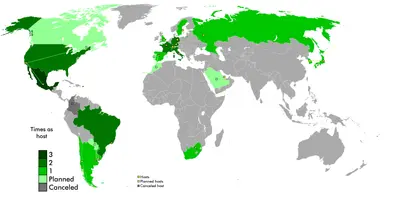 Top 10 World Cup Hosting Controversies
Explore more Sports rankings on Top10Grid
People Also Explore
Because you're viewing Sports
Top 10 Greatest Athletes of All Time
320 views · 0 votes
Top 10 Moments from the 2026 Winter Olympics
313 views · 1 votes
Top 10 Most Successful Female Athletes of All Time
215 views · 1 votes
Top 10 World Cup Hosting Controversies
212 views · 1 votes
Top 10 World Cup Penalty Shootout Dramas
207 views · 1 votes
Top 10 Figure Skaters of All Time
120 views · 0 votes
You might also like

SPORTSSame category
Top 10 Indian Cricket Players of All Time
10 items

SPORTSSame category
Top 10 Surf Spots in Spain
10 items

SPORTSSame category
Top 10 Greatest Cricketers of All Time
10 items

SPORTSSame category
Top 10 World Cup Penalty Shootout Dramas
12 items

SPORTSSame category
Top 10 Greatest Cyclists of All Time
10 items

SPORTSSame category
Top 10 Greatest Rivalries in Sports History
10 items