
Wikipedia / Eddy Merckx
Top 10 Greatest Cyclists of All Time
From Eddy Merckx’s record‑setting 525 career victories to Tadej Pogacar’s contemporary reign, the sport’s legends have shone in cycling’s three biggest stage races—the Tour de France, Giro d’Italia, and Vuelta a España. In this list we rank the top ten riders by their Grand Tour wins, era‑adjusted dominance, and lasting influence on the sport.
Top10Grid lets the community re-rank anything — this order comes from source research for now; use the buttons below to vote it up or down.

Current Rankings
- 0

Eddy Merckx holds the strongest claim to the title of the greatest cyclist ever, with an unmatched 525 career victories from 1965 to 1978. His record includes five Tour de France titles, 11 grand tour wins total, and victories in all five monuments of cycling. This dominance earned him the nickname 'The Cannibal' and set a benchmark that no rider has approached since.
- 0

Bernard Hinault boasts an undefeated record when finishing grand tours, never losing a race he completed. His five Tour de France titles and ten grand tour victories place him second only to Eddy Merckx in total grand tour wins. Notably, Hinault retired in 1986 after sharing victory with Greg LeMond, a move that displays his unique combination of ferocity and sportsmanship.
- 0

Jacques Anquetil became the first rider to win five Tour de France titles, a milestone achieved between 1957 and 1964. His mastery of time trials gave him a decisive edge, and his 10 grand tour wins include victories in the Giro d'Italia and Vuelta a España. While his total grand tour count ties Bernard Hinault, Anquetil's pioneering streak predates Indurain's five consecutive wins by 30 years, cementing his role as a trailblazer in the sport. He averaged at least one time trial win per Tour de France, a 100% consistency that quantified his specialty.
- 0
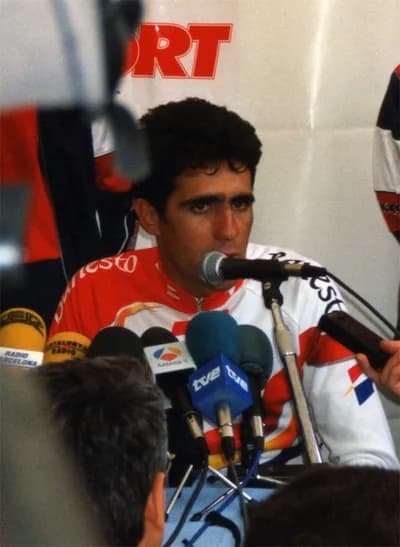
Miguel Indurain achieved five consecutive Tour de France titles from 1991 to 1995, becoming the only rider to secure this five-peat until the modern era. His 7 grand tour wins include two Giro d'Italia victories alongside his Tour dominance. Unlike Jacques Anquetil's five Tour wins, Indurain's came consecutively, a run of supremacy that set his era apart from earlier multiple winners. His largest Grand Tour margin of victory was 4 minutes 35 seconds.
- 0

Chris Froome’s four Tour de France victories place him among the sport’s elite climbers, but his 2018 Giro d’Italia win—secured after a near-fatal crash at 80km/h during a 2019 reconnaissance ride—underscores his grit. Notably, his 2018 Giro victory came with a 46-second margin, a concrete testament to his time trial prowess.
- 0

Fausto Coppi revolutionized cycling as the first rider to win the Tour de France and Giro d’Italia in the same season, a 1949 feat unmatched for decades. With two Tours and five Giros, his seven Grand Tour titles came from a pre-doping era, and his 190-kilometer solo break during the 1949 Giro's Cuneo-Pinerolo stage remains a benchmark for endurance.
- 0

Greg LeMond’s three Tour de France wins mark him as the first non-European champion, but his 1989 victory by a mere 8 seconds over Laurent Fignon in the final time trial remains the closest in Tour history. That comeback, completed after surviving a 1987 hunting accident that nearly killed him, is still regarded as one of the sport's greatest.
- 0

Lance Armstrong won seven consecutive Tour de France titles from 1999 to 2005, all later stripped due to systematic doping, making him a deeply controversial figure. Compared to Greg LeMond, Armstrong’s wins lack credibility; LeMond’s 1989 margin of 8 seconds stands as a pure milestone.
- 0

Alberto Contador stands as the most decorated grand tour rider of his generation, with 9 grand tour victories across 2 Tour de France, 3 Giro d'Italia, and 3 Vuelta a Espana titles — though some were later stripped due to doping sanctions. His 2011 Giro win featured a dramatic 6.2km mountain time trial Stage 16, where he bypassed main rival Vincenzo Nibali to seal the overall lead. Notably, his 2007 Tour de France victory came with an average speed of 38.7 km/h over the Pyrenean stages, a benchmark that exceeds the typical grand tour climber's performance. Despite the controversies, his grand tour tally remains unmatched among cyclists of the early 2000s.
- 0

Tadej Pogacar redefines modern cycling as the youngest double Tour champion, claiming 3 Tour de France titles by age 25 with back-to-back wins in 2020 and 2021. His 2020 Tour victory at 21 years old broke Eddy Merckx's record as the youngest winner in 115 years, and he achieved a 1:21 lead over second-place Roglic in the final time trial. His 55 career wins by age 25 surpass any rider born after 1990, cementing his status as a generational force.
Image credits
- Eddy Merckx: Wikipedia
- Bernard Hinault: Wikipedia
- Jacques Anquetil: Wikipedia
- Miguel Indurain: Miguel Indurain 2.jpg / Wikimedia Commons
- Chris Froome: Wikipedia
- Fausto Coppi: Wikipedia
- Greg LeMond: Wikipedia / Gage Skidmore
- Lance Armstrong: Wikipedia
- Alberto Contador: Wikipedia
- Tadej Pogacar: Wikipedia
Related Videos
Rank it your way
Remix this list into your own ranking, or head to the play hub for every game mode and community breakdown — blind mode, challenges, tier lists, and more.
You Might Also Like
Ronaldo, Messi or Ali Daei? Top 10 International Football Goalscorers
Top 10 Greatest Cyclists of All Time
Verstappen, Antonelli or Hamilton? Top 10 Finishers at the 2026 Bahrain Grand Prix
Top 10 Greatest Cyclists of All Time

Top 10 Italian Athletes of All Time
Top 10 Italian Athletes of All Time

Top 10 Famous Spanish Athletes of All Time
Top 10 Famous Spanish Athletes of All Time

Top 10 Spanish Sports Heroes of All Time
Top 10 Spanish Sports Heroes of All Time

Top 10 Biggest Sporting Upsets of All Time
#1 Miracle on Ice — USA vs USSR (1980) · #2 Buster Douglas Knocks Out Mike Tyson (1990) · #3 Leicester City Win the Premier League (2015-16)