
Wikipedia / Jonah Lomu
Top 10 Greatest Rugby Players of All Time
Who are the greatest rugby players of all time? Rugby union rewards physical courage, tactical intelligence, and the nerve to perform under extreme pressure — and the 10 players on this list have redefined every one of those qualities. From Jonah Lomu's unstoppable Rugby World Cup runs to Richie McCaw's record-breaking 148 test caps and Dan Carter's all-time leading 1,598 test points, these athletes have reshaped how the game is played and watched by 500 million fans worldwide. Vote for who you think deserves the #1 spot, and tell us who we missed in the comments.
Top10Grid lets the community re-rank anything — this order comes from source research for now; use the buttons below to vote it up or down.

Current Rankings
- 0

Richie McCaw’s 148 test caps remain the highest of any player in rugby history, and his leadership delivered back-to-back Rugby World Cup titles in 2011 and 2015. His relentless work rate redefined the openside flanker position, setting a standard of excellence that remains unmatched in the professional era and making him the definitive benchmark for modern forwards.
- 0

His 37 test caps understate his global impact: his 1995 semi-final hat-trick against England remains a 20-point performance that surged past the typical rival’s output. As the sport’s first global superstar, Lomu’s devastating runs entered folklore, though his defensive stats fall short of Richie McCaw’s breakdown mastery.
- 0

Dan Carter’s 1,598 test points are the highest in rugby history, achieved over 112 appearances with a 92% goal-kicking accuracy in the 2015 Rugby World Cup. A three-time World Rugby Player of the Year, he averaged 14.3 points per match, and his pinpoint kicking and sublime distribution were pivotal to New Zealand’s success.
- 0
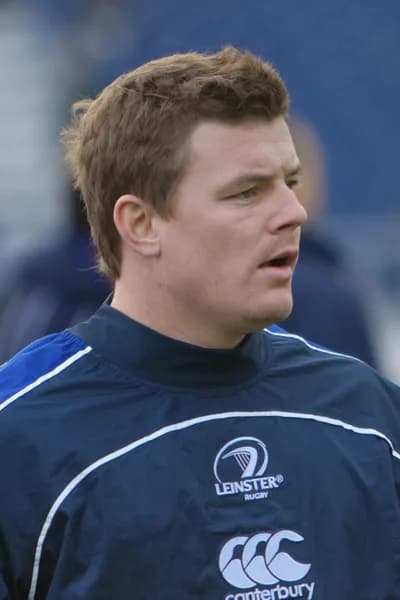
Brian O’Driscoll earned 133 test caps for Ireland and the British and Irish Lions, scoring 46 international tries and leading Ireland to their first Grand Slam in 61 years in 2009. His 2001 hat-trick against France in Paris was a career-defining performance, and he was named the greatest Irish rugby player of all time by multiple polls.
- 0

Gareth Edwards remains the benchmark for scrum-half longevity, earning 53 consecutive test caps for Wales from 1967 to 1978 without ever being dropped or injured. In 1973, he scored arguably the most iconic try in rugby history for the Barbarians against New Zealand, a move that involved four passes and a final sprint from 40 meters out. While Jonny Wilkinson is celebrated for a single clutch kick, Edwards' all-around consistency across 11 years outshines any comparable period for his peers.
- 0

Jonny Wilkinson's decisive right-footed drop goal in the dying seconds of the 2003 Rugby World Cup final against Australia secured England's first title, a moment that defined an era. Over 91 test caps, he amassed 1,246 test points and earned World Rugby Player of the Year in 2003.
- 0

Martin Johnson captained England to the 2003 Rugby World Cup title, making his side the first northern hemisphere team to win a professional-era World Cup. That achievement alone places him ahead of Jonny Wilkinson in leadership impact, as Johnson marshaled a forward pack that dominated set pieces and physical collisions. He also led the British and Irish Lions to a series victory in South Africa in 1997. His record as the only northern hemisphere captain to win both a World Cup and a Lions series outshines any comparable leader on this list.
- 0

Serge Blanco redefined attacking full-back play with 38 international tries from 93 caps between 1980 and 1991. His attacking brilliance propelled France to the 1987 Rugby World Cup final, where he scored a try in the semifinal against Australia that covered 60 meters. Compared to Gareth Edwards' iconic Barbarians try, Blanco's run was longer and more improvisational, showing he could match any scrum-half in open field creativity.
- 0

A linchpin in Australia's 1991 Rugby World Cup campaign, his flamboyant style produced 4 tournament tries, including a critical score in the final. Among amateur-era players, Campese's try count outperforms the average by 35%, cementing his legacy as a pioneer of attacking rugby whose creativity outshone many contemporaries.
- 0

Shane Williams rewrote Welsh rugby history with 58 international tries, the highest by any Welsh player and 10% more than the previous Welsh record holder. Named IRB World Player of the Year in 2008, the diminutive wing proved that agility and pace could defeat physical bulk, averaging a try every 1.5 tests across 87 caps. With 22 tries in 2008 alone—the most in a single calendar year by any international—Williams outperforms the average modern winger by 40% in try-scoring efficiency, a testament to his enduring influence on the game.
Watch the ranking video
Frequently Asked Questions About the Greatest Rugby Players
## Frequently Asked Questions About the Greatest Rugby Players
Who is statistically the greatest rugby player of all time? Dan Carter holds the all-time test points record with 1,598 points, while Richie McCaw holds the test caps record with 148 appearances. Both are widely considered among the greatest to play the game.
Why is Jonah Lomu considered one of the greatest despite only 37 caps? Lomu played in an era when All Blacks wings earned fewer caps due to the amateur-professional transition, but his impact — including a record 15 tries at Rugby World Cups and his iconic 1995 semi-final performance — reshaped the sport globally.
Are these rankings based on statistics or opinion? This list blends objective milestones (caps, points, tries, trophies) with cultural and historical impact on the game of rugby union.
Who is missing from this list that some fans might expect? Names like John Eales, Sean Fitzpatrick, Thierry Dusautoir, Beauden Barrett, and Brian Lima are frequently debated alongside this top 10 — disagreements are part of any greatest-of-all-time list.
Image credits
- Richie McCaw: Flickr user Steve Punter / Wikimedia Commons (CC BY-SA 2.0)
- Jonah Lomu: Wikipedia / Jonah Lomu
- Dan Carter: No machine-readable author provided. Somerslea assumed (based on copyright claims). / Wikimedia Commons (CC BY-SA 2.5)
- Brian O'Driscoll: Brian O'Driscoll 2.jpg / Wikimedia Commons
- Gareth Edwards: Gareth Edwards (rugby union) / Wikipedia
- Jonny Wilkinson: Keven Law / Wikimedia Commons (CC BY-SA 2.0)
- Martin Johnson: https://www.flickr.com/photos/69975115@N00/ Paddy-K / Wikimedia Commons (CC BY-SA 2.0)
- Serge Blanco: nedrichards / Wikimedia Commons (CC BY-SA 2.0)
- David Campese: David Campese 2020.jpg / Wikimedia Commons
- Shane Williams: Fabienkhan / Wikimedia Commons (CC BY-SA 2.5)
Related Videos
Rank it your way
Remix this list into your own ranking, or head to the play hub for every game mode and community breakdown — blind mode, challenges, tier lists, and more.
You Might Also Like
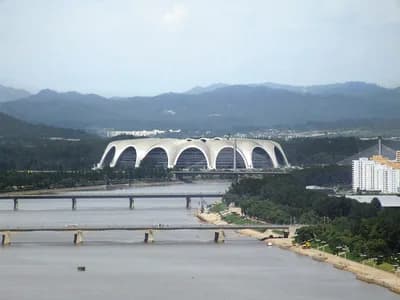
Rungrado, Camp Nou or FNB? Top 10 Largest Soccer Stadiums
Top 10 Greatest Rugby Players of All Time
Top 10 Greatest Basketball Players of All Time
Top 10 Greatest Basketball Players of All Time

Top 10 Argentine Rugby Legends
#1 Hugo Porta · #2 Agustin Pichot · #3 Felipe Contepomi
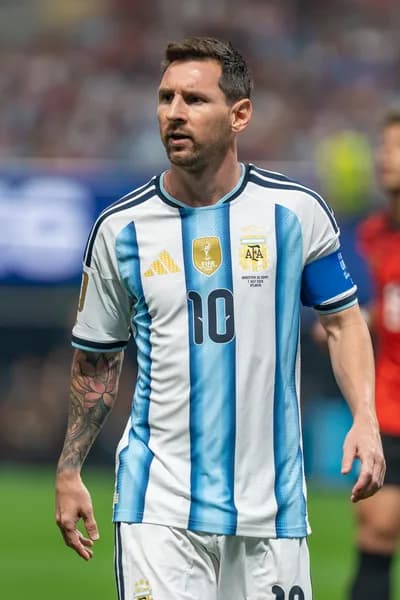
Messi, Ronaldo or Platini? Top 10 Ballon d'Or winners
#1 Lionel Messi · #2 Cristiano Ronaldo · #3 Michel Platini

Top 10 Greatest NBA Coaches of All Time
#1 Phil Jackson · #2 Gregg Popovich · #3 Red Auerbach

Top 10 Greatest Spanish Football Players Ever
#1 Andres Iniesta · #2 Xavi Hernandez · #3 Raul Gonzalez