
Wikimedia Commons
Top 10 Iconic Olympic Moments That Changed History
With the 2026 Milan-Cortina Winter Olympics fresh in memory and the 2028 Los Angeles Summer Games approaching, Olympic fever is building. But the Olympics have always been about more than medals — they are stages for the most dramatic human stories in sports. From Jesse Owens defying Hitler to Usain Bolt redefining human speed, these are the Olympic moments that transcended sport and changed the world.
Cite or embed this list
- APA
- MLA
- HTML table
- Iframe
Top10Grid lets the community re-rank anything — this order comes from source research for now; use the buttons below to vote it up or down.

Current Rankings
- 0#1
Jesse Owens Wins Four Golds (Berlin 1936)

Jesse Owens' four gold medals at the 1936 Berlin Olympics delivered the most forceful rebuttal to Nazi racial ideology in history. He won the 100m (10.3s), 200m (20.7s), long jump (8.06m), and 4x100m relay (39.8s, a world record) while Hitler watched. It remains more politically significant than any other athletic achievement, smashing the myth of Aryan supremacy before 110,000 spectators.
- 0#2
Usain Bolt Triple-Triple (2008-2016)

Usain Bolt's nine Olympic gold medals across three Games—100m, 200m, and 4x100m relay in 2008, 2012, and 2016—constitute sprinting's greatest dynasty. His 2008 100m world record of 9.69s, and the 2009 9.58s mark, remain untouched. Bolt transcends the sport: his Lightning Bolt pose is more recognizable than any gesture in modern athletics, even outperforming Nadia Comaneci's perfect 10 in cultural reach.
- 0#3
Nadia Comaneci Perfect 10 (Montreal 1976)

Nadia Comaneci's perfect 10.0 at age 14 in Montreal 1976 redefined gymnastics forever. The scoreboard could only display 1.00, but she earned seven perfect scores across uneven bars and balance beam. Her precision raised the bar so high that the 10-point system was later abandoned—a lasting legacy unmatched by any other gymnast in history.
- 0#4
Black Power Salute (Mexico City 1968)

Tommie Smith and John Carlos' black-gloved fist salute during the 200m medal ceremony in 1968 became the most iconic protest in Olympic history. Smith ran 19.83s to win gold; Carlos took bronze (20.10s). Both were expelled and faced death threats, while Australian Peter Norman, who wore an OPHR badge in solidarity, was blacklisted for life. The image remains a more powerful statement of racial justice than Jesse Owens' four golds in 1936.
- 0#5
Miracle on Ice (Lake Placid 1980)
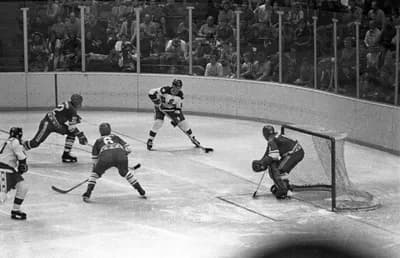
The Miracle on Ice remains the greatest upset in Olympic history, as American college students defeated the Soviet Union 4-3 in the 1980 Winter Olympics semifinal. The Soviets had won four consecutive Olympic golds and featured professional-caliber players, making the U.S. victory a 10-to-1 underdog achievement according to betting odds. Al Michaels' 'Do you believe in miracles?' call is the most famous in American sports broadcasting history, capturing a moment when amateur athletes toppled a hockey dynasty.
- 0#6
Muhammad Ali Lights the Flame (Atlanta 1996)

When Muhammad Ali, hands trembling from Parkinson's disease, lit the Olympic cauldron at the Atlanta 1996 Opening Ceremony, 3.5 billion people watching worldwide witnessed the most emotional moment in Olympic ceremony history. The greatest boxer of all time, stripped of his title for refusing the Vietnam draft, stood on the world's biggest stage one final time, a testament to resilience. It remains a powerful reminder of courage and the unifying power of sport.
- 0#7
Simone Biles Mental Health Withdrawal (Tokyo 2020)

Simone Biles, the greatest gymnast in history, withdrew from five of six event finals at Tokyo 2020 due to 'the twisties,' a dangerous mental block causing loss of spatial awareness mid-air. Her decision prioritized mental health over medals, sparking a global conversation about athlete wellbeing and breaking the stigma around vulnerability in elite sports. Biles returned in 2024 to win three more golds, proving that stepping back was strength, not weakness, and setting a new benchmark for athlete advocacy.
- 0#8
Cathy Freeman 400m Final (Sydney 2000)

Cathy Freeman's 400m final at Sydney 2000 featured the largest crowd for a single Olympic event — 112,000 spectators — as she won gold in 49.11 seconds while an entire nation held its breath. As an Indigenous Australian, Freeman lit the Opening Ceremony cauldron and carried both the Aboriginal and Australian flags, making her race the most emotionally charged 49 seconds in Australian history. It remains a defining symbol of unity in a country still grappling with its past.
- 0#9
Derek Redmond Finishes with His Father (Barcelona 1992)

The most purely emotional moment in Olympic history: Derek Redmond, a British sprinter, tore his right hamstring 200 meters into the 400m semifinal at Barcelona 1992. Collapsing in agony, he refused a stretcher, got up, and hopped on one leg toward the finish. His father Jim burst from the stands, past security, and supported his sobbing son across the line. They finished dead last in 1:30.5, a time 30 seconds slower than the race winner. It redefined Olympic success not as victory, but as completing the journey against all odds.
- 0#10
Michael Phelps 8 Golds (Beijing 2008)

Michael Phelps achieved the greatest single-Games performance in Olympic history: eight gold medals at Beijing 2008. The 100m butterfly win by 0.01 seconds over Milos Cavic remains the closest finish in Olympic swimming history, a margin of 1 centimeter at the wall. Phelps completed 17 races in 8 days, including 4 individual and 4 relay events, all world records except one. The eight golds shattered Mark Spitz's 36-year-old record of seven, a feat unmatched at any single Games.
Image credits
- Miracle on Ice (Lake Placid 1980): Miracle on Ice / Wikipedia
Rank it your way
Remix this list into your own ranking, or head to the play hub for every game mode and community breakdown — blind mode, challenges, tier lists, and more.
You Might Also Like

Top 10 Biggest Sporting Upsets of All Time
Top 10 Biggest Sporting Upsets of All Time
Top 10 Greatest World Cup Goals Ever Scored
Top 10 Greatest World Cup Goals Ever Scored

Top 10 Athletes Who Changed Their Sport's Economics Forever
#1 Michael Jordan — The Brand That Became a Religion · #2 Lionel Messi — The $150 Million Move That Changed MLS · #3 Cristiano Ronaldo — The $200M Man of Saudi Arabia

Top 10 Adventure Sports in Argentina
#1 Mountaineering on Aconcagua · #2 White-Water Rafting in Mendoza · #3 Ice Trekking on Perito Moreno

Top 10 Chinese Martial Arts & Sports
#1 Tai Chi (Taijiquan) · #2 Kung Fu (Wushu) · #3 Shaolin Kung Fu

Top 10 Best Olympic Moments
#1 Jesse Owens Wins Four Golds in Berlin (1936) · #2 Usain Bolt's Triple-Triple (2008-2016) · #3 Nadia Comăneci Scores the First Perfect 10 (1976)