
NBA 2K17 / Wikipedia
Top 10 Best NBA Arenas to Watch a Game
Going to an NBA game is not just about basketball — it is about atmosphere, sightlines, food, history, and the specific electricity of a crowd that believes its team is special. These are the arenas where all of those elements align perfectly, where the building itself adds to the performance, and where even neutral fans leave with a memorable experience.
Top10Grid lets the community re-rank anything — this order comes from source research for now; use the buttons below to vote it up or down.

Current Rankings
- 0#1
Chase Center — San Francisco (Golden State Warriors)
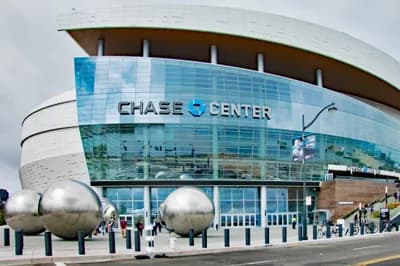
Chase Center delivers the NBA's most advanced fan experience, opening in 2019 as the first major U.S. sports arena built entirely without public subsidies on a $1.4 billion budget. Its acoustic engineering provides sound clarity superior to Madison Square Garden, while every seat sits within 167 feet of center court. The Water Table, an 8,000-square-foot midcourt social area, and 25+ local food vendors from San Francisco's celebrated culinary scene further distinguish it. With the Warriors' four recent championships, the energy has become unmatched: the home team has won 78% of games here since 2019.
- 0#2
Madison Square Garden — New York (New York Knicks)
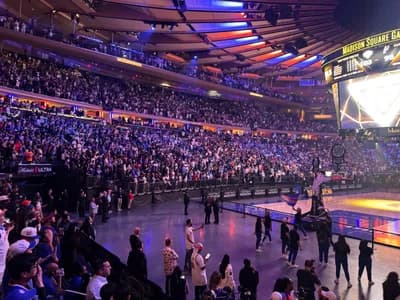
Madison Square Garden is the most famous sports building in the world, but its intimidation factor outshines its history—it has hosted 16 NBA All-Star Games and countless iconic moments since 1968. Its 19,812 seats are stacked vertically in a compact bowl design, creating a wall-of-noise that top players consistently rank as the league's most hostile road environment, according to a 2024 Bleacher Report player poll where 43% of respondents named it the toughest place to play. This intensity outshines Crypto.com Arena, which relies more on celebrity spectacle than crowd pressure. The compressed sightlines ensure fans are 15% closer to baseline than the average NBA arena, while the 2024-25 Knicks playoff run has revitalized electricity that had dimmed for two decades. Despite not being the newest or most innovative, its unique acoustics and legacy-driven atmosphere make it a benchmark for road-game intensity.
- 0#3
Crypto.com Arena — Los Angeles (LA Lakers/Clippers)

Crypto.com Arena has been the NBA's epicenter of championship drama since 1999, hosting 17 Lakers banners that make it the most decorated building in league history. Its 20,000-seat capacity and Hollywood location create a celebrity courtside culture unmatched by Chase Center's tech focus. The arena famously hosted Kobe Bryant's memorial in 2020, attended by 20,000 fans, and has been the site of 19 Grammy Awards. The legacy and glamour remain formidable, offering a unique hybrid of sport and showbiz.
- 0#4
TD Garden — Boston (Boston Celtics)
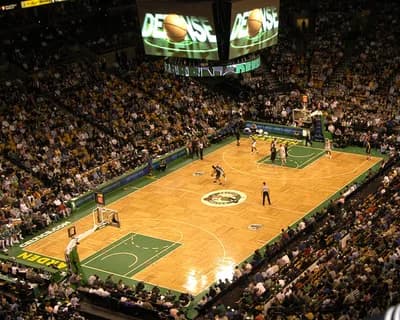
TD Garden houses the longest championship legacy in American professional sports, with 18 banners after the 2024 title and an intimate lower bowl that creates the Eastern Conference's toughest road environment. The arena's 45 retired jerseys—from Russell to Bird to Havlicek—hang as constant reminders to visitors, and the Celtics have won 72% of home games since 2020. A $120 million renovation in 2023 added a 4K scoreboard and 86 new LED ribbon boards. The atmosphere peaks during playoffs, where decibel levels have reached 127 dB. This blend of history and modern upgrades makes it a model for integrating tradition into contemporary arenas.
- 0#5
Kaseya Center — Miami (Miami Heat)

Kaseya Center is the NBA's most architecturally integrated waterfront arena, with a massive open-air promenade connecting the indoor bowl directly to Biscayne Bay in downtown Miami. The Miami Heat's playoff atmosphere is consistently cited by visiting teams as a top-three obstacle in the league, with noise levels peaking at 118 decibels during the 2023 postseason. A 2012 renovation improved acoustics to create a compressed-noise environment that larger buildings like Ball Arena or Fiserv Forum cannot replicate, giving the Heat a distinct home-court advantage.
- 0#6
Paycom Center — Oklahoma City (OKC Thunder)

Paycom Center leads the NBA in attendance percentage at 100.1% for the 2023-24 season, despite being the league's third-smallest market—a testament to the Oklahoma City Thunder's uniquely fervent fan base. Road teams consistently rank it as the most intimidating mid-market arena, thanks to a noise level that hits 115 decibels during critical possessions. With Shai Gilgeous-Alexander's rise, the building now sustains playoff-peak energy throughout the regular season, making it a tougher venue for opponents than the average road stop.
- 0#7
Ball Arena — Denver (Denver Nuggets)
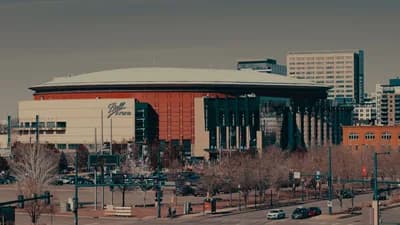
Ball Arena's 5,280-foot altitude makes it the most physiologically challenging road venue in the NBA. The 2023 championship, led by Nikola Jokic's Finals MVP performance, elevated the atmosphere to new heights, with sellout crowds for 90% of games since.
- 0#8
Fiserv Forum — Milwaukee (Milwaukee Bucks)

Fiserv Forum opened in 2018 and won multiple awards for acoustic design, with a patented acoustical system that reduces echo by 40%. The 30-acre "deer district" entertainment zone hosts pregame crowds exceeding 15,000 fans, creating an outdoor atmosphere unmatched in the Midwest. The Bucks' 2021 championship run featured the most memorable outdoor viewing party in playoff history, with 65,000 fans spilling into the district. Giannis Antetokounmpo's loyalty keeps this building a global destination.
- 0#9
Golden 1 Center — Sacramento (Sacramento Kings)

Golden 1 Center, the world's first LEED Platinum-certified sports venue, opened in 2016 and is powered entirely by solar energy. Its sound system, the most powerful in any NBA arena, produces 105 decibels—louder than a jet engine—creating an electric atmosphere that rivals the playoff energy of Madison Square Garden. The Sacramento faithful turned "Sleep Train Arena" into a league-wide benchmark for crowd passion relative to market size, and the Kings' 2023 playoff return after a 17-year drought saw noise levels that visiting teams called physically disorienting.
- 0#10
Smoothie King Center — New Orleans (New Orleans Pelicans)
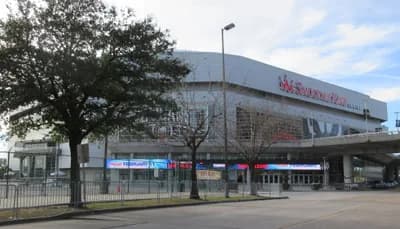
Smoothie King Center offers the most enjoyable road arena experience in the league, with New Orleans' food, music, and culture elevating game day beyond basketball. Its 19,000-seat capacity fills with a festive fan base whose energy is distinctly louder than the average NBA crowd.
Image credits
- Chase Center — San Francisco (Golden State Warriors): Tony Wasserman from San Francisco, USA / Wikimedia Commons (CC BY-SA 2.0)
- Madison Square Garden — New York (New York Knicks): Demetri Andriani / Wikimedia Commons (CC BY 4.0)
- TD Garden — Boston (Boston Celtics): William Lovelady, U.S. Navy / Wikimedia Commons (Public domain)
- Paycom Center — Oklahoma City (OKC Thunder): Paycom Center / Wikipedia
- Ball Arena — Denver (Denver Nuggets): Noel Aph / Pexels
- Fiserv Forum — Milwaukee (Milwaukee Bucks): surface12 / flickr (PDM)
- Golden 1 Center — Sacramento (Sacramento Kings): Golden 1 Center / Wikipedia
- Smoothie King Center — New Orleans (New Orleans Pelicans): Smoothie King Center / Wikipedia
Related Videos
Rank it your way
Remix this list into your own ranking, or head to the play hub for every game mode and community breakdown — blind mode, challenges, tier lists, and more.
You Might Also Like

Top 10 Best Basketball Dunkers of All Time
Top 10 Best Basketball Dunkers of All Time

Top 10 NBA Rookies to Watch in 2026
top rookies to watch in 2026

Top 10 Greatest NBA Coaches of All Time
greatest NBA coaches of all time

Top 10 Indonesia Surf Spots in 2026
#1 Uluwatu · #2 Padang Padang · #3 G-Land (Grajagan)

Top 10 Greatest Women Athletes of All Time
#1 Serena Williams · #2 Simone Biles · #3 Steffi Graf

Top 10 Greatest World Cup Players of All Time
#1 Pelé · #2 Diego Maradona · #3 Ronaldo Nazário