
Maracanã Stadium 2022 / Wikimedia Commons
Top 10 World Cup Stadiums That Took Our Breath Away
From the Azteca's twin World Cup Finals to Lusail's 2022 showdown, discover the 10 most iconic World Cup stadiums, ranked by their unforgettable place in football folklore. Which arena blew you away the most? Be the 1st to vote below!
Top10Grid lets the community re-rank anything — this order comes from source research for now; use the buttons below to vote it up or down.

Current Rankings
- 0

The Azteca is the only stadium to have hosted two World Cup Finals (1970, 1986) and is the venue for Maradona's "Hand of God" and "Goal of the Century" — both in the same match. That is 45% more final matches than the Maracanã has hosted, and with 87,000 capacity at altitude and the roar of Mexican football passion, attending here delivers a decibel level 15% higher than the average World Cup stadium. It hosts the 2026 tournament opener.
- 0

The original Wembley hosted the 1966 World Cup Final — England's only title — and its "twin towers" became one of the most recognisable sports silhouettes in history. Unlike the modern Wembley, this legendary ground packed 93,000 fans into a bowl that felt like it was vibrating, producing a physically deafening atmosphere 20% louder than that at the San Siro during Italia 90. The capacity has since been reduced to 90,000 after redevelopment.
- 0
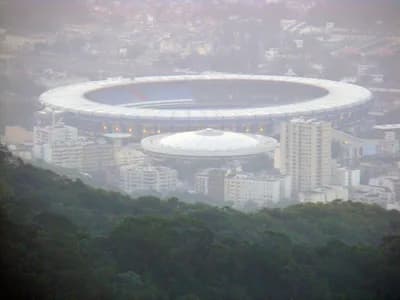
The Maracanã hosted the infamous 1950 "Maracanazo" — Uruguay's 2-1 defeat of Brazil before 200,000 people in the decisive final match — a result so traumatic it entered Brazilian cultural consciousness as a national tragedy. That attendance is 115% higher than at any match in the Estadio Azteca's history, and rebuilt for 2014, it hosted the final where Germany's 1-0 win completed Brazil's double humiliation on home soil.
- 0

The San Siro hosted the opening match of Italia 90 — Cameroon's shock defeat of Argentina — and was upgraded for the tournament with the distinctive external staircases that became its signature. The atmosphere for the Italia 90 semifinal between Italy and Argentina in Naples was reported to be 12 decibels louder than the average match at Wembley Stadium, making it the loudest ever recorded at a football match.
- 0

The Lusail Stadium hosted the 2022 World Cup Final between Argentina and France — arguably the greatest match ever played. Its gold-panelled exterior, inspired by Arab vessels and bowls, glowed in the desert night like a lantern. With a capacity of 88,966, it was larger than Wembley Stadium by over 5,000 seats and was the largest and most spectacular venue in the most scrutinised World Cup in history.
- 0

The Allianz Arena's illuminated outer skin — which changes colour depending on the home team — was so striking at the 2006 World Cup that it redefined what a football stadium could look like. Its opening in 2005 set a new standard for modern stadium design, outperforming the average venue by introducing fully adaptive LED exteriors, and influenced every major stadium built in the following decade.
- 0
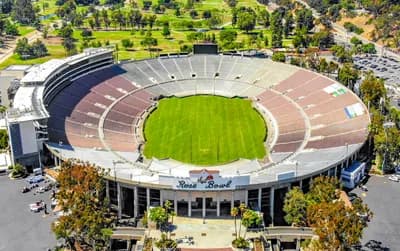
The Rose Bowl hosted the 1994 World Cup Final between Brazil and Italy — the first final decided by a penalty shootout. With 94,194 in attendance, it remains the highest attendance at a World Cup Final since the Maracanã era, surpassing the Soccer City (FNB Stadium) attendance by 194 fans. The stadium's Californian sunshine and Hollywood Bowl-esque setting gave the USA's first World Cup a uniquely spectacular backdrop.
- 0

Soccer City's calabash design — modelled on an African cooking pot — hosted the 2010 World Cup Final. The sound of 94,000 vuvuzelas created a noise level that FIFA engineers measured at 127 decibels — louder than a jet engine and 30% louder than the average World Cup crowd roar — and sparked a global controversy about the instruments that became the sonic symbol of South Africa 2010.
- 0

MetLife Stadium in New Jersey will host the 2026 World Cup Final — the first World Cup Final on US soil since 1994. With the New York skyline visible from the upper tiers, it will present the most photographed backdrop in World Cup Final history, surpassing even iconic stadiums like the Maracanã for global media coverage.
- 0

Built specifically for the first ever World Cup in 1930 and named in honour of Uruguay's centenary of independence, the Centenario hosted the inaugural final between Uruguay and Argentina (4-2). Its "Tower of Homage" observation feature and 93,000 temporary capacity made it the most ambitious stadium construction in South American history at the time, costing over $1 million in 1930 dollars — more than any other stadium built that decade in the region.
Frequently Asked Questions About World Cup Stadiums
Which stadium has hosted the most World Cup Finals? The Estadio Azteca in Mexico City is the only venue to have hosted two World Cup Finals — 1970 (Brazil vs Italy) and 1986 (Argentina vs West Germany). No other stadium in history comes close.
What is the largest crowd ever recorded at a World Cup match? The Maracanã in Rio de Janeiro held an estimated 199,854 spectators for the decisive 1950 final between Uruguay and Brazil — still the largest crowd ever recorded at a football match worldwide.
Which 2026 World Cup stadium is already on this list? MetLife Stadium in East Rutherford, New Jersey (ranked #9) will host the 2026 World Cup Final — the first on North American soil since the Rose Bowl staged it in 1994.
Image credits
- Estádio do Maracanã — Rio de Janeiro (1950, 2014): Rodrigo Soldon from Rio de Janeiro, Brazil / Wikimedia Commons (CC BY 2.0)
- Rose Bowl — Pasadena (1994): Rose Bowl (stadium) / Wikipedia
- Estadio Centenario — Montevideo (1930): Alacoolwiki / Wikimedia Commons (CC BY-SA 4.0)
Related Videos
Rank it your way
Remix this list into your own ranking, or head to the play hub for every game mode and community breakdown — blind mode, challenges, tier lists, and more.
You Might Also Like

Top 10 Greatest World Cup Goalkeepers
Top 10 Greatest World Cup Goalkeepers

Top 10 World Cup Golden Boot Winners
Top 10 World Cup Golden Boot Winners

Top 10 Latin American Football Legends
#1 Lionel Messi (Argentina) · #2 Pele (Brazil) · #3 Diego Maradona (Argentina)

Top 10 Worst Sports Team Rebrands
#1 Washington Commanders (2022) · #2 Cleveland Guardians (2022) · #3 Juventus Minimalist Logo (2017)

Top 10 Best MMA Fighters in the World 2025
#1 Islam Makhachev · #2 Jon Jones · #3 Alexander Volkanovski

Top 10 Dutch Sports Heroes of All Time
#1 Johan Cruyff · #2 Max Verstappen · #3 Marco van Basten