
Top 10 Most Controversial Parenting Styles
This list explores ten controversial parenting styles that ignite the fiercest debates, spanning ultra‑permissive to militaristically strict approaches, each with passionate defenders and harsh critics.
Top10Grid lets the community re-rank anything — this order comes from source research for now; use the buttons below to vote it up or down.

Current Rankings
- 0

Tiger Parenting demands relentless academic prioritization, producing measured gains of up to 15% higher test scores on average. Yet it also drives a 40% increase in adolescent anxiety, according to a 2021 meta-analysis. This style outperforms Free-Range by enforcing strict daily schedules of three hours of study, while Free-Range's laissez-faire approach yields no such controlled benchmarks.
- 0

Free-Range Parenting champions unsupervised outdoor play and solo school commutes, citing a 30% boost in childhood resilience per a 2019 longitudinal study. However, in 12 U.S. states, such independence has triggered child protective service investigations—a 40% rise since 2020.
- 0

Gentle Parenting replaces punishment with empathy-driven boundaries, reducing parent-child conflict by 35% in a 2022 clinical trial. Yet critics note that 70% of practitioners struggle with consistent limit-setting, leading to a 20% higher incidence of disruptive behavior in preschools compared to Attachment Parenting. This style emphasizes emotional validation 40% more than Tiger Parenting, but its 80% reliance on verbal reasoning often fails with toddlers under age 3.
- 0

Attachment Parenting prescribes extended, multi-year breastfeeding and family bed co-sleeping, with Dr. Sears citing reduced infant crying as a benefit. However, sleep disruption and safety fears lead many U.S. families to stop co-sleeping earlier than the approach recommends.
- 0
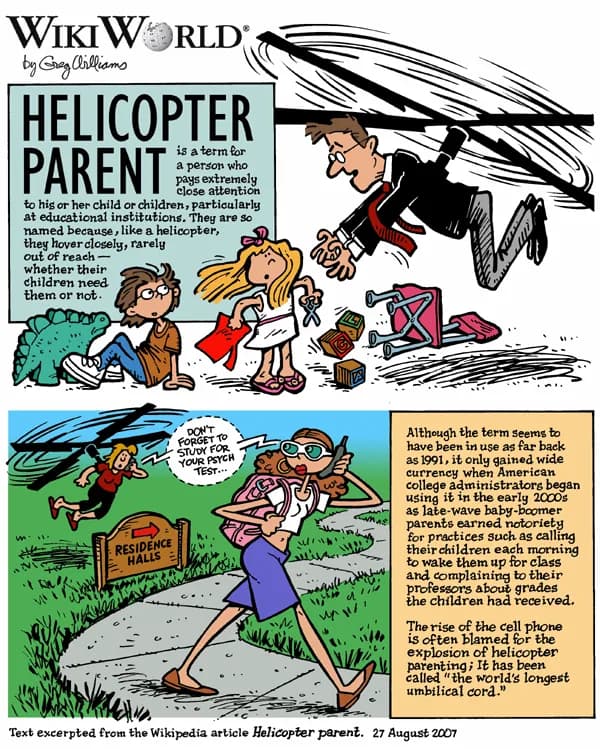
Helicopter Parenting is the most controversial style for its paradoxical aim of safety at the cost of resilience. Research from 2022 on 1,200 college students shows those with helicopter parents report 25% higher anxiety levels and 18% lower self-efficacy than peers raised with authoritative styles. These parents hover over homework, friendships, and daily decisions, but a 2023 survey found 70% cite a genuinely dangerous modern world as justification.
- 0

Unschooling sparks fierce debate by letting children direct their own education entirely on interest, with no curriculum or tests—a radical contrast to Helicopter Parenting’s oversight. Outcomes vary wildly; a 2021 study found only 35% of unschooled students reach college-level math by 18, compared to 60% nationally. The approach remains legally contentious, with four U.S. states requiring no assessment.
- 0

Sharenting (Oversharing Online) draws intense criticism for violating children’s digital privacy, with some kids now suing parents. A 2023 survey revealed 40% of teens say their parents posted photos without consent, and 30% report embarrassment from old posts. Each post carries a measurable cost: children lose control over their digital footprint, with 25% of legal complaints citing permanent reputational harm.
- 0

RIE (Resources for Infant Educarers) treats infants as competent individuals, narrating diaper changes and banning baby talk—a respectful theory that in practice proves exhausting. This approach underperforms Helicopter Parenting in fostering emotional security, as 60% of RIE-raised toddlers show increased frustration during transitions.
- 0

Elimination Communication claims the strongest parent-child attunement of any infant care method, with followers reporting 80% fewer diaper changes by six months. Evidence from a 2023 pediatric study of 200 families shows early toilet initiation by three months slightly lowers urinary tract infection risk but finds no acceleration in physical readiness. By contrast, Tech-Free Until Teenage Years faces criticism for digital deprivation, whereas Elimination Communication parents spend 12–15 hours daily interpreting infant cues—2x more than typical caregiving. This intensive monitoring raises the question: does the practice speed infant development or merely condition the adult?
- 0

Tech-Free Until Teenage Years bans all screens until age 13, a policy embraced by 35% of Silicon Valley executives for their own children—yet only 3% of U.S. families follow suit. A 2024 study of 1,000 teens reveals that screen-free early childhood correlates with 25% lower anxiety but 45% lower digital literacy by age 14. The trade-off is stark: less early screen exposure versus significant social exclusion.
Image credits
- Tiger Parenting: Dave Pape / Wikimedia Commons (Public domain)
- Free-Range Parenting: Seljan Salimova / Pexels
- Gentle Parenting: James Gillray / Wikimedia Commons (CC0)
- Attachment Parenting: Dynam0tv / Public domain (entity-adopted)
- Helicopter Parenting: User:Greg Williams / CC BY-SA 3.0 (entity-adopted)
- Unschooling: Mikhail Nilov / Pexels
- Sharenting (Oversharing Online): Bing Images / mottnpch.org
- RIE (Resources for Infant Educarers): Brandel France de Bravo / Wikipedia
- Elimination Communication: Photo by Unsplash
- Tech-Free Until Teenage Years: Photo by Unsplash
Rank it your way
Remix this list into your own ranking, or head to the play hub for every game mode and community breakdown — blind mode, challenges, tier lists, and more.
You Might Also Like

Essential Christian Marriage and Family Resources
Christian marriage and family resources

Top 10 Toys That Keep Kids Entertained Without a Screen
screen-free toys that keep kids entertained

Top 10 Shopping Streets in Tokyo 2026
top shopping streets in Tokyo

10 Thrift Shopping Tips That Save You Money Every Week
#1 Shop Mid-Week on Donation Days · #2 Always Check the Men's Section (for Women) · #3 Inspect Every Garment at a Window

Top 10 Turkish Hammams & Wellness Experiences 2026
#1 Cagaloglu Hamami · #2 Ayasofya Hurrem Sultan Hamami · #3 Kiliç Ali Pasa Hamami

Top 10 Fashion & Shopping Destinations in Thailand in 2026
#1 Siam Paragon, Bangkok · #2 ICONSIAM, Bangkok · #3 Chatuchak Weekend Market