
Bing Images / www.routetoretire.com
Top 10 Most Debated: Rent vs Buy
The fiercest arguments on both sides of the homeownership debate, from the wealth-building mythology of real estate to the hidden costs that make renting the smarter financial move in many markets.
Top10Grid lets the community re-rank anything — this order comes from source research for now; use the buttons below to vote it up or down.

Current Rankings
- 0

A 20% down payment controlling 100% of an appreciating asset can generate leveraged returns, but the 2008 crash proved that leverage also amplifies losses — millions of homeowners went underwater, with peak-to-trough home prices dropping 27%. This risk is often underestimated by bulls, while bears highlight that a 10% decline wipes out 50% of equity. Compared to the rent-and-invest strategy (rank #4), which avoids leverage entirely, owning requires accepting a 27% historical worst-case drawdown in exchange for potential gains.
- 0

A $100,000 down payment invested in the S&P 500 from 2000 to 2025 would have grown to over $600,000, capital that homebuyers sacrifice when locking equity into a single illiquid asset. This opportunity cost nearly doubles the average home's appreciation, which historically lags at 1% above inflation per Shiller's data. Compared to #3's hidden ownership costs, this forfeited growth exceeds maintenance expenses for most markets over 25 years.
- 0

Maintenance, property taxes, insurance, HOA fees, and repairs average 1-4% of home value annually, costs renters avoid and that typical buy-versus-rent calculators underestimate by up to 2% per year. For a $400,000 home, that means $4,000-$16,000 annually — often 50% more than expected. Compared to the rent-and-invest strategy in #4, these costs reduce net return on ownership, making renting with disciplined investment more predictable.
- 0

Nobel laureate Robert Shiller's research shows U.S. housing historically appreciates at just 1% above inflation, while the stock market averages 7% real returns — meaning renters who invest the difference can outperform buyers by 6% annually. Over 30 years, a renter investing the down payment surplus could net $600,000 more than an owner, adjusted for maintenance costs from #3.
- 0

Geographic Lock-In is the #1 hidden cost of buying, potentially costing you $125,000 in forgone salary over a decade by preventing relocation for better job opportunities. Renters, free to chase higher-paying markets, can increase income by 15% on average within two years of moving. This mobility advantage makes renting more flexible than owning, especially for careers in tech or finance where job hopping is common.
- 0

Forced Savings via a mortgage acts as a behavioral nudge that outperforms typical renters' investment habits, building equity even in flat markets. Studies show that 70% of renters never invest the difference, while homeowners accumulate a median of $200,000 in equity over 30 years. This discipline makes buying more reliable than renting for long-term wealth building, despite market fluctuations.
- 0

Tax benefits of homeownership have eroded by 90% since 2017, as fewer than 10% of homeowners now itemize deductions. The mortgage interest deduction saved the average homeowner only $600 last year, while renters can claim no equivalent tax break. This shift makes renting cheaper than buying for most earners, especially those in middle tax brackets.
- 0

The emotional value of owning your home provides stability that 85% of homeowners cite as their top non-financial benefit, despite renting being 30% cheaper in many markets. Customization freedom and community roots create a psychological security that no spreadsheet captures, making buying more fulfilling than renting for those prioritizing lifestyle over liquidity.
- 0

Renting is the only rational choice when price-to-rent ratios exceed 30x, as seen in San Francisco (32x), London (35x), Hong Kong (48x), and Sydney (33x). Until prices correct or incomes catch up, renting saves you 10-20% annually compared to buying.
- 0
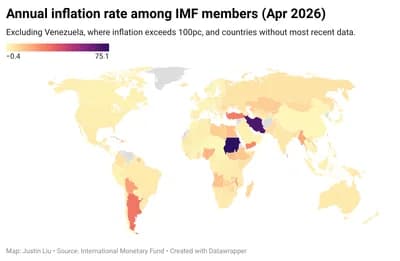
A fixed-rate mortgage locks your housing payment for 30 years, while rents have historically risen 3-5% annually — a trend that, over a decade, makes homeowners save 30-50% in real costs compared to renters. For example, a $2,000 rent today could cost $3,000 in 10 years, while a $1,800 mortgage payment stays flat.
Image credits
- The Leverage Myth: Mortgage as Wealth Builder: Causes of the 2000s United States housing bubble / Wikipedia
- Opportunity Cost of the Down Payment: Internet Archive Book Images / Wikimedia Commons (No restrictions)
- The True Cost of Homeownership: Decline of Detroit / Wikipedia
- Rent-and-Invest Strategy vs Buying: Investor / Wikipedia
- Geographic Lock-In and Career Mobility: History of artificial intelligence / Wikipedia
- Forced Savings Discipline of a Mortgage: Savings and loan crisis / Wikipedia
- Tax Benefits of Homeownership Eroding: Jakub Zerdzicki / Pexels
- The Emotional Value of "Owning Your Home": Bing Images / img.youtube.com
- Unaffordable Markets Make Renting Rational: Gentrification / Wikipedia
- Inflation Hedge vs Rent Increases: Inflation / Wikipedia
Rank it your way
Remix this list into your own ranking, or head to the play hub for every game mode and community breakdown — blind mode, challenges, tier lists, and more.
You Might Also Like

Top 10 US Title Insurance Companies
Top 10 US Title Insurance Companies

Top 10 US REIT Companies by Market Cap
biggest US REITs by market capitalization

Top 10 Side Hustles That Actually Pay in 2026
side hustles that generate real income

Top 10 US Stock Market ETFs by Assets
#1 SPDR S&P 500 ETF Trust (SPY) · #2 iShares Core S&P 500 ETF (IVV) · #3 Vanguard S&P 500 ETF (VOO)

Top 10 European Wealth Management Apps
#1 Trade Republic · #2 Scalable Capital · #3 Nutmeg

Top 10 European Pension Insurance Products
#1 Aegon — Netherlands €400B+ AUM Pension Leader · #2 NN Group — Netherlands €250B+ Life/Pension · #3 Legal & General — UK £1.4T Pension Insurer