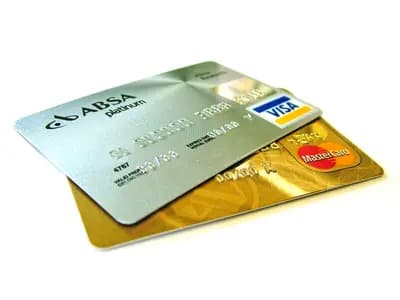
Credit card / Wikipedia
Top 10 Credit Card Networks Dominating Global Payments
Credit card networks are the invisible infrastructure powering $30+ trillion in annual global transactions, connecting billions of cardholders to millions of merchants through complex authorization, clearing, and settlement systems. The US-headquartered duopoly of Visa and Mastercard controls over 80% of global card payment volume, while American Express dominates the premium spend segment and UnionPay commands the world's largest cardholder base by number. The 2024-2026 period has been defined by the Capital One-Discover merger, stablecoin payment pilots, and the rapid expansion of real-time payment rails challenging card network hegemony in emerging markets.
Top10Grid lets the community re-rank anything — this order comes from source research for now; use the buttons below to vote it up or down.

Current Rankings
- 0#1
Visa

Visa is the world's largest payment network with $35.9 billion in revenue (FY2024), 4.3 billion cards in circulation, and acceptance at 130+ million merchant locations across 200+ countries. Its VisaNet processing network handles 76,000+ transaction messages per second with 99.999% uptime. In 2025-2026, Visa accelerated its tokenization strategy — replacing 16-digit card numbers with secure tokens — with 10 billion+ tokens issued, making Visa the largest token issuer in global payments.
- 0#2
Mastercard

Mastercard's Cyber & Intelligence solutions process real-time fraud scores using AI models trained on 150+ billion transactions annually. In 2025-2026, Mastercard's Multi-Token Network enabled banks and fintechs to issue stablecoin-linked debit cards — bridging blockchain and traditional payment rails for the first time at mainstream scale.
- 0#3
American Express

American Express generated $65.9 billion in total revenues (2024) through a unique spend-centric, fee-heavy model that targets affluent consumers and corporate clients rather than mass-market cardholders. Amex's closed-loop network — where it acts as both card issuer and network — enables richer merchant data and higher average transaction values ($250+ vs. Visa's $80). In 2025-2026, Amex's Platinum and Gold cards hit all-time-high customer acquisition records as younger affluent consumers embraced premium travel and dining perks at record rates.
- 0#4
Discover Financial Services

Discover Financial Services operates both a credit card network (the Discover Network) and issues its own cards — a rare closed-loop structure similar to Amex — generating $15.4 billion in revenue (2023). In February 2024, Capital One announced a $35.3 billion acquisition of Discover, the largest bank merger since the 2008 financial crisis, which would create a card network capable of directly challenging Visa and Mastercard's dominance in debit processing. The deal received final regulatory approval on April 18, 2025 and closed on May 18, 2025, merging the networks under Capital One's global distribution.
- 0#5
UnionPay

China UnionPay has the world's largest cardholder base at 9+ billion cards issued — more than Visa and Mastercard combined — though most usage is concentrated within China's domestic market. UnionPay's mobile payment QR code system competes with Alipay and WeChat Pay domestically, while its international card acceptance has expanded to 180+ countries. In 2025-2026, UnionPay deepened partnerships with central banks in Southeast Asia and Africa, positioning itself as the payment infrastructure of China's Belt and Road investment corridor.
- 0#6
JCB (Japan Credit Bureau)

JCB is the only Japanese international payment network, with 150+ million cardholders across 23 countries and acceptance at 40+ million merchants in the Asia-Pacific region. JCB operates as both a card brand and issuer, with strong penetration in Japan, Korea, Thailand, and Hawaii's Japanese tourist economy. In 2025-2026, JCB partnered with fintech companies in Southeast Asia to issue co-branded digital-first cards targeting unbanked populations, leveraging its deep relationships with Japanese tourism and retail brands.
- 0#7
Diners Club International

Diners Club International holds the distinction of issuing the world's first charge card in 1950 — when founder Frank McNamara famously forgot his wallet at a New York restaurant — launching the entire modern credit card industry. Now owned by Discover/Capital One, Diners Club operates a premium global charge card network with acceptance at 50+ million merchants in 185 countries, focused on corporate travel and entertainment spending. Its legacy lives on as the direct ancestor of every credit card issued today.
- 0#8
RuPay
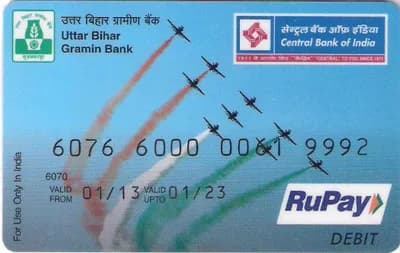
RuPay is India's government-backed domestic card network, launched by the National Payments Corporation of India (NPCI) in 2012, now with 700+ million cards issued across debit, credit, and prepaid categories. RuPay's integration with UPI (Unified Payments Interface) enables QR-based payments, contactless NFC transactions, and interoperability with India's 400+ million smartphone users. In 2025-2026, India's government mandated RuPay acceptance for all government benefit disbursements, accelerating financial inclusion for 200+ million previously unbanked citizens.
- 0#9
Interac

Interac is Canada's dominant domestic debit network, owned as a nonprofit cooperative by Canadian financial institutions, processing $80+ billion in annual debit transactions at virtually every Canadian point-of-sale terminal. Interac e-Transfer has become Canada's primary peer-to-peer payment system, processing $350+ billion in annual transfers — more than PayPal's US volume. In 2025-2026, Interac piloted its Interac Verified digital identity service, enabling Canadians to authenticate government services and financial accounts using a single credential.
- 0#10
eftpos Australia

eftpos Australia is the domestic debit card network that powers over 80% of in-store debit transactions in Australia, processing $300+ billion in annual transaction value through 900,000+ terminals. In 2022, eftpos merged with BPAY and NPP Australia to form Australian Payments Plus (AusPayNet) — consolidating Australia's retail, bill, and real-time payment rails under a unified entity. In 2025-2026, eftpos's PayTo real-time payment mandates enabled bank-approved recurring payments, directly challenging Visa and Mastercard's debit card dominance in the Australian market.
Image credits
- Visa: Visa Inc. logo (2014-2021).svg / Wikimedia Commons (entity-adopted)
- Mastercard: Wikimedia Commons
- American Express: American Express Company Building 65 Broadway entrance.jpg / Wikimedia Commons (entity-adopted)
- Discover Financial Services: Wikimedia Commons
- UnionPay: WQL / CC BY-SA 3.0 (entity-adopted)
- JCB (Japan Credit Bureau): Rs1421 / CC BY-SA 3.0 (entity-adopted)
- Diners Club International: Wikimedia Commons
- RuPay: Vk40471 / Wikimedia Commons (CC BY-SA 3.0)
- Interac: Interac Corp. / CC BY-SA 4.0 (entity-adopted)
- eftpos Australia: Wikimedia Commons
Related Videos
Rank it your way
Remix this list into your own ranking, or head to the play hub for every game mode and community breakdown — blind mode, challenges, tier lists, and more.
You Might Also Like
Top 10 US FinTech M&A Deals Reshaping Finance
Top 10 US FinTech M&A Deals Reshaping Finance

Top 10 US Payment Processors by Transaction Volume
Top 10 US Payment Processors by Transaction Volume

Top 10 Best Credit Cards for Students & Entry-Level Spenders in Hong Kong
Top 10 Best Credit Cards for Students & Entry-Level Spend...

Top 10 CoinGecko — Top Cryptocurrencies — May 6, 2026
#1 Bitcoin (BTC) · #2 Ethereum (ETH) · #3 Tether (USDT)

Top 10 CoinGecko — Top Cryptocurrencies — April 3, 2026
#1 Bitcoin (BTC) · #2 Ethereum (ETH) · #3 Tether (USDT)

Top 10 CoinGecko — Top Cryptocurrencies — May 5, 2026
#1 Bitcoin (BTC) · #2 Ethereum (ETH) · #3 Tether (USDT)