
Top 10 Most Successful Movie Franchises of All Time — the Billions Behind the Blockbusters
Movie franchises are the most reliable revenue-generating machines in entertainment history — sequels, prequels, spin-offs, and reboots multiplying a single compelling universe into multi-decade commercial empires. These 10 franchises have generated more combined box office revenue than the GDP of most nations, reshaping cinema economics, studio strategy, and global popular culture in the process.
Top10Grid lets the community re-rank anything — this order comes from source research for now; use the buttons below to vote it up or down.

Current Rankings
- 0#1
Marvel Cinematic Universe — $30+ Billion

The Marvel Cinematic Universe reigns supreme as the highest-grossing film franchise, amassing over $30 billion across 33 films — an achievement built on an unprecedented interconnected cinematic universe strategy. Starting with *Iron Man* (2008) on a $140 million budget, Marvel Studios created a template that every other studio has tried and mostly failed to replicate. *Avengers: Endgame* alone earned $2.79 billion, making it the third highest-grossing film ever, while *Infinity War* ($2.05 billion) sits at fifth. This franchise outperforms *Star Wars* by nearly triple its box office total, proving the enduring power of a meticulously planned, character-driven saga.
- 0#2
Star Wars — $10.3 Billion

George Lucas' Star Wars universe has generated $10.3 billion in theatrical revenue across 12 films since 1977 — plus an estimated $42 billion in merchandise, making it the most valuable movie franchise merchandise property in history. Disney paid $4.05 billion for Lucasfilm in 2012 and has recouped approximately that investment in theatrical revenue alone, with Disney+ series adding a new revenue stream that has extended the franchise's audience to streaming-native generations.
- 0#3
James Bond — $7.8 Billion

With 25 official films spanning 60 years, the James Bond franchise is cinema's longest-running and most consistent. From Sean Connery's 1962 debut in *Dr. No* to Daniel Craig's final outing in *No Time to Die* (2021), Bond has generated $7.8 billion in box office revenue adjusted for inflation. The franchise's ability to reinvent the character across six actors while maintaining core audience loyalty is one of the most studied long-form brand management cases in entertainment.
- 0#4
Harry Potter + Wizarding World — $9.7 Billion

The Harry Potter franchise — 8 core films plus the *Fantastic Beasts* series — has generated $9.7 billion at the global box office, with *Harry Potter and the Deathly Hallows Part 2* alone earning $1.34 billion. The franchise's broader economic footprint includes Universal Studios' Wizarding World theme parks ($1 billion+ annually), merchandise ($25 billion cumulative), and J.K. Rowling's books (500 million copies). The books-to-film adaptation pipeline it pioneered became the template for *Twilight*, *The Hunger Games*, and *Divergent*.
- 0#5
Fast & Furious — $7.3 Billion

The Fast & Furious franchise boasts one of Hollywood's most improbable growth arcs, evolving from a modest $38 million street-racing origins in 2001 to a globe-trotting spy-action juggernaut that has amassed $7.3 billion across 11 films. Furious 7 alone earned $1.52 billion, ranking as the third-highest-grossing film of 2015, while F8 added $1.24 billion.
- 0#6
DC Extended Universe — $5.8 Billion

Despite persistent critical struggles, the DC Extended Universe has generated $5.8 billion, proving that superhero brand recognition reliably drives theatrical attendance even when reviews are mixed. Standouts like Aquaman ($1.15 billion) and Wonder Woman ($822 million) show the ceiling achievable with clear vision. The franchise's repeated continuity resets, culminating in James Gunn's 2024 DC Universe relaunch, reflect a challenge the MCU largely avoided with its decade-long planning — suggesting that brand power alone cannot compensate for a fractured narrative foundation.
- 0#7
Jurassic Park / World — $6 Billion

Steven Spielberg's 1993 Jurassic Park launched one of cinema's most resilient franchises, with Jurassic World: Dominion completing a six-film cycle that generated $6 billion in cumulative box office — well ahead of the Transformers series' $4.8 billion, a margin attributable to the original's pioneering photorealistic CGI, which made every subsequent blockbuster possible. The first Jurassic Park earned roughly $1 billion globally in 1993, among the first films ever to reach that mark, establishing that a $100 million budget could yield outsized returns in a global market.
- 0#8
Transformers — $4.8 Billion
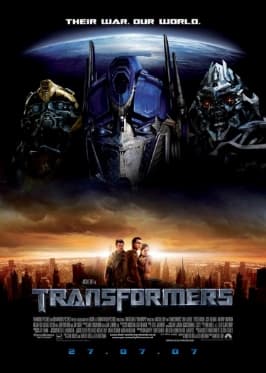
Michael Bay's Transformers franchise—adapted from a Hasbro toy line—has generated $4.8 billion across 7 films while being critically eviscerated for each installment, making it the definitive proof that spectacle and nostalgia can deliver reliable box office independent of quality.
- 0#9
Mission: Impossible — $3.6 Billion
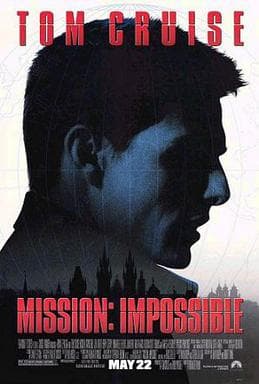
Its strongest entry, Fallout (2018), grossed $791 million worldwide, outpacing the runner-up, Ghost Protocol (roughly $695 million), by close to $100 million. Cruise's insistence on performing genuine stunts—scaling the Burj Khalifa, HALO jumping, motorcycle base-jumping in Norway—has made practical effects a brand differentiator as CGI dominates rivals like the Fast & Furious franchise. Dead Reckoning Part One (2023) pushed the envelope further with a $290 million budget, yet still turned a profit, proving that real spectacle commands premium audiences.
- 0#10
The Lord of the Rings / The Hobbit — $5.9 Billion
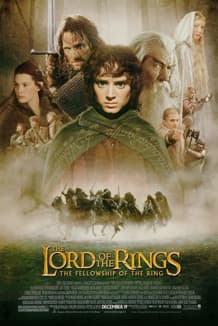
The Return of the King (2003) not only earned $1.1 billion at the box office but also won 11 Academy Awards—tied with Ben-Hur and Titanic for the most ever. Jackson's innovative approach of shooting all three LOTR films simultaneously in New Zealand, on a combined budget of roughly $281 million, pioneered a long-lead production model later echoed by Marvel's own multi-film planning. The strategy also helped permanently establish New Zealand as a major destination for film tourism.
Watch the ranking video
Image credits
- Marvel Cinematic Universe — $30+ Billion: Wikipedia
- Star Wars — $10.3 Billion: Otto Rascon / Pexels
- James Bond — $7.8 Billion: Wikipedia
- Harry Potter + Wizarding World — $9.7 Billion: The Wizarding World of Harry Potter / Wikipedia
- Fast & Furious — $7.3 Billion: Wikipedia
- DC Extended Universe — $5.8 Billion: Wikipedia
- Jurassic Park / World — $6 Billion: Wikipedia
- Transformers — $4.8 Billion: Wikipedia
- Mission: Impossible — $3.6 Billion: Wikipedia
- The Lord of the Rings / The Hobbit — $5.9 Billion: Wikipedia
Related Videos
Rank it your way
Remix this list into your own ranking, or head to the play hub for every game mode and community breakdown — blind mode, challenges, tier lists, and more.
You Might Also Like

Top 10 Turkish Films of All Time
Top 10 Turkish Films of All Time
Top 10 Movies That Permanently Changed Cinema — Every Film After Them Was Different
Top 10 Movies That Permanently Changed Cinema — Every Film After Them Was Different
Top 10 Argentine Films of All Time
Top 10 Argentine Films of All Time

Top 10 Highest-Grossing Movies of All Time
Top 10 Highest-Grossing Movies of All Time

Top 10 YouTube — Trending Videos (US) — September 2, 2026
#1 Felix "Slow It Down" | [Stray Kids : SKZ-PLAYER] · #2 Street Fighter | New Trailer (2026 Movie) · #3 🔴LIVE | THE COMEBACK. | ESCAPE FROM TARKOV | John X Cloakzy | #BUNGULATE

Top 10 Apple Music — Top Albums (US) — May 9, 2026
#1 BROWN — Chris Brown · #2 The Great Divide: The Last Of The Bugs — Noah Kahan · #3 Dandelion — Ella Langley