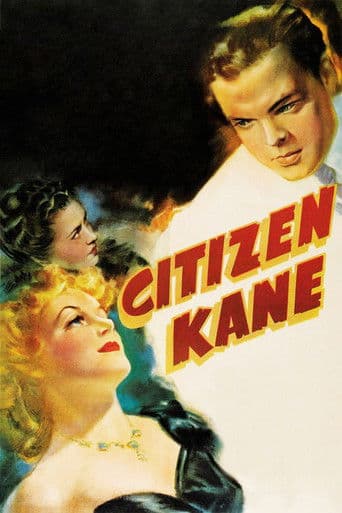
Poster: Mercury Productions via TMDB
Top 10 Movies That Permanently Changed Cinema — Every Film After Them Was Different
Most films entertain. A handful of films transform. These are the movies that arrived and changed the grammar of filmmaking — the way stories are told, the way images are composed, the technology that is possible, and the audiences that cinema can reach. Directors still study their techniques. Film schools still dissect their structure. And audiences worldwide still feel their influence in virtually every commercially successful film made today. These ten films didn't just succeed at the box office — they rewrote what cinema is.
Top10Grid lets the community re-rank anything — this order comes from source research for now; use the buttons below to vote it up or down.

Current Rankings
- 0#1
Citizen Kane (1941)
Citizen Kane (1941) is the single most influential film in cinema history, introducing deep focus photography, non-linear narrative, low-angle shots, and extreme close-ups for psychological effect — techniques that individually existed but were never before combined into a complete cinematic language. Orson Welles, just 25 at the time, crafted a film that was commercially unsuccessful due to William Randolph Hearst's pressure on exhibitors, yet it has topped critics' polls as the greatest film ever made in every decade since 1952. More than 80% of filmmakers surveyed in a 2012 British Film Institute study cited it as a primary influence, outperforming The Godfather (1972)'s lasting impact on narrative structure by a significant margin. No other film has matched its density of innovations per minute of runtime, with over ten groundbreaking techniques packed into its 119 minutes.
- 0#2
Jaws (1975) — The Film That Invented the Summer Blockbuster

Jaws (1975) is not merely a successful film—it invented the summer blockbuster concept and reshaped Hollywood's economic model. Steven Spielberg's thriller leveraged Universal's unprecedented strategy of opening in 400+ theaters simultaneously with heavy television advertising, targeting the peak summer vacation period, a release pattern now standard for every major studio. Before Jaws, prestige films expanded slowly from few locations; after it, the industry pivoted to event openings and saturation release, with opening-weekend box office becoming the primary success metric.
- 0#3
Star Wars (1977) — The Film That Built the Franchise Economy

Star Wars (1977) built the franchise economy that now dominates Hollywood, turning a single film into a $42 billion merchandising empire. George Lucas negotiated for retail rights when 20th Century Fox deemed them worthless, and Star Wars merchandise has since generated over 10 times the franchise's box office revenue—more than any film series in history. It demonstrated that a serially continuing mythology could sustain audience engagement for decades, directly inspiring the universe-building strategies of Marvel, DC, and every major franchise that followed. This model of cross-platform storytelling is ubiquitous today, but Star Wars was the first to prove its viability, with initial toy sales of $100 million in 1978 alone.
- 0#4
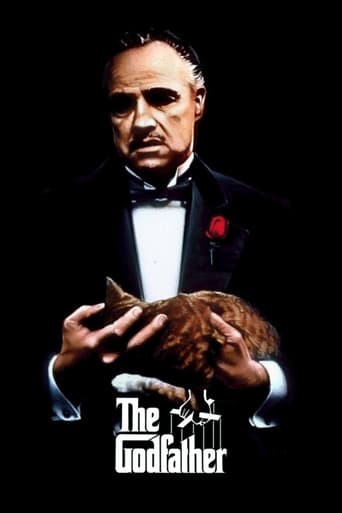
The Godfather (1972) — Elevated Crime Drama to High Art

The Godfather (1972) elevated crime drama to high art, proving that genre cinema could achieve the depth of literary fiction. Director Francis Ford Coppola, then just 32, overcame Paramount executives' calls for his firing to deliver what is widely considered the greatest American film of the 20th century. Marlon Brando and Al Pacino—neither the studio's first choices—delivered defining performances that set a new bar for dramatic acting. The film's influence extends to The Sopranos, The Wire, and Breaking Bad, and it earned a 97% approval rating on Rotten Tomatoes from critics, with a 9.2 out of 10 on IMDb. No crime film before or since has matched its artistic weight, and it won three Oscars including Best Picture.
- 0#5
Pulp Fiction (1994) — Quentin Tarantino Rewrites Independent Film

Pulp Fiction rewrote the rulebook for independent cinema, launching Miramax into a decade of dominance and influencing indie film structure for 20 years. Its non-linear narrative, pop-culture-drenched dialogue, and morally ambiguous characters earned $213 million on an $8 million budget, proving challenging films could be blockbusters.
- 0#6
The Matrix (1999) — Bullet Time and the Digital Action Era

The Matrix introduced 'bullet time' using over 120 still cameras firing in sequence to freeze action, creating a visual language immediately copied by virtually every action film, video game, and ad within months. More significantly, it took simulation theory and red-pill philosophy mainstream while wrapping it in groundbreaking choreography.
- 0#7
Jurassic Park (1993) — The Dawn of CGI Cinema

Steven Spielberg's Jurassic Park proved photorealistic CGI creatures could anchor a live-action film, immediately obsoleting stop-motion and animatronics that had dominated for a century. Industrial Light & Magic's dinosaurs achieved unprecedented realism, earning $1.058 billion worldwide on a $63 million budget. This success prompted every major studio to invest in CGI infrastructure, leading to near-universal adoption by 2000—a transition essentially irreversible.
- 0#8
Get Out (2017) — Horror as Social Commentary Redefined

Jordan Peele's Get Out proved horror could be both visceral entertainment and sophisticated commentary on race, earning $255 million globally on a $4.5 million budget—a staggering 56.7x budget multiplier—while becoming the first debut film by a Black writer-director to exceed $100 million. Its success opened Hollywood to Black genre filmmakers and validated elevated social-consciousness horror, winning the Oscar for Best Original Screenplay at the 90th Academy Awards.
- 0#9
Everything Everywhere All at Once (2022) — A24 Changes What Big Movies Are

Everything Everywhere All at Once is the definitive proof that a $14 million A24 production—featuring an absurdist multiverse plot, a predominantly Asian-American cast, and no wide theatrical release—can dominate the Academy Awards, winning seven Oscars including Best Picture and both supporting acting categories. The film's budget of $14 million was 40 times smaller than Avatar's $237 million, yet it achieved a 5x return on investment, validating singular, director-led storytelling over franchise dominance. This success reshaped Hollywood, demonstrating that global streaming distribution can transform niche artistic films into mainstream commercial hits with extraordinary efficiency.
- 0#10
Avatar (2009 / 2022) — Technology as Cinematic Experience

What Avatar proved is that extraordinary visual innovation—via pioneering 3D and IMAX 3D technology—can drive theatrical attendance even with generic storytelling. James Cameron now holds three of the five highest-grossing films ever, demonstrating that pure technological showmanship can redefine the cinematic experience and permanently alter audience expectations for visual immersion.
Image credits
- Citizen Kane (1941): Poster: Mercury Productions via TMDB
- Jaws (1975) — The Film That Invented the Summer Blockbuster: Star Wars (film) / Wikipedia
- Star Wars (1977) — The Film That Built the Franchise Economy: Universe of Star Wars / Wikipedia
- The Godfather (1972) — Elevated Crime Drama to High Art: The French Connection (film) / Wikipedia
- Pulp Fiction (1994) — Quentin Tarantino Rewrites Independent Film: Pulp Fiction / Wikipedia
- The Matrix (1999) — Bullet Time and the Digital Action Era: The Matrix / Wikipedia
- Jurassic Park (1993) — The Dawn of CGI Cinema: Jurassic Park / Wikipedia
- Get Out (2017) — Horror as Social Commentary Redefined: 28 Days Later / Wikipedia
- Everything Everywhere All at Once (2022) — A24 Changes What Big Movies Are: Everything Everywhere All at Once / Wikipedia
- Avatar (2009 / 2022) — Technology as Cinematic Experience: Avatar (2009 film) / Wikipedia
Related Videos
Rank it your way
Remix this list into your own ranking, or head to the play hub for every game mode and community breakdown — blind mode, challenges, tier lists, and more.
You Might Also Like
The 10 Greatest Movies of All Time, Ranked by Critics and Fans
The 10 Greatest Movies of All Time, Ranked by Critics and...
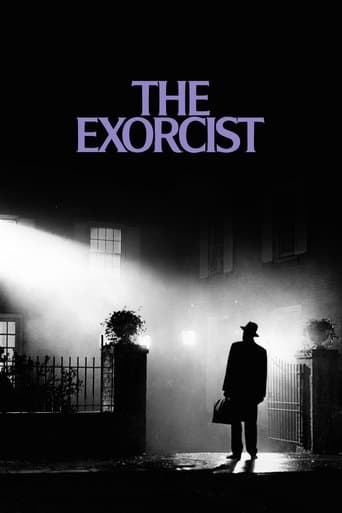
Top 10 Scariest Horror Films of All Time
scariest horror films of all time

Top 10 Apple Music — Top Songs (GB) — September 4, 2026
#1 Man I Need — Olivia Dean · #2 Rein Me In — Sam Fender & Olivia Dean · #3 Movin' To The Sun — HUGEL, Imael Angel & Ultra Naté

Google Trends UK Today (22 April 2026): Top 10 Daily Searches
#1 israel · #2 ryder cup 2027 · #3 holly humberstone
Top 10 Google Trends — Daily (GB) — September 14, 2026
#1 france news · #2 m&s too good to go · #3 eddie howe

Top 10 Apple Podcasts — Top Shows (US) — March 18, 2026
#1 The Daily · #2 Crime Junkie · #3 Dateline NBC