
Wikipedia
Science fiction cinema at its greatest does more than dazzle with spectacle — it uses the impossible to illuminate the profoundly human. From Stanley Kubrick's transcendent vision of space travel in 1968 to Denis Villeneuve's linguistic meditation on time in 2016, these ten films each redefined what the genre could achieve, earning their place through critical consensus, cultural impact, technical innovation, and the rare ability to still feel essential decades after release. Ranked by the intersection of artistic ambition, box-office resonance, and lasting influence on cinema and popular culture.
Community rankings for this Film
Curated by our film editors. Critical reception and community vote both shape the order — updated as opinion shifts.

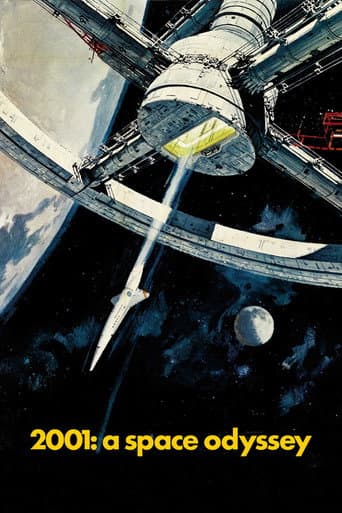
Stanley Kubrick's 2001: A Space Odyssey (1968) is the most formally ambitious science fiction film ever made and, by broad critical consensus, the greatest. Working with Arthur C. Clarke, Kubrick spent four years crafting a film that depicts humanity's entire arc — from bone-wielding apes to star-children — with almost no dialogue in its first and final acts. The practical effects, achieved two years before the Moon landing, are so precise that NASA later used the film to reassure the public that space travel was feasible. The HAL 9000 sequence remains cinema's defining portrait of artificial intelligence as existential threat. Certified Fresh at 96% on Rotten Tomatoes, it won the Academy Award for Best Visual Effects and was selected for preservation in the US National Film Registry in 1991.

George Lucas's Star Wars (1977) — later retitled A New Hope — did not merely produce a hit film; it fundamentally restructured the economics and aesthetics of Hollywood. Made on a budget of $11 million, it grossed $775 million worldwide (adjusted to over $3 billion in 2023 dollars), invented the modern blockbuster model of summer tentpole releases and franchise-driven merchandising, and won six Academy Awards including Best Original Score (John Williams), Best Film Editing, and Best Visual Effects. The Industrial Light and Magic effects company Lucas founded specifically for the film became the industry standard for practical and digital effects for the next four decades. Its hero's journey structure, derived from Joseph Campbell's "The Hero with a Thousand Faces", became the template for mainstream genre storytelling worldwide.

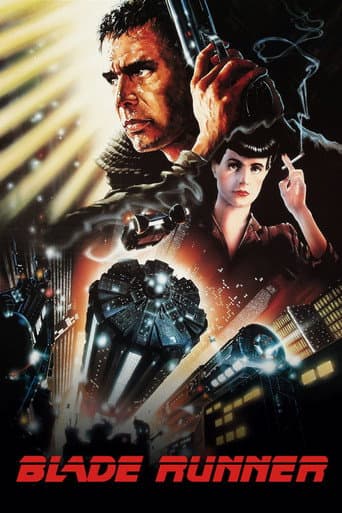
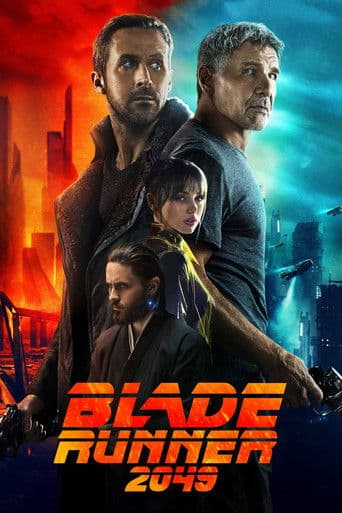
Ridley Scott's Blade Runner (1982) was a commercial disappointment on release but has since been reappraised as the definitive cyberpunk text — the visual, philosophical, and aesthetic source from which virtually every dystopian urban science fiction film of the past four decades has drawn. Syd Mead's production design of rain-soaked, neon-lit 2019 Los Angeles established the visual grammar of the genre; the question of whether Harrison Ford's Deckard is himself a replicant — a question Scott and Ford have given contradictory answers to for 40 years — gave it a philosophical depth that sustains scholarly analysis. Certified Fresh at 90% on Rotten Tomatoes, it received five Academy Award nominations and was selected for the US National Film Registry in 1993.

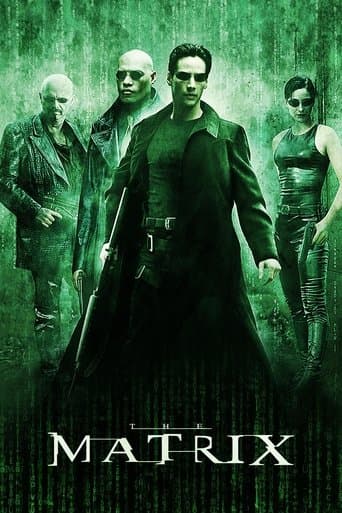
The Wachowskis' The Matrix (1999) arrived at the precise cultural moment when anxieties about digital reality, simulation, and computer dependency were reaching mainstream consciousness, and it answered them with a film that was simultaneously a philosophy lecture, a Hong Kong action film, and a cyberpunk thriller. Its "bullet time" visual effect — high-speed photography around a frozen moment — was immediately adopted by every major action film produced in the following decade. The film grossed $463 million worldwide against a $63 million budget, won four Academy Awards, and introduced concepts (the red pill/blue pill choice, simulated reality, "there is no spoon") that became genuine idioms of popular philosophy. Its central question — are we living in a simulation — is now seriously debated by physicists and Silicon Valley billionaires alike.

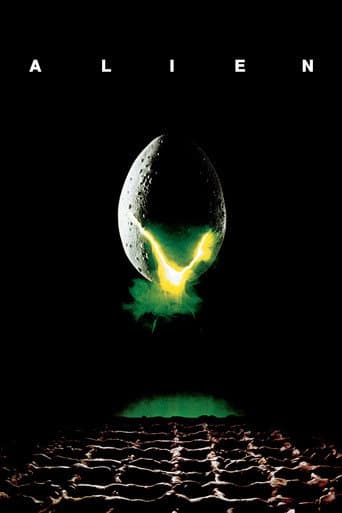
Ridley Scott's Alien (1979) achieved something almost unique in science fiction: it transplanted the grammar of the haunted-house horror film into deep space and made it feel entirely plausible. HR Giger's biomechanical creature design — unsettling because it fuses the organic with the mechanical in viscerally disturbing ways — won the Academy Award for Best Visual Effects and created one of cinema's great iconic monsters. Certified Fresh at 97% on Rotten Tomatoes, the film's grimy, industrial vision of space travel — the Nostromo's crew are blue-collar workers, not heroic astronauts — was as influential on the genre's aesthetic as 2001 was on its visual grandeur. It launched a franchise of eight films and counting, and its female protagonist Ellen Ripley (Sigourney Weaver) redefined how action heroes could be written.

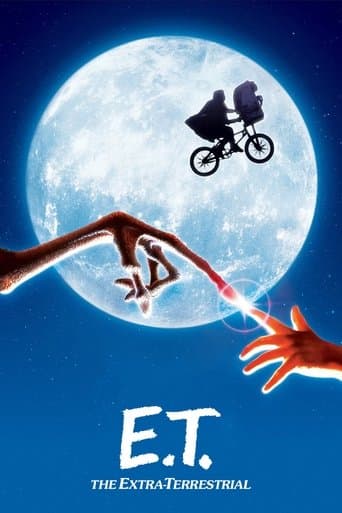
Steven Spielberg's E.T. the Extra-Terrestrial (1982) was the highest-grossing film of its decade, earning $793 million worldwide against a $10.5 million budget — a return of 75:1 that remained the standard for blockbuster profitability for years. But its commercial power derived from emotional precision: E.T. is fundamentally a film about childhood loneliness, the terror of adult authority, and the radical empathy required to befriend the genuinely alien. Its John Williams score, the silhouetted bicycle-against-the-moon image, and its final farewell sequence are among cinema's most emotionally effective constructions. It won four Academy Awards, was nominated for Best Picture, and was selected for the US National Film Registry in 1994. For many critics and audiences it remains the definitive family science fiction film.

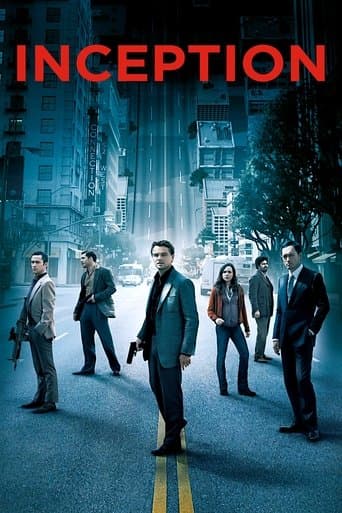
Christopher Nolan's Inception (2010) is the most formally complex science fiction blockbuster ever made to achieve genuine mainstream success, grossing $836 million worldwide and winning four Academy Awards (Cinematography, Visual Effects, Sound Mixing, Sound Editing). Its architecture of nested dream-levels — a heist within a dream within a dream within a dream — demands active audience engagement of a kind rarely attempted in $160 million studio films. The film's spinning top ending, designed to be deliberately ambiguous about whether the protagonist has ever returned to reality, generated more analytical essays than perhaps any film of the decade. Certified Fresh at 87% on Rotten Tomatoes, it demonstrated that a wholly original, fiercely intellectual science fiction concept could compete at the top of the global box office.

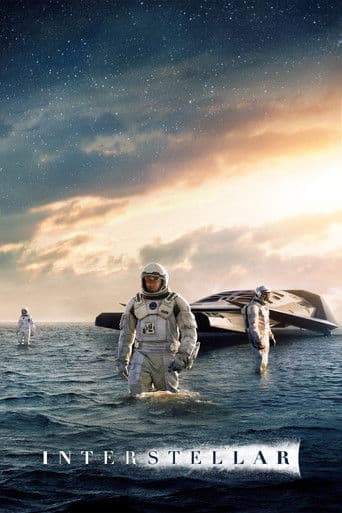
Christopher Nolan's Interstellar (2014) is the most scientifically rigorous mainstream science fiction film ever made: the film's depictions of a rotating black hole and the gravitational time dilation experienced near it were developed in collaboration with theoretical physicist Kip Thorne (who won the 2017 Nobel Prize in Physics partly for related work), and generated two peer-reviewed academic papers. Grossing $701 million worldwide and winning the Academy Award for Best Visual Effects, the film uses relativity and time dilation as genuine emotional instruments — a father watching his daughter age faster than himself across an unbridgeable cosmic distance. Certified Fresh at 73% on Rotten Tomatoes, it remains one of the few films to make advanced astrophysics feel viscerally heartbreaking.

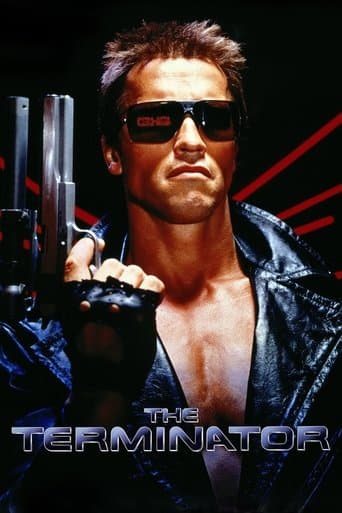
James Cameron's The Terminator (1984) was made for $6 million and grossed $78 million worldwide — a 13:1 return that transformed Cameron from an unknown director into one of Hollywood's most bankable names. Its time-travel paradox (a machine sent from the future to prevent the birth of the man who will defeat its creators) was constructed with unusual logical rigour for its genre, and its central image — an unstoppable machine beneath a human disguise, relentlessly pursuing its target — tapped directly into 1980s anxieties about nuclear weapons, automation, and determinism. Arnold Schwarzenegger's performance as the T-800, built almost entirely from physical menace and monosyllables, created one of cinema's great iconic villains. The franchise it spawned has grossed over $2 billion across six films.

Denis Villeneuve's Arrival (2016) is the finest science fiction film of the 21st century's first two decades, a work that uses the genre's premise — Earth contacted by alien intelligence — to explore linguistic determinism, free will, and the nature of grief with a rigour and emotional depth that most literary drama cannot match. Based on Ted Chiang's novella "Story of Your Life", adapted by Eric Heisserer, it received eight Academy Award nominations including Best Picture and Best Director, winning for Best Sound Editing. Certified Fresh at 94% on Rotten Tomatoes, it demonstrates that science fiction's highest ambitions — using the impossible to make the most human experiences feel newly comprehensible — are still reachable in a studio context.
The most-voted lists across every category — curated weekly. Join the early readers.
No spam. One email per week. Unsubscribe anytime.


Create a free account or sign in to join the discussion.
Sign in to join the conversation
Top 10 Greatest Movies of All Time
Netflix Top 10 Movies — Global — Apr 6, 2026
Top 10 Most Awarded Film Actors of All Time
Top 10 World Cup Documentaries and FilmsExplore more Film rankings on Top10Grid
Because you're viewing Film

Stanley Kubrick's 2001: A Space Odyssey (1968) is the most formally ambitious science fiction film ever made and, by broad critical consensus, the greatest. Working with Arthur C. Clarke, Kubrick spent four years crafting a film that depicts humanity's entire arc — from bone-wielding apes to star-children — with almost no dialogue in its first and final acts. The practical effects, achieved two years before the Moon landing, are so precise that NASA later used the film to reassure the public that space travel was feasible. The HAL 9000 sequence remains cinema's defining portrait of artificial intelligence as existential threat. Certified Fresh at 96% on Rotten Tomatoes, it won the Academy Award for Best Visual Effects and was selected for preservation in the US National Film Registry in 1991.

George Lucas's Star Wars (1977) — later retitled A New Hope — did not merely produce a hit film; it fundamentally restructured the economics and aesthetics of Hollywood. Made on a budget of $11 million, it grossed $775 million worldwide (adjusted to over $3 billion in 2023 dollars), invented the modern blockbuster model of summer tentpole releases and franchise-driven merchandising, and won six Academy Awards including Best Original Score (John Williams), Best Film Editing, and Best Visual Effects. The Industrial Light and Magic effects company Lucas founded specifically for the film became the industry standard for practical and digital effects for the next four decades. Its hero's journey structure, derived from Joseph Campbell's "The Hero with a Thousand Faces", became the template for mainstream genre storytelling worldwide.

Ridley Scott's Blade Runner (1982) was a commercial disappointment on release but has since been reappraised as the definitive cyberpunk text — the visual, philosophical, and aesthetic source from which virtually every dystopian urban science fiction film of the past four decades has drawn. Syd Mead's production design of rain-soaked, neon-lit 2019 Los Angeles established the visual grammar of the genre; the question of whether Harrison Ford's Deckard is himself a replicant — a question Scott and Ford have given contradictory answers to for 40 years — gave it a philosophical depth that sustains scholarly analysis. Certified Fresh at 90% on Rotten Tomatoes, it received five Academy Award nominations and was selected for the US National Film Registry in 1993.

The Wachowskis' The Matrix (1999) arrived at the precise cultural moment when anxieties about digital reality, simulation, and computer dependency were reaching mainstream consciousness, and it answered them with a film that was simultaneously a philosophy lecture, a Hong Kong action film, and a cyberpunk thriller. Its "bullet time" visual effect — high-speed photography around a frozen moment — was immediately adopted by every major action film produced in the following decade. The film grossed $463 million worldwide against a $63 million budget, won four Academy Awards, and introduced concepts (the red pill/blue pill choice, simulated reality, "there is no spoon") that became genuine idioms of popular philosophy. Its central question — are we living in a simulation — is now seriously debated by physicists and Silicon Valley billionaires alike.

Ridley Scott's Alien (1979) achieved something almost unique in science fiction: it transplanted the grammar of the haunted-house horror film into deep space and made it feel entirely plausible. HR Giger's biomechanical creature design — unsettling because it fuses the organic with the mechanical in viscerally disturbing ways — won the Academy Award for Best Visual Effects and created one of cinema's great iconic monsters. Certified Fresh at 97% on Rotten Tomatoes, the film's grimy, industrial vision of space travel — the Nostromo's crew are blue-collar workers, not heroic astronauts — was as influential on the genre's aesthetic as 2001 was on its visual grandeur. It launched a franchise of eight films and counting, and its female protagonist Ellen Ripley (Sigourney Weaver) redefined how action heroes could be written.

Steven Spielberg's E.T. the Extra-Terrestrial (1982) was the highest-grossing film of its decade, earning $793 million worldwide against a $10.5 million budget — a return of 75:1 that remained the standard for blockbuster profitability for years. But its commercial power derived from emotional precision: E.T. is fundamentally a film about childhood loneliness, the terror of adult authority, and the radical empathy required to befriend the genuinely alien. Its John Williams score, the silhouetted bicycle-against-the-moon image, and its final farewell sequence are among cinema's most emotionally effective constructions. It won four Academy Awards, was nominated for Best Picture, and was selected for the US National Film Registry in 1994. For many critics and audiences it remains the definitive family science fiction film.

Christopher Nolan's Inception (2010) is the most formally complex science fiction blockbuster ever made to achieve genuine mainstream success, grossing $836 million worldwide and winning four Academy Awards (Cinematography, Visual Effects, Sound Mixing, Sound Editing). Its architecture of nested dream-levels — a heist within a dream within a dream within a dream — demands active audience engagement of a kind rarely attempted in $160 million studio films. The film's spinning top ending, designed to be deliberately ambiguous about whether the protagonist has ever returned to reality, generated more analytical essays than perhaps any film of the decade. Certified Fresh at 87% on Rotten Tomatoes, it demonstrated that a wholly original, fiercely intellectual science fiction concept could compete at the top of the global box office.

Christopher Nolan's Interstellar (2014) is the most scientifically rigorous mainstream science fiction film ever made: the film's depictions of a rotating black hole and the gravitational time dilation experienced near it were developed in collaboration with theoretical physicist Kip Thorne (who won the 2017 Nobel Prize in Physics partly for related work), and generated two peer-reviewed academic papers. Grossing $701 million worldwide and winning the Academy Award for Best Visual Effects, the film uses relativity and time dilation as genuine emotional instruments — a father watching his daughter age faster than himself across an unbridgeable cosmic distance. Certified Fresh at 73% on Rotten Tomatoes, it remains one of the few films to make advanced astrophysics feel viscerally heartbreaking.

James Cameron's The Terminator (1984) was made for $6 million and grossed $78 million worldwide — a 13:1 return that transformed Cameron from an unknown director into one of Hollywood's most bankable names. Its time-travel paradox (a machine sent from the future to prevent the birth of the man who will defeat its creators) was constructed with unusual logical rigour for its genre, and its central image — an unstoppable machine beneath a human disguise, relentlessly pursuing its target — tapped directly into 1980s anxieties about nuclear weapons, automation, and determinism. Arnold Schwarzenegger's performance as the T-800, built almost entirely from physical menace and monosyllables, created one of cinema's great iconic villains. The franchise it spawned has grossed over $2 billion across six films.

Denis Villeneuve's Arrival (2016) is the finest science fiction film of the 21st century's first two decades, a work that uses the genre's premise — Earth contacted by alien intelligence — to explore linguistic determinism, free will, and the nature of grief with a rigour and emotional depth that most literary drama cannot match. Based on Ted Chiang's novella "Story of Your Life", adapted by Eric Heisserer, it received eight Academy Award nominations including Best Picture and Best Director, winning for Best Sound Editing. Certified Fresh at 94% on Rotten Tomatoes, it demonstrates that science fiction's highest ambitions — using the impossible to make the most human experiences feel newly comprehensible — are still reachable in a studio context.

Top 10 World Cup Documentaries and Films
91 views · 0 votes

Top 10 Greatest War Films of All Time
180 views · @admin

Top 10 Most Anticipated Movies of 2026
80 views · @admin

Top 10 Robert Duvall Roles
69 views · @admin
Top 10 Most Iconic Squid Game Characters
63 views · @admin

Top 10 Trending TikTok Videos — March 2026
55 views · @admin

Top 10 Best Movies of 2025
54 views · @admin
If you liked this, you might love these


Top 10 Easter Movies to Watch
10 items

Top 15 Best Hong Kong Films & TV Shows to Watch in 2025-2026
15 items

Top 10 Robert Duvall Roles
10 items

Top 10 Highest-Grossing Films of All Time (Worldwide Box Office)
10 items

Top 10 Best Sci-Fi Films of All Time
10 items

Top 10 Greatest Movies of All Time
10 items