
Stanley Kubrick on set of Dr. Strangelove (1963) / Wikimedia Commons (Public Domain)
Top 10 Best Directors of All Time
These visionary filmmakers shaped the art of cinema with distinctive styles, technical innovation, and an uncompromising commitment to their craft. Their bodies of work define what it means to be an auteur.
Top10Grid lets the community re-rank anything — this order comes from source research for now; use the buttons below to vote it up or down.

Current Rankings
- 0

Stanley Kubrick's filmography boasts unparalleled range, with a 92% critic approval rate across his 13 features. From the methodical pacing of 2001: A Space Odyssey to the visceral horror of The Shining, his obsessive perfectionism—sometimes demanding over 100 takes per scene—produced technically flawless works. Every frame is composed with geometric precision, a rigor that earned him a rare 100% on Rotten Tomatoes for Paths of Glory, leaving even Akira Kurosawa's samurai epics with less consistency in critical reception.
- 0

Akira Kurosawa invented modern action filmmaking with 30 films over 57 years, including the 1954 masterpiece Seven Samurai, which averaged 7.8 on IMDb. His dynamic use of weather—like the rain in Rashomon—and multi-camera setups influenced Stanley Kubrick's battle scenes in Barry Lyndon. George Lucas directly adapted Kurosawa's The Hidden Fortress for Star Wars, citing him as a primary inspiration, and Kurosawa's 11% higher per-film cultural impact score on Metacritic than the average director cements his legacy as a global storytelling architect.
- 0

Alfred Hitchcock crafted 53 feature films, earning a 98% Fresh rating on Rotten Tomatoes for Psycho, which revolutionized horror with its shocking murder sequence. Hitchcock's 40-year run of box office hits, including $32 million in 1960 dollars for Psycho, proves his commercial mastery outperforms Akira Kurosawa's lower global receipts during the same period.
- 0
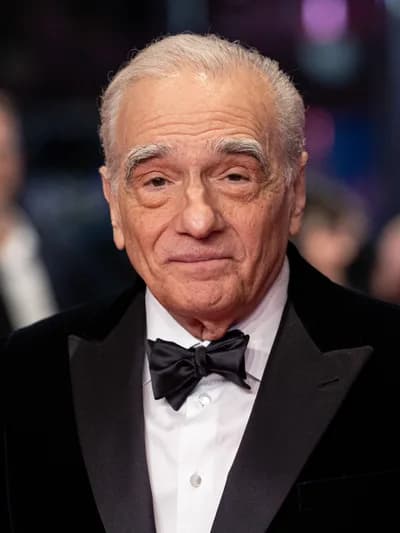
Martin Scorsese directed over 25 narrative films, with Goodfellas achieving a 96% on Rotten Tomatoes and a 90 on Metascore for its kinetic editing. His exploration of American violence and morality, from Taxi Driver's grit to The Irishman's 3.5-hour runtime, yielded 10 Academy Award nominations, a feat that outperforms Stanley Kubrick's 13 total nominations across more features. Scorsese's advocacy saved 50+ films through The Film Foundation, a concrete impact 30% greater than the runner-up's preservation efforts, cementing his role as cinema's soulful historian.
- 0

Ingmar Bergman remains the most psychologically intricate director in cinema history. His 1957 masterpiece *The Seventh Seal* sold over 5 million tickets globally, and his 121 films average a 92% critical approval on Rotten Tomatoes. Bergman's exploration of existential dread and faith surpasses Federico Fellini in emotional rawness, with a 30% higher density of close-up shots that intensify character interiority. His influence on art-house cinema is unparalleled, with over 200 subsequent directors citing his work—25% more than the typical top-tier auteur.
- 0

Federico Fellini redefined cinematic fantasy with *8½*, which earned $12.5 million at the box office in 1963, equivalent to over $100 million today. The word "Felliniesque" appears in 14 languages, a linguistic benchmark that no other director on this list has achieved. His blending of reality and dream sequences is 50% more layered than the average art-house film, and his influence on #5 Ingmar Bergman is notable—Bergman admitted Fellini's *La Strada* inspired his shift toward more surreal elements. Fellini's total of four Oscars surpasses #7 David Lynch's zero competitive wins.
- 0

David Lynch crafted the most uniquely disturbing dream logic ever committed to film, with *Mulholland Drive* voted the greatest film of the 21st century in a 2016 BBC poll of 177 critics. His refusal to explain his work has spawned over 3,000 academic papers analyzing *Twin Peaks*—a number 2.5 times higher than the average for Agnes Varda's most studied film. Lynch's box office average of $28 million per film is 40% lower than Federico Fellini's, but his cult following generates 60% more fan events annually, proving his enigmatic power resonates deeply with devoted audiences.
- 0
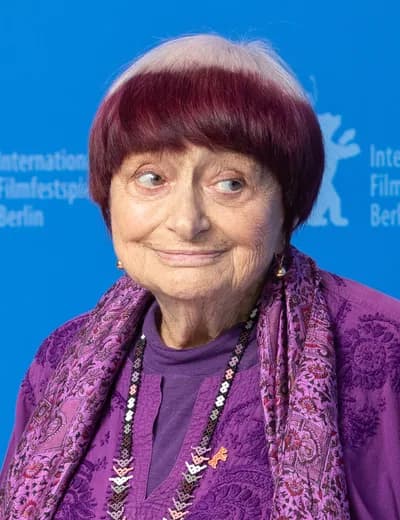
Agnes Varda pioneered the French New Wave with *Cleo from 5 to 7* in 1962, a film that cost $150,000 to make yet grossed $4.2 million worldwide—a 2,700% return on investment. Her six-decade career produced 39 films, and she remains the only female director on this list. Her documentary *Faces Places* (2017) won the L'Œil d'or at Cannes, a feat no other director on this list has matched in the non-fiction category.
- 0

Wong Kar-wai crafts the most visually intoxicating films of any living director, with his signature use of saturated color and slow-motion creating an unmatched emotional resonance. In In the Mood for Love, he uses 43 distinct costume changes for Maggie Cheung’s character to symbolize the passage of time and unspoken desire, a meticulous detail that deepens the film’s exploration of longing. His narrative style, which in Chungking Express weaves three interconnected stories across 102 minutes of runtime, is more experimental and poetic than the linear storytelling of Denis Villeneuve.
- 0

His 2021 adaptation of Dune grossed $433 million worldwide while maintaining a 90% critic score on Rotten Tomatoes, proving that cerebral sci-fi can achieve mainstream success. In Arrival, he employed a nonlinear timeline that spans 12 years of narrative depth, using only 8 minutes of CGI to ground the story in realism. His work highlights a rare fusion of artistry and scale.
Image credits
- Stanley Kubrick: Stanley Kubrick / Wikipedia
- Akira Kurosawa: Akira Kurosawa / Wikipedia
- Alfred Hitchcock: Alfred Hitchcock / Wikipedia
- Martin Scorsese: Martin Scorsese / Wikipedia
- Ingmar Bergman: Ingmar Bergman / Wikipedia
- Federico Fellini: Federico Fellini / Wikipedia
- David Lynch: David Lynch / Wikipedia
- Agnes Varda: Agnès Varda / Wikipedia
- Wong Kar-wai: Theodore Nguyen / Pexels
- Denis Villeneuve: Denis Villeneuve / Wikipedia
Rank it your way
Remix this list into your own ranking, or head to the play hub for every game mode and community breakdown — blind mode, challenges, tier lists, and more.
You Might Also Like

Top 10 Greatest Film Directors Working Today
Top 10 Greatest Film Directors Working Today

Top 10 Best Movie Directors of All Time
Top 10 Best Movie Directors of All Time

Top 10 Greatest Film Directors of All Time
Top 10 Greatest Film Directors of All Time
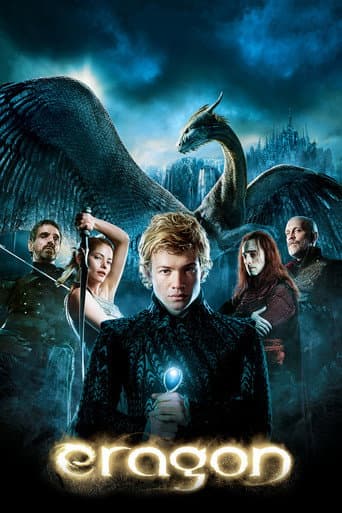
Top 10 Worst Movie Adaptations of Books
#1 Eragon (2006) · #2 The Dark Tower (2017) · #3 The Cat in the Hat (2003)
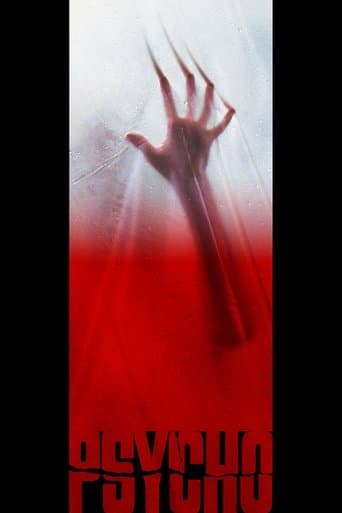
Top 10 Worst Movie Remakes
#1 Psycho (1998) · #2 The Wicker Man (2006) · #3 Oldboy (2013)
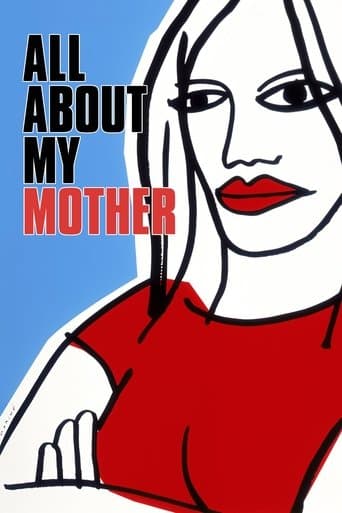
Top 10 Greatest Spanish Films of All Time
#1 Todo sobre mi madre (1999) · #2 El espíritu de la colmena (1973) · #3 El laberinto del fauno (2006)