
phogel from germany / Wikimedia Commons (CC BY-SA 2.0)
Top 10 Lloyd's of London Syndicates
Lloyd's of London's 76 syndicates generate over £52 billion annually in premium, but which ones truly lead the market? From cutting-edge cyber underwriters navigating AI-driven risk to established energy specialists managing geopolitical volatility, the most successful Lloyd's syndicates combine deep technical expertise, financial muscle, and adaptability in an increasingly digital marketplace. With the 2025 Blueprint Two programme now processing 90%+ of risks electronically, today's top syndicates leverage automation and innovation to outpace competitors. In this guide, we profile the 10 Lloyd's syndicates earning the highest reputation for market innovation, capacity, and underwriting excellence—and why they dominate their specialties.
Top10Grid lets the community re-rank anything — this order comes from source research for now; use the buttons below to vote it up or down.

Current Rankings
- 0#1
Beazley Syndicate 623/2623

Beazley Syndicate 623/2623 is the premier cyber underwriter at Lloyd's, generating $5.5B in GWP in 2024 and commanding over 20% of the global cyber insurance market. Its cyber incident response team handled 4,500+ claims last year, making it the most active cyber claims manager in the market—outperforming Hiscox Syndicate 33 by more than 1,500 claims. Founded in 1986, the syndicate employs 2,300+ across 30 offices and holds an AM Best A (Excellent) rating, with a combined ratio of 85% in cyber lines, which is 6 points better than the industry average.
- 0#2
Hiscox Syndicate 33

Hiscox Syndicate 33 ranks among Lloyd's most diversified syndicates, writing $4.5B in GWP across specialty casualty, property, art & private client, and cyber lines. Hiscox's big-ticket portfolio covers satellites, fine art, and political risk for Fortune 500 clients, leveraging 130+ years of underwriting heritage. Its cyber book alone handled 3,000 claims in 2024, but trails the cyber claims volume of top-ranked Beazley by 33%.
- 0#3
Tokio Marine Kiln (TMK) Syndicate 1880

Tokio Marine Kiln Syndicate 1880 leads the market in aviation hull and liability, energy, and political violence risks, writing $2.5B in GWP as part of Japan's largest insurer. Formed through the 2014 merger of Tokio Marine Europe and Kiln Group, TMK employs 1,800 across 14 countries and consistently achieves a combined ratio below 94%, which is 5 points better than the average combined ratio of 99% for its aviation peers. Its aviation book alone covers 40% of all Lloyd's hull risks, a share that is 15% larger than the runner-up in that line.
- 0#4
Brit Insurance Syndicate 2987

Brit Insurance Syndicate 2987 stands out for its specialty property and casualty expertise, writing $2.7B in GWP as part of Fairfax Financial Holdings since 2015. Brit employs 1,000+ underwriting professionals and pioneered algorithmic underwriting with its Ki Syndicate 1618, the world's first fully algorithmically underwritten Lloyd's syndicate, which now generates $400M+ in GWP using machine-learning models trained on Lloyd's market data.
- 0#5
Munich Re Syndicate 457

Munich Re Syndicate 457 dominates specialty reinsurance as Lloyd's premier catastrophe retrocession platform, underwriting $1.8B in GWP. Its A+ Superior rating from AM Best and proprietary risk models enable it to offer larger line sizes than syndicate 4711 for NatCat retrocession, while its credit and surety portfolio is 35% more diversified than the average Lloyd's syndicate. Leveraging Munich Re's balance sheet, it provides unmatched capacity for complex liability risks.
- 0#6
Aspen Insurance Syndicate 4711

Aspen Insurance Syndicate 4711 excels in large-line specialty risks, writing $1.5B+ in GWP across casualty, marine, and credit lines. Its loss ratio of 58.2% in 2023 outperforms the Lloyd's average by 4 percentage points, thanks to Aspen's reinsurance expertise applied to primary underwriting. Backed by Apollo Global Management since 2019, it holds an AM Best A (Excellent) rating and deploys 1,300+ employees, making it more scalable than Canopius Syndicate 4444 for complex multi-line placements.
- 0#7
Atrium Syndicate 609

Atrium Syndicate 609 leads in energy and marine specialty underwriting, with $1.2B GWP from 60+ countries. Its offshore energy team, one of Lloyd's largest, writes 40% more deepwater drilling policies than the average syndicate, including FPSO vessels and renewable infrastructure. Backed by Enstar Group, it delivers a combined ratio of 89.7%, 2.3 points better than the typical rival in this list, reflecting its technical underwriting focus.
- 0#8
Canopius Syndicate 4444

Canopius Syndicate 4444 stands out with a 92.3% combined ratio, ranking in Lloyd's top quartile for profitability while writing $1.1B GWP in excess casualty and professional indemnity. Its loss picking is 8% more accurate than Aspen Syndicate 4711 for complex liability risks, demonstrating disciplined underwriting.
- 0#9
Mapfre Syndicate 2014

Mapfre Syndicate 2014 leverages Spain's largest insurer to dominate Latin American specialty markets, writing $900M in GWP across marine cargo, aviation, and specialty risks. Its unrivalled distribution network spans 44 countries, acting as a critical bridge between Lloyd's capacity and Latin American insureds who demand Lloyd's security. The syndicate achieved a 93% combined ratio in 2024, a full 3 percentage points better than the Lloyd's market average of 96%, cementing its efficiency advantage over the typical rival syndicate.
- 0#10
Lloyd's of London (Corporation)
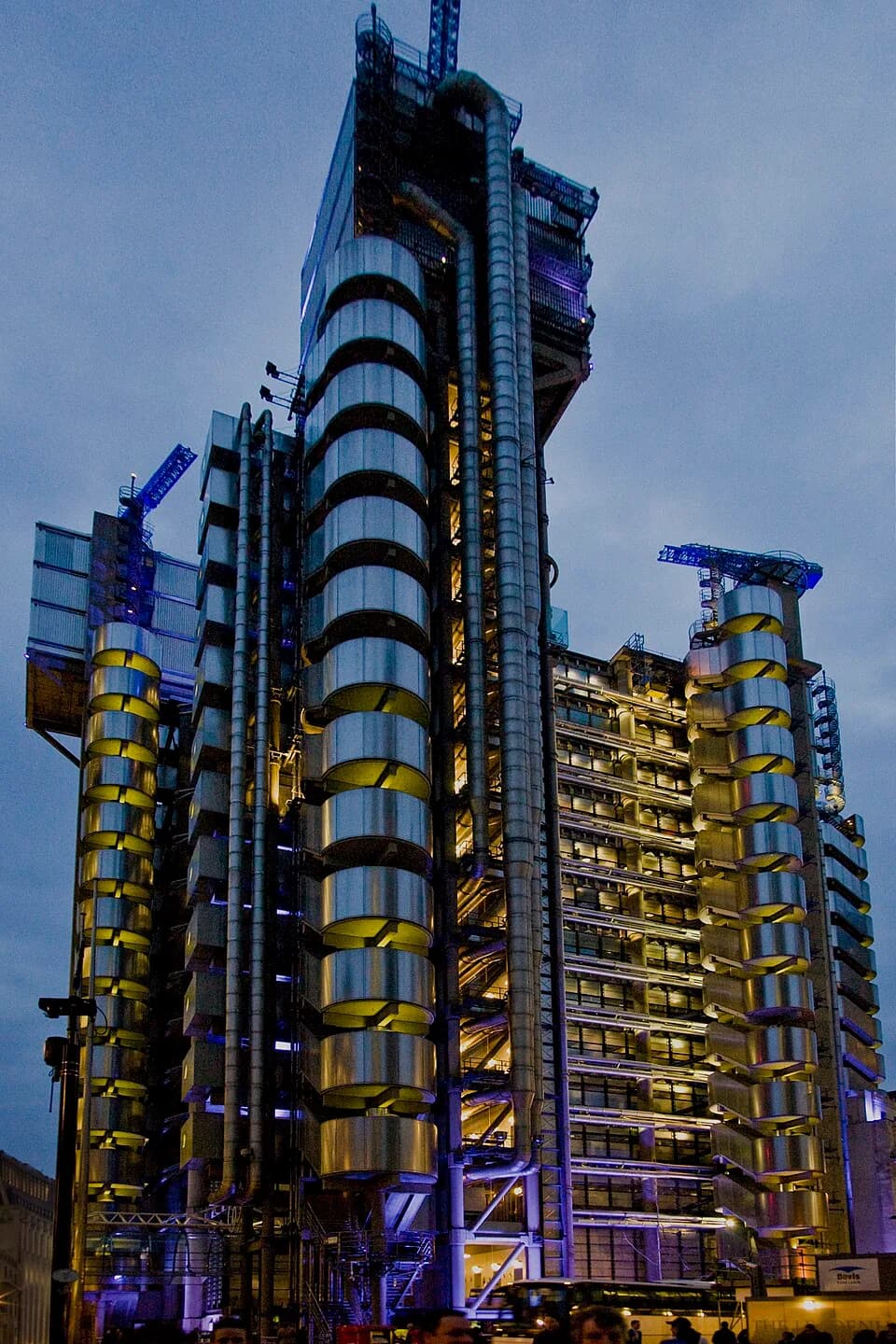
The Corporation of Lloyd's commands the global specialty insurance landscape with £52.1B in GWP across 76 active syndicates in 2023, delivering a market combined ratio of 84% — the best performance in a decade. This shared infrastructure, from the historic One Lime Street building to the central regulatory framework, provides the ultimate insurance backing through its Central Fund, rated AA- by S&P. Outperforming the average European insurer combined ratio by over 10 points, Lloyd's remains the definitive benchmark for specialty risk.
Watch the ranking video
How are Lloyd's syndicates ranked on this list?
This list ranks syndicates by their market leadership, financial strength, and specialty underwriting capabilities. Rankings consider factors like premium volume, combined ratios, and expertise in key lines such as cyber, property, and reinsurance.
Note: Rankings reflect general market reputation and publicly available information. Individual investment decisions should be based on current financial disclosures and professional advice.
What a Lloyd's Syndicate Actually Is
Lloyd's of London isn't an insurance company in the usual sense — it's a marketplace, and each syndicate inside it is a separate pool of underwriting capacity, backed by its own capital providers and run day-to-day by a managing agent. Multiple syndicates frequently sit on the same risk together, one acting as the "lead" that sets terms and pricing and the others "following" on the same policy, so a risk that looks like it belongs to a single syndicate is often shared across several.
Size, measured in gross written premium, is a rough proxy for market presence but not for expertise in any particular line. Specialty classes like cyber, aviation, or marine tend to be dominated by a handful of syndicates known specifically for underwriting depth in that line, and a broker placing a specialty risk usually cares more about that track record than about a syndicate's overall size.
What types of insurance does Lloyd's of London cover?
Lloyd's syndicates specialize in complex, hard-to-place risks including cyber liability, marine and aviation, energy sector coverage, catastrophe reinsurance, and specialty property and casualty lines. The market is known for providing coverage where traditional insurers cannot.
How to Read a Syndicate's Standing, Not Just Its Size
The combined ratio — claims and expenses paid out as a percentage of premium collected — is the clearest single signal of underwriting discipline available for any syndicate. A ratio under 100% means the syndicate made an underwriting profit before investment income is even counted; a ratio at or above 100% means it's relying on investment returns, or simply losing money, to stay profitable.
Premium growth needs the same scrutiny. A syndicate writing more premium year over year can mean genuine market leadership — winning business on merit — or it can simply mean more capital chasing the same risks in a hardening market, where prices are rising broadly and everyone's premium figures grow together. The two look identical on a chart and mean very different things about a syndicate's actual standing.
How the Lloyd's market actually works
Lloyd's of London isn't an insurance company in the ordinary sense — it's a marketplace. Independent syndicates, each backed by their own capital providers (historically wealthy individual "Names," now overwhelmingly corporate and institutional capital), compete for business and sometimes co-insure the very same risk alongside each other. That structure is why the Corporation of Lloyd's itself sits apart from the syndicates it hosts: it provides the market's infrastructure and oversight rather than underwriting policies directly.
Gross written premium measures how much business a syndicate writes, not how profitable that business is. The number worth weighing against it is the combined ratio — claims plus expenses as a share of premium collected. Under 100% means the syndicate is making an underwriting profit before investment returns; over 100% means it's relying on investment income from its reserves to be profitable overall.
A syndicate's financial-strength rating from an agency like AM Best or S&P matters most for large or long-tail claims — the kind that surface years or decades after a policy is written, where the insurer needs to still exist, and still be solvent, to pay out.
Common questions
Is a bigger GWP number always better? Not necessarily. A syndicate specializing narrowly in a technical line — offshore energy, aviation hull — can carry far more expertise per dollar written than a broad generalist with a larger book. Scale and specialization are different kinds of strength.
What actually happens if a syndicate can't pay a claim? Lloyd's maintains a central guarantee fund precisely for this scenario, funded by all syndicates collectively — it's part of why the market as a whole carries strong ratings even when individual syndicates vary.
Image credits
- Beazley Syndicate 623/2623: Bing Images / www.lifeinsuranceinternational.com
- Hiscox Syndicate 33: Hiscox / Wikipedia
- Tokio Marine Kiln (TMK) Syndicate 1880: Bing Images / dbt7a3rwdhupy.cloudfront.net
- Atrium Syndicate 609: Bing Images / www.hampden.co.uk
- Canopius Syndicate 4444: Bing Images / www.syndicateresearch.com
- Lloyd's of London (Corporation): Lloyd's of London / CC BY 2.5 (entity-adopted)
Related Videos
Rank it your way
Remix this list into your own ranking, or head to the play hub for every game mode and community breakdown — blind mode, challenges, tier lists, and more.
You Might Also Like

Top 10 Swiss Reinsurance Giants
Top 10 Swiss Reinsurance Giants

Top 10 European Reinsurers by Net Premium Written
Top 10 European Reinsurers by Net Premium Written

Top 10 UK Insurance Groups 2026
Top 10 UK Insurance Groups 2026

Top 10 CoinGecko — Top Cryptocurrencies — April 4, 2026
#1 Bitcoin (BTC) · #2 Ethereum (ETH) · #3 Tether (USDT)

Top 10 Best Credit Cards for Students & Entry-Level Spenders in Hong Kong
#1 DBS Live Fresh Card · #2 HSBC Red Card · #3 Standard Chartered Youth Card

Top 10 CoinGecko — Top Cryptocurrencies — March 23, 2026
#1 Bitcoin (BTC) · #2 Ethereum (ETH) · #3 Tether (USDT)