Lake Singkarak
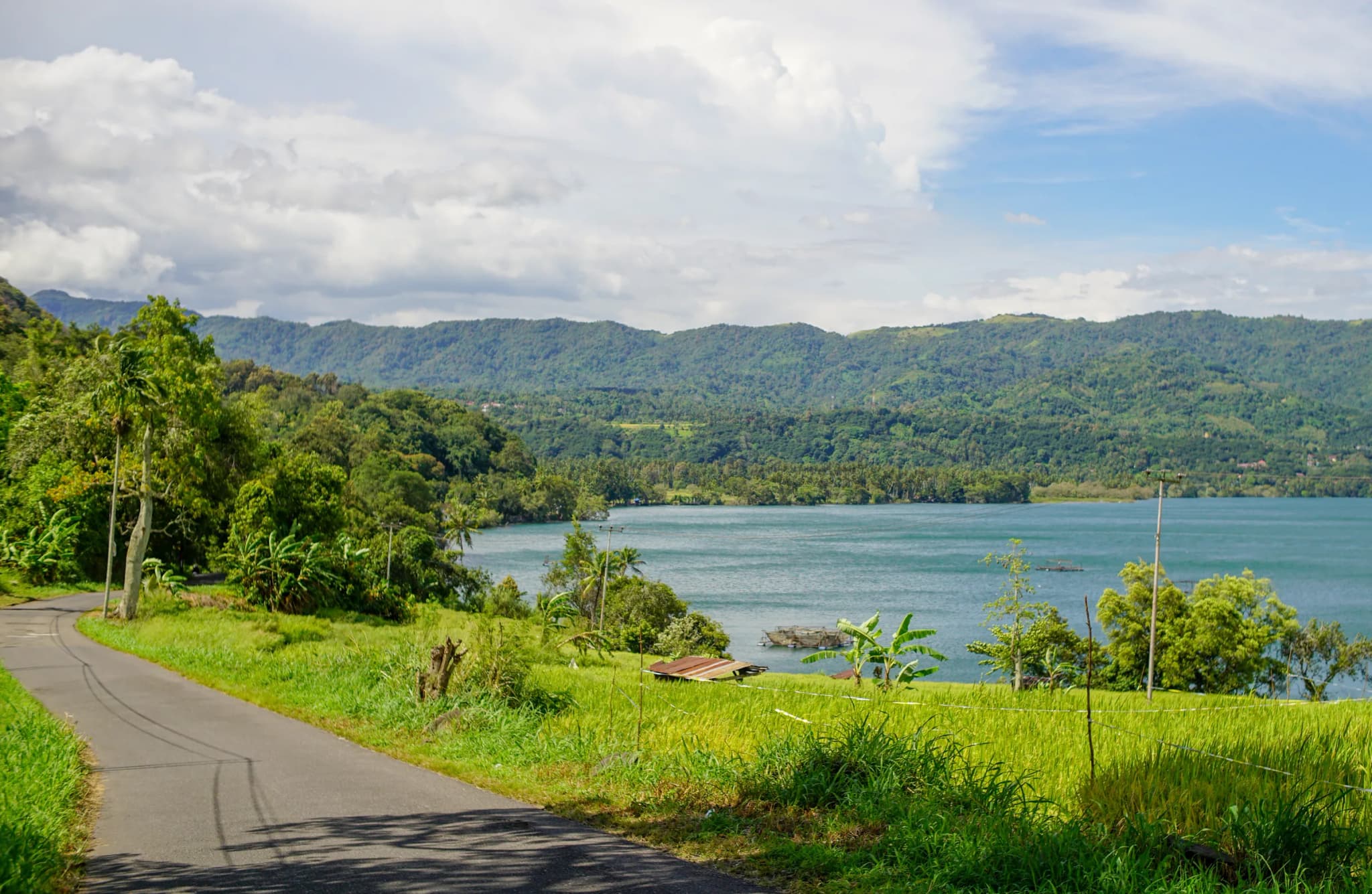
Lake Singkarak is West Sumatra's second-largest lake after Maninjau, a tectonic basin stretching almost 21 kilometres between the regencies of Tanah Datar and Solok. It sits at 362 metres above sea level, covers 107.8 square kilometres, and reaches a maximum depth of 268 metres, with an average closer to 149 metres, figures that place it among the deeper lakes on this list even though it rarely gets the same attention as its more famous neighbour. The lake's defining creature is ikan bilih (Mystacoleucus padangensis), a small silvery fish found naturally only in Singkarak's waters and long harvested by local fishing communities as both food and income. Ikan bilih has since been introduced to a handful of other Indonesian lakes as a food fish, but Singkarak remains its original home, and dried or fried bilih is sold throughout the surrounding Minangkabau towns as a regional speciality. Much of the lake's natural outflow has been diverted through a tunnel to the Anai River, which runs west to the Indian Ocean near Padang rather than following its old drainage path. The diverted water now powers the Singkarak hydroelectric station, which supplies electricity to both West Sumatra and neighbouring Riau province, making the lake one of Sumatra's working pieces of energy infrastructure as well as a scenic destination. Villages along the eastern and western shores, reachable from Padang by a drive of roughly two hours or from Bukittinggi via the Anai Valley road, offer simple lakeside restaurants that serve bilih fresh from the water, along with grilled fish and rice, making a lap of the shoreline one of the more relaxed half-day trips out of either city.
Photos (1)
Comments on "Lake Singkarak"
Have a take on this ranking?
Comments are how the argument actually happens here. Posting one needs a free account — it takes about a minute.
No comments yet.
The first comment sets the terms of the argument.