Lake Maninjau
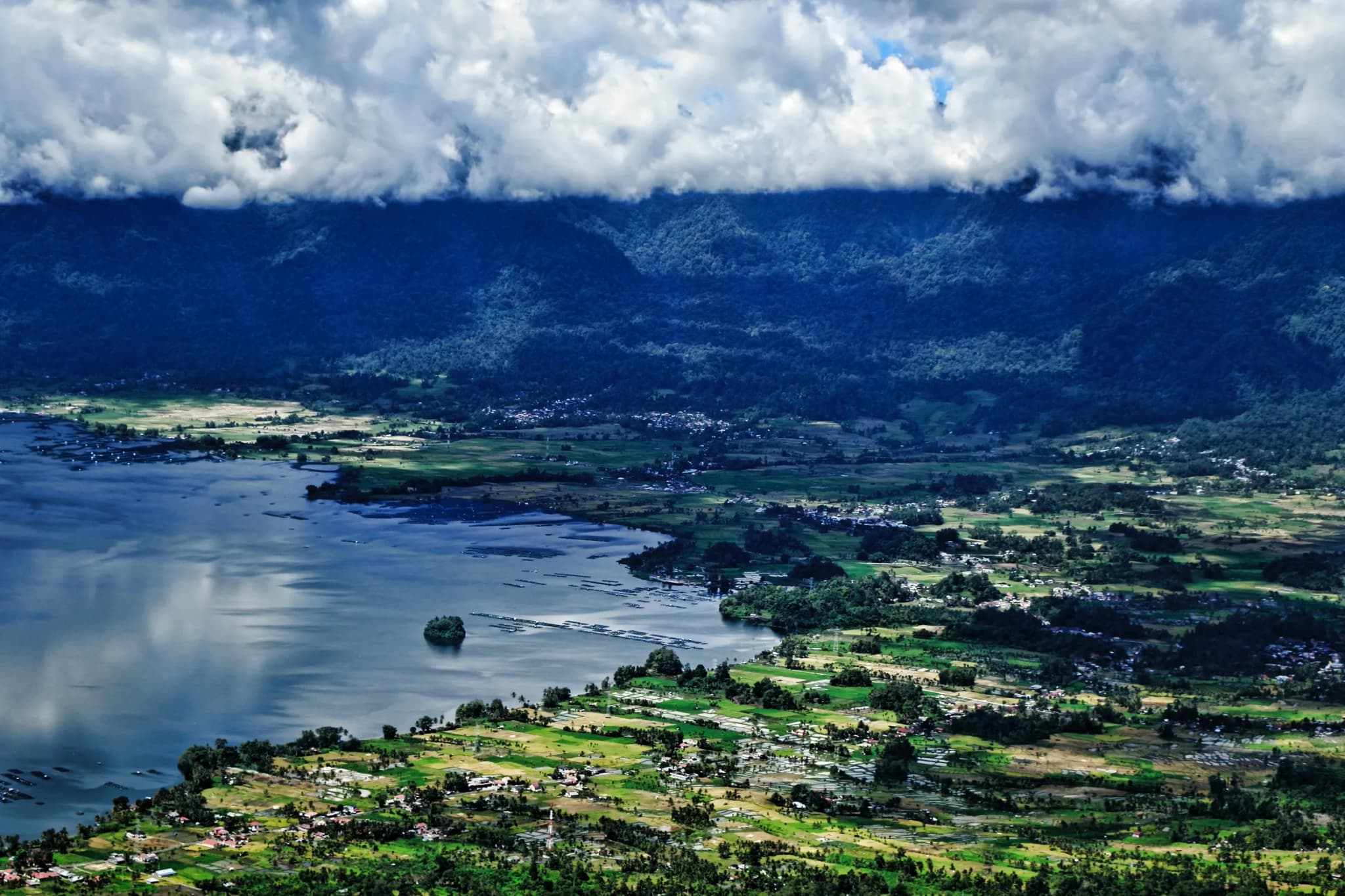
Lake Maninjau fills a caldera in the hills above the West Sumatran coast, formed by a volcanic eruption around 52,000 years ago that is estimated to have deposited between 220 and 250 cubic kilometres of material across roughly 8,500 square kilometres. What remains today is a lake 16 kilometres long and 7 kilometres wide, sitting at 459 metres above sea level, with an average depth of 105 metres and a recorded maximum of 165 metres. The lake takes its name from the Minangkabau word for overlook or observation, and the Minangkabau people who farm its shores and terraced rice slopes make up the great majority of the surrounding population. The connection between the lake and Minangkabau identity runs deep enough that Indonesia's first president, Sukarno, wrote a pantun, a traditional rhymed verse form, praising the lake after visiting in June 1948, a poem still quoted locally as a mark of the lake's standing in national memory. Since 1983, Lake Maninjau has done double duty as a source of electricity: water is diverted out through the Antokan River to a hydroelectric station that generates around 68 megawatts for the West Sumatra grid, one of a handful of Indonesian lakes put to this kind of infrastructural use. The descent to the lakeshore from the regional hub of Bukittinggi is itself a minor attraction, a switchback mountain road known locally as Kelok 44 that drops through more than forty numbered bends before levelling out at the water's edge. Around the lake, small towns such as Maninjau and Bayua provide the main guesthouses and jumping-off points, and Lawang, above the caldera rim, is the classic viewpoint for photographing the full width of the lake with its ring of green hills. The calm, warm water and gentle climate at 459 metres make it a popular weekend escape from the heat of the Sumatran lowlands.
Photos (1)
Comments on "Lake Maninjau"
Have a take on this ranking?
Comments are how the argument actually happens here. Posting one needs a free account — it takes about a minute.
No comments yet.
The first comment sets the terms of the argument.