Lake Matano
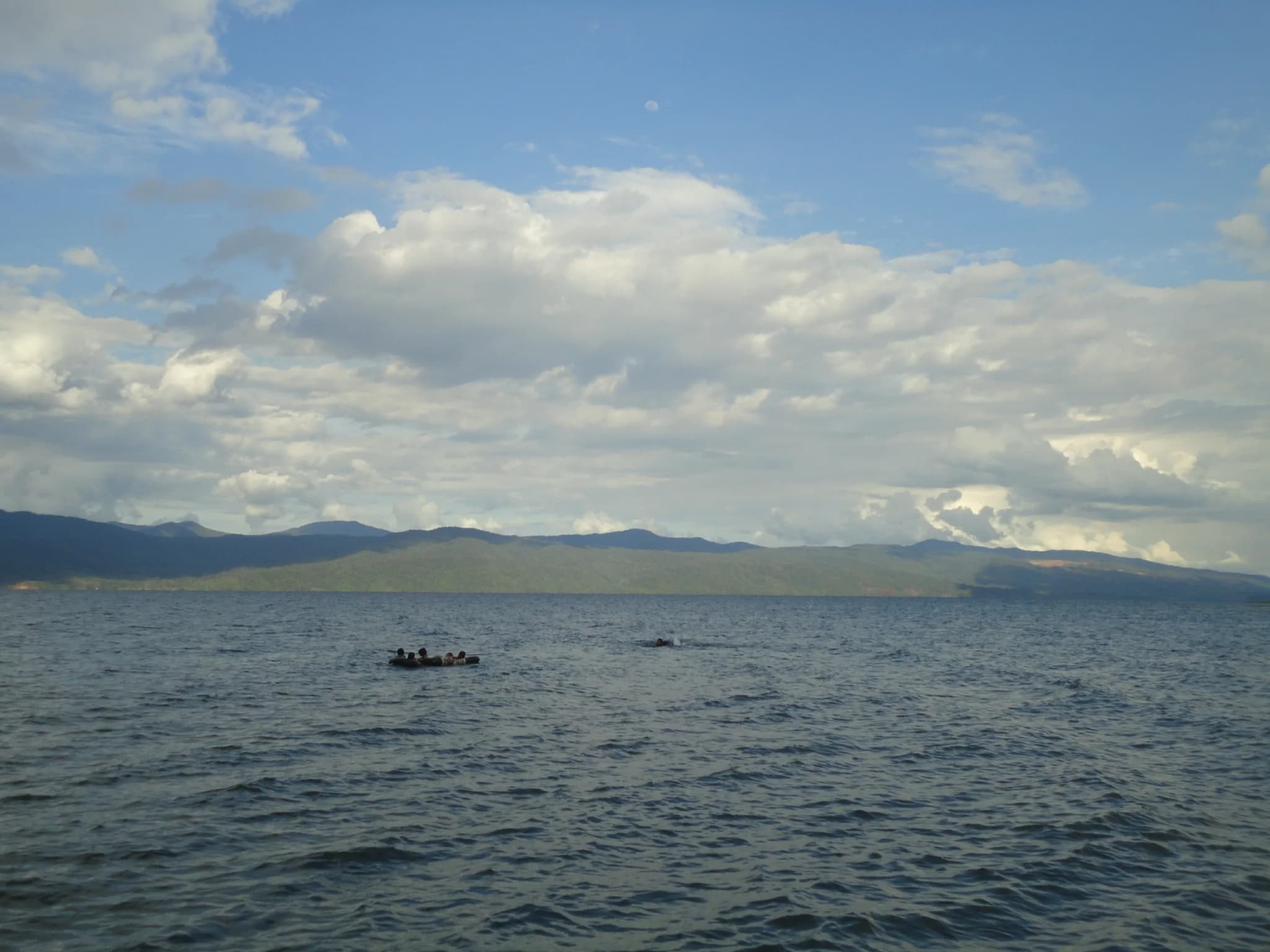
Lake Matano is the deepest lake in Indonesia and the eleventh deepest in the world, reaching 590 metres at its lowest point, a depth so extreme that the bottom of the lake actually sits below sea level, a rare condition known as a cryptodepression. The lake formed in a tectonic graben, a section of crust that dropped between parallel faults, somewhere between one and two million years ago, making it one of the oldest lakes in Southeast Asia. It stretches 28 kilometres long and 8 kilometres wide across a surface area of 164.1 square kilometres, ringed by the forested hills of East Luwu Regency in South Sulawesi. Age and isolation have made Matano a byword among freshwater biologists for endemic life. Roughly a fifth of the lake's diatom species exist nowhere else, and its animal life follows the same pattern: several endemic fish species, freshwater shrimp of the genus Caridina, crabs from the Parathelphusid family and snails of the genus Tylomelania have all evolved in place, in a burst of local diversification researchers have compared to the species swarms of Africa's Rift Valley lakes. The physics of the lake are just as unusual as its biology. Because the surrounding climate stays warm and stable year-round, the water column never fully mixes the way temperate lakes do each winter, leaving a stagnant deep layer that scientists studying early Earth chemistry treat as a working analogue for the anoxic, low-oxygen oceans of the Archean Eon, more than 2.5 billion years ago. Sorowako, on the lake's eastern shore, is the main access point and home to one of Indonesia's largest nickel-processing operations; a passenger ferry crosses between it and the settlement of Nuha. Most visitors combine Matano with a look at neighbouring Lake Towuti, connected by the short Larona River, from hillside viewpoints that take in both lakes at once.
Photos (1)
Comments on "Lake Matano"
Have a take on this ranking?
Comments are how the argument actually happens here. Posting one needs a free account — it takes about a minute.
No comments yet.
The first comment sets the terms of the argument.