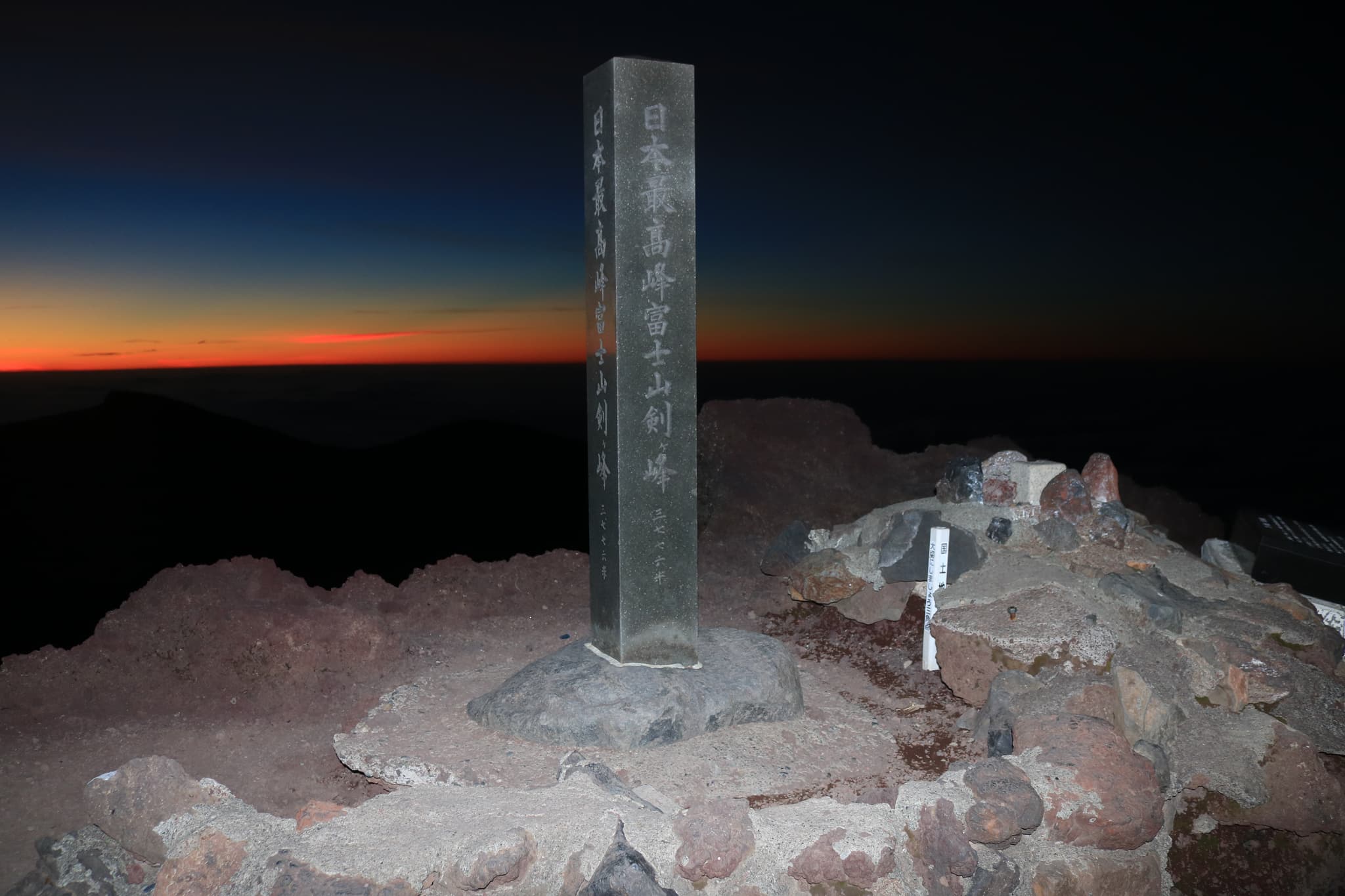
Alpsdake / Wikimedia Commons (CC BY-SA 4.0)
Top 10 Highest Mountains in Japan (2026)
Top 10 Highest Mountains in Japan (2026): picked and ranked by our editors, and open to your votes. How we ranked this: Peaks are ranked by elevation in the Geospatial Information Authority of Japan list “Nihon no omona sangaku hyoko” (1,003 mountains), 31 March 2026 edition, as tabulated on 9 September 2026 by Yama to Kogen Chizu. Heights are metres above Tokyo Bay mean sea level, rounded to the nearest metre when a triangulation-point value is used. Each summit is one item. Okuhotaka and Aino share 3,190 m; Okuhotaka is placed 3rd because that table lists it first. Figures were checked against English Wikipedia mountain pages opened on 3 October 2026. Where those pages still print an older metre value, both figures are stated. Top10Grid checked every figure and name against the pages cited for each entry and removed anything those pages did not support. Sources: yamachizu.jp, en.wikipedia.org. — Top10Grid Travel Fan Club · Reviewed by Max Rankin
Top10Grid lets the community re-rank anything — this order comes from source research for now; use the buttons below to vote it up or down.
Current Rankings
- 1
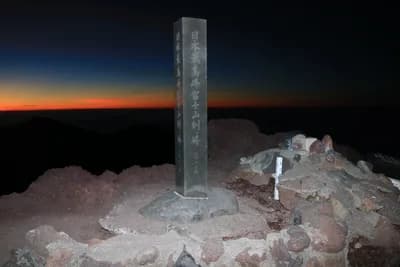
Mount Fuji’s highest point, Kengamine, is listed at 3,776 m and is the highest mountain in Japan. The peak stands on the border of Shizuoka and Yamanashi prefectures. English Wikipedia lists the summit elevation as 3,776.24 m and calls Fuji an active stratovolcano on Honshu, the highest mountain in Japan. Its last eruption was in 1707–08. UNESCO inscribed it on 22 June 2013 as “Fujisan, sacred place and source of artistic inspiration,” with a property area of 20,702.1 ha. Wikipedia also lists it among Japan’s Three Holy Mountains with Mount Tate and Mount Haku.
- –
Mount Kita, in Yamanashi Prefecture, is listed at 3,193 m, the second-highest mountain in Japan. It is the highest peak of the Akaishi Mountains, or Southern Alps. English Wikipedia gives the same elevation and a prominence of 2,239 m, and translates the name as “northern peak.” It stands in Minami Alps National Park, near the city of Minami-Alps, and is one of the 100 Famous Japanese Mountains. Wikipedia calls it the second-highest mountain in Japan after Mount Fuji and “the Leader of the Southern Alps.” The Kitadake Buttress on the east side is a 600 m rock face.
- –
Mount Okuhotaka is listed at 3,190 m on the border of Nagano and Gifu. It is the highest peak of the Hotaka range in the Hida Mountains. English Wikipedia’s Mount Hotakadake page gives the same 3,190 m figure and a prominence of 2,307 m. It says Okuhotaka is the highest peak in the Hotaka Mountains and the highest point in both Nagano and Gifu, and the third-highest mountain in Japan after Fuji and Kita. The Hotaka peaks lie in Chubu-Sangaku National Park, which was designated on 4 December 1934. Wikipedia records the first ascent of Okuhotaka by Gunji Abe in 1906.
- –
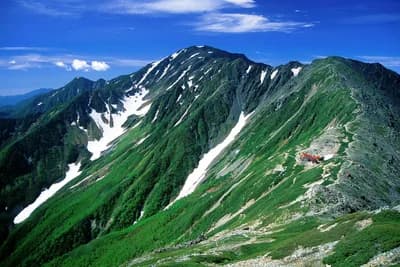
Mount Aino is listed at 3,190 m, the same elevation as Okuhotaka. Its summit is on the Yamanashi–Shizuoka border in the Akaishi Mountains. East of the summit is the cirque Hosozawa Kar. Wikipedia says the nearest hut to the south is Notori Hut, and Kitadake mountain cottage sits on the saddle toward Kita.
- –
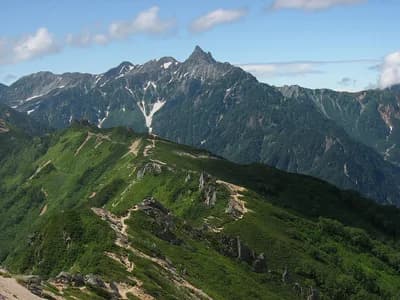
Mount Yari is listed at 3,180 m in the Hida Mountains. The summit is on the border of Nagano and Gifu prefectures. Wikipedia places the peak in the southern Hida Mountains, on the border of Omachi and Matsumoto in Nagano and Takayama in Gifu, inside Chubu-Sangaku National Park. It records a first ascent by the priest Banryu on 28 July 1828, a first non-Japanese ascent by William Gowland in 1878, and a first winter ascent by Maki Yuko in 1922. The mountain is one of the 100 Famous Japanese Mountains.
- –
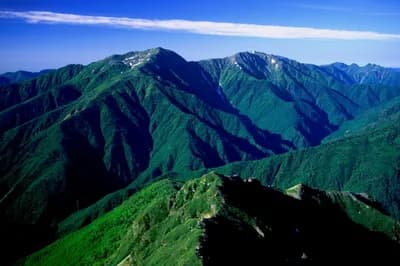
Mount Warusawa, also called Higashi-dake, is listed at 3,141 m in Shizuoka Prefecture. It is the eastern peak of the Arakawa three mountains. English Wikipedia gives the same height and says the mountain is in Minami Alps National Park. With Mount Arakawa-Naka, listed at 3,083 m, and Mount Arakawa-Mae, listed at 3,068 m, it forms the Arakawa three mountains, with Warusawa the eastern peak. It is one of the 100 Famous Japanese Mountains.
- –
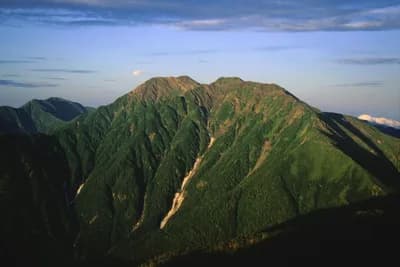
Mount Akaishi stands on the Nagano–Shizuoka border in the Akaishi Mountains. The 2026 list used here gives 3,121 m; English Wikipedia still prints 3,120 m. English Wikipedia’s article still lists 3,120 m and calls it the 7th-tallest peak in Japan and the 4th-tallest in the Akaishi Mountains. The mountain was included in Minami Alps National Park on 1 June 1964. The first recorded ascent was by Haruki Nashiba and Masaaki Terasawa in 1879; Walter Weston climbed it on 19 August 1892.
- –
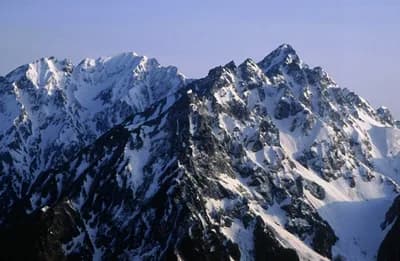
Mount Karasawa is listed at 3,110 m between Kitahotaka and the Hotakadake mountain cottage. It is a peak of the Hotaka range in Nagano and Gifu. English Wikipedia’s Hotakadake page says the triangulation point on top is at 3,103 m while the peak reaches 3,110 m, and places the summit on the ridge between Kitahotaka and Shirade Col, where the Hotakadake mountain cottage stands. The same page describes the climbing base at Karasawa as a U-shaped cirque under Okuhotaka, Maehotaka and the Tsuri Ridge, with snow remaining through the year because it faces north.
- –
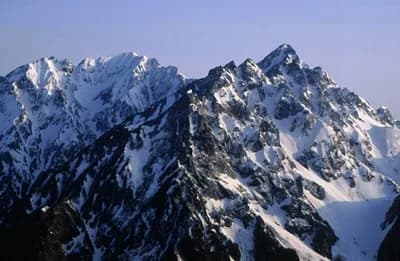
Mount Kitahotaka is listed at 3,106 m at the north end of the Hotaka range. It lies on the Nagano–Gifu border in Chubu-Sangaku National Park. English Wikipedia gives the same height and calls it the second-highest Hotaka peak, at the northern end of the range. Takidani, on the west face, is described as a well-known rocky area, and Kitahotaka Hut stands near the summit. North of Kitahotaka, the ridge drops and rises at Daikiretto before continuing over Mount Minami and Mount Obami toward Mount Yari. The wider Hotaka group is in Chubu-Sangaku National Park.
- –#10
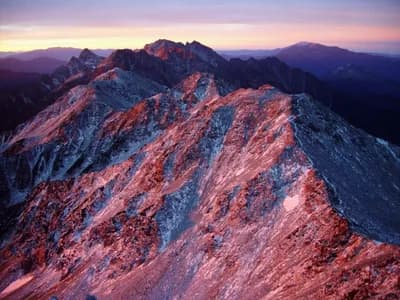
Mount Obami is listed at 3,101 m on the ridge south of Mount Yari. The summit is on the border of Matsumoto, Nagano, and Takayama, Gifu. English Wikipedia gives 3,101 m and a prominence of 81 m, and places the summit on the border of Matsumoto and Takayama inside Chubu-Sangaku National Park, south of Mount Yari. According to that article, the name is said to come from hunters who called it “Big Eat” because herds gathered there and ate the grass. The same page says a party including Masao Udono, with Kamonji Kamijo, climbed it in August 1909 while traversing from Okuhotaka to Yari.
Rank it your way
Remix this list into your own ranking, or head to the play hub for every game mode and community breakdown — blind mode, challenges, tier lists, and more.
You Might Also Like

Top 10 Luxury Hotels in the Netherlands 2026
Top 10 Luxury Hotels in the Netherlands 2026

Top 10 Best Things to Do in Xi'an, China
Top 10 Best Things to Do in Xi'an, China

Top 10 Best Things to Do in New Zealand
Top 10 Best Things to Do in New Zealand

Top 10 Best Things to Do in Greece
#1 Acropolis of Athens · #2 Santorini Caldera · #3 Delphi Archaeological Site
Top 10 Thailand Temples in 2026
#1 Wat Phra Kaew (Temple of the Emerald Buddha) · #2 Wat Rong Khun (White Temple) · #3 Wat Pho (Temple of the Reclining Buddha)
Top 10 Most Dangerous Mountains in the World
#1 Annapurna I · #2 K2 · #3 Nanga Parbat