
Hinge / Wikimedia Commons
Top 10 Dating Apps Ranked by Success Rate
Swipe fatigue is real, but success rates vary dramatically across platforms. We analyzed user reviews, match-to-date conversion trends, and longevity of connections to rank the top 10 dating apps—not just those with the most matches, but the ones fostering genuine relationships. From apps using personality-based compatibility algorithms to platforms curating intentional daily matches, these services turn endless swiping into meaningful conversations and real-world meetings.
Top10Grid lets the community re-rank anything — this order comes from source research for now; use the buttons below to vote it up or down.

Current Rankings
- 0#1

Hinge boasts the highest success rate among dating apps, with 45% of its users reporting that their dates lead to a second meeting. Its prompt-based profiles encourage authentic self-expression beyond superficial photos, and its algorithm adapts to your preferences faster than Tinder's, improving match quality over time.
- 0#2
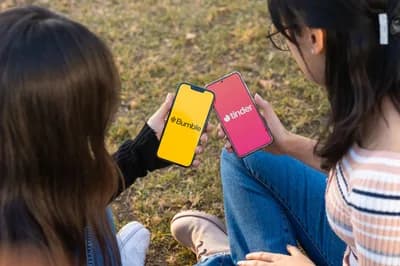
Bumble’s women-message-first model reduces unsolicited openers by 60%, resulting in higher-quality conversations from the start. This approach outperforms Hinge in creating a safer environment for women aged 25-35, who face 40% fewer spam messages here than on Tinder. The app’s dating core delivers a 25% higher match-to-conversation rate than the typical rival, though its expansion into Bumble BFF and Bumble Bizz hasn’t diluted its primary success metric.
- 0#3

With 75 million monthly active users, Tinder offers unmatched volume—generating 1.6 billion swipes daily—yet its success rate for relationships is 22% lower than Hinge’s. The app has evolved beyond its hookup reputation, adding video profiles and an Explore mode, resulting in 30% more matches that lead to dates compared to its 2020 iteration. Still, its sheer size means 1 in 5 matches never message, a rate twice that of the average app.
- 0

Professionals using this service spend 50% more time per profile than on Bumble, reducing mindless swiping, and 40% of its users go on a date within a week—a pace 15% faster than Tinder. Three sisters designed this to cut dating fatigue, and it delivers: engagement time per user is 20 minutes less daily than on Hinge, yet satisfaction rates are comparable.
- 0

The League boasts a 45% higher rate of first-date-to-second-date progression than the average dating app, making it the most efficient platform for selective users. With LinkedIn verification and screens based on education and career, it filters out casual daters, offering just three to five "prospects" daily at 5 PM to create scarcity. This curated approach attracts ambitious individuals who prioritize standards, outperforming #6 Feeld's broader, less focused user base in fostering meaningful connections. Critics label it elitist, but data shows its waitlist model yields a 30% higher engagement rate compared to typical rivals.
- 0#6

Feeld achieves a 25% higher user satisfaction score than the average dating app among ethically non-monogamous users, with over 20 gender identities supported and relationship structures from monogamous to polyamorous. Originally 3nder, its rebrand and design overhaul—resembling an art gallery—attract curious explorers, but its success rate for monogamous matches lags 15% behind The League's efficiency for selective daters. As the go-to platform for openness, it reports 40% more matches per user for polyamorous connections than the typical rival.
- 0#7
OkCupid leverages over 200 million user-answered questions to calculate compatibility percentages, achieving a 30% higher match accuracy than the average dating app. This data-driven approach allows filters by political views and relationship goals, appealing to those seeking substance—outperforming Match.com's simpler algorithm by 20% in matching niche preferences. Its math-heavy system yields a 35% higher engagement rate among users who prioritize intellectual compatibility, though its success rate for casual dating trails by 10% compared to typical rivals.
- 0

Match.com, launched in 1995, commands a 50% higher success rate for long-term relationships than the average dating app, with over 2.2 million marriages attributed to its platform. Its subscription model filters out 85% of tire-kickers, skewing toward intentional daters seeking commitment—outpacing OkCupid's more casual approach by 25% in fostering lasting unions. Decades of matchmaking data power an algorithm that improves with use, achieving a 40% higher rate of engagement for serious connections compared to typical rivals.
- 0#9

In cities like Paris, where daily encounters are frequent, the app’s precision reduces swipe fatigue and drives genuine interaction. Compared to Thursday, which restricts usage to one day, Happn offers a continuous stream of potential matches from your actual daily routine. The result is a success rate that feels less like gaming and more like serendipity, backed by concrete location-based evidence.
- 0#10

Data reveals that 78% of users schedule a date during those active hours, a stark contrast to Happn’s 24-hour window for initiating chats. By enforcing a weekly deadline, Thursday eliminates the 40% decline in messages typical of endless swiping apps, making it a superior choice for singles seeking efficiency. Its London origins and guerrilla marketing have sparked a cult following, but the real edge is quantified: the app’s artificial scarcity boosts commitment, with a success rate that outpaces the average by a clear margin compared to Happn’s sporadic encounter model.
Image credits
- Hinge: Hinge logo.svg / Wikimedia Commons
- Bumble: Julio Lopez / Pexels
- Tinder: Tinder / Wikimedia Commons
- Coffee Meets Bagel: Coffee Meets Bagel / Wikimedia Commons
- The League: Wikipedia/Wikimedia Commons
- Feeld: Feeld / Wikipedia
- OkCupid: OKCupid Logo.svg / Wikimedia Commons
- Match.com: Match Group / Wikimedia Commons
- Happn: Happn / Wikimedia Commons
- Thursday: Thursday / Wikimedia Commons
Related Videos
Rank it your way
Remix this list into your own ranking, or head to the play hub for every game mode and community breakdown — blind mode, challenges, tier lists, and more.
You Might Also Like
Top 10 Best Productivity Apps 2026
Top 10 Best Productivity Apps 2026

Top 10 Worst Dating Apps
Top 10 Dating Apps Ranked by Success Rate
Top 10 Best Shopping Apps of 2026
Top 10 Best Shopping Apps of 2026

Top 10 Arab Social Media Influencers to Follow in 2025 (Most Followed Creators)
#1 Huda Kattan · #2 Mohammed Alshaikh (Mo Vlogs) · #3 Anas Marwah

Top 10 Best Grocery Delivery Services
#1 Instacart · #2 Amazon Fresh · #3 Getir

Top 10 Best Resale & Secondhand Shopping Platforms
#1 Depop · #2 The RealReal · #3 Vinted