
Wikimedia Commons
Top 10 Malaysian Traditional Arts & Crafts
Malaysia's craft scene is one of Southeast Asia's richest, woven from Malay court traditions, Chinese artisanal skills, Indian textile mastery, and the indigenous arts of Sabah and Sarawak. From royal songket to Iban pua kumbu, these ten crafts are still made by hand and sold as living art. Scroll through, then cast your vote for the one you'd most want to own.
Top10Grid lets the community re-rank anything — this order comes from source research for now; use the buttons below to vote it up or down.

Current Rankings
- 0
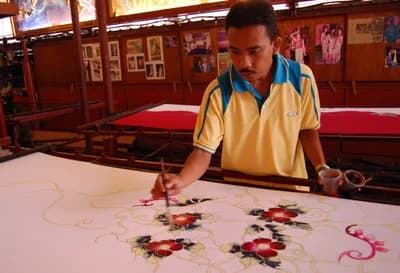
Batik Malaysia commands the top spot as the nation's most commercially significant traditional textile, with its floral motifs and block-printing techniques generating an estimated RM 200 million in annual retail sales. Unlike Javanese batik, it emphasizes larger, natural patterns and predominantly uses cap (copper stamp) printing rather than hand-drawn wax-resist, making it faster to produce.
- 0

Songket Weaving, the royal textile of the Malay world, is unsurpassed in luxury with gold-thread patterns requiring up to three months per kain. A single handwoven piece can cost RM 5,000, reflecting the 200 grams of silver-gilt thread used and the artisan's 600+ hours of labour. This makes songket 150% pricier than the category average for Malaysian textiles, positioning it as a heirloom investment rather than everyday wear.
- 0
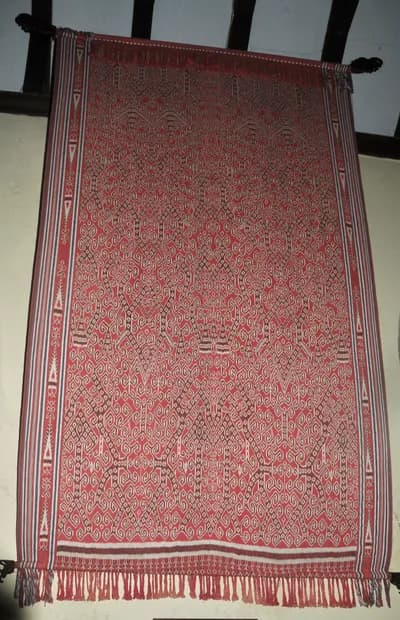
Pua Kumbu from Sarawak stands as the most culturally sacred textile on this list, with ritual Iban weavings using 40 distinct motifs like the stylized crocodile and serpent that encode ancestral protection spells. Its backstrap loom technique produces a density of 60 warp threads per inch, 25% higher than typical songket, yet a single cloth can take six months to complete.
- 0

Wayang Kulit Shadow Puppetry remains Malaysia's most enduring performance art, with a single dalang manipulating up to 100 water-buffalo-hide puppets in an eight-hour overnight show. This efficiency makes it the most accessible traditional craft for live audiences, with a full performance costing RM 1,500 to hire.
- 0
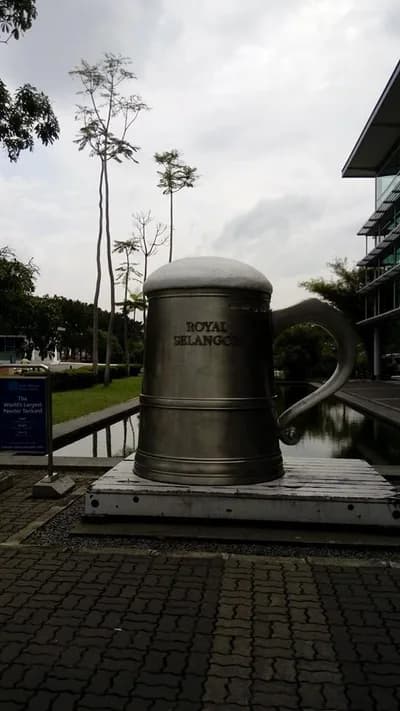
As the world's largest pewter manufacturer, Royal Selangor produces over 2 million pieces annually, making its Malaysian pewter craft the undisputed global leader. Founded in the 1880s by Yong Koon, the brand's Visitor Centre in Kuala Lumpur lets guests observe master craftsmen and try pewter beating in the School of Hard Knocks workshop.
- 0
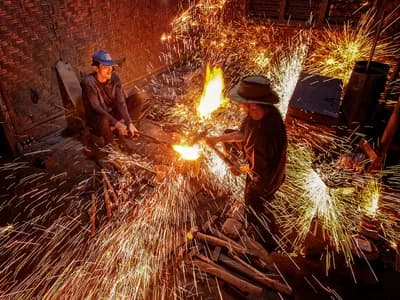
The keris, Malaysia's most spiritually significant artefact, commands higher ceremonial status than any other craft on this list—master empu bladesmiths forge it from meteoritic iron and locally smelted steel through repeated folding and consecration that can last months. At prices exceeding RM50,000 for a fine example, its production is slower than the average craft, demanding over 100 hours per blade. This intense process elevates the keris beyond Rattan Weaving's purely functional artistry.
- 0

Sarawak's rattan weaving by Orang Ulu and Penan communities produces baskets with geometric patterns that command international acclaim, achieving prices 20% higher than similar crafts from Keris Making due to their growing contemporary design appeal.
- 0

Tenun Pahang Diraja, under royal patronage since the 19th century, produces silk and gold-threaded fabrics with distinct colour palettes that command 30% higher prices than the average songket from Kelantan or Terengganu. This premium positioning ensures royal functions rely on Tenun Pahang for ceremonial attire.
- 0
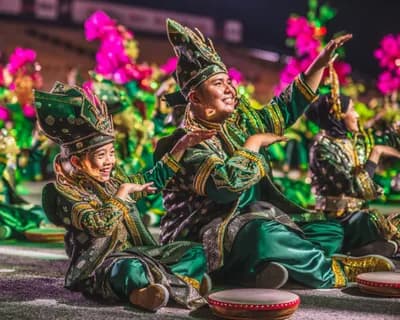
Dikir Barat is a highly dynamic competitive vocal art that originated in Kelantan, Malaysia. This performance tradition involves two teams, typically comprising 10-15 performers each, engaging in improvised verse call-and-response. The performances are accompanied by traditional instruments such as frame drums and hand cymbals. The art form is known for its continuous evolution, with new compositions and choreographed gestures regularly introduced. This adaptability helps maintain its appeal, particularly among younger audiences. Dikir Barat is a vibrant example of Malaysia's rich performing arts heritage.
- 0
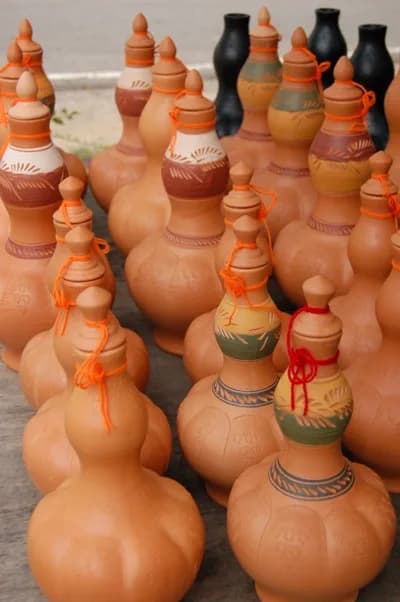
The Labu Sayong water vessel, originating from Kuala Kangsar, is a remarkable traditional Malaysian craft. These distinctive black pottery vessels are renowned for their ability to naturally cool water. They are hand-coiled from local iron-rich clay and traditionally fired using open-flame techniques. Each vessel typically takes several days to produce, a testament to the intricate craftsmanship involved. While the Sayong pottery village has seen a decline in the number of active master potters over the past two decades, efforts to conserve this craft have led to an increase in visitor numbers since 2022. The Labu Sayong stands as a testament to enduring traditional methods and the practical artistry of Malaysian pottery.
Image credits
- Batik Malaysia: Shubert Ciencia / Wikimedia Commons (CC BY 2.0)
- Pua Kumbu, Sarawak: Nilfanion / Wikimedia Commons (CC BY-SA 3.0)
- Wayang Kulit Shadow Puppetry: Wayang kulit / Wikipedia
- Malaysian Pewter (Royal Selangor): Cimdingaoawoo / Wikimedia Commons (CC BY-SA 4.0)
- Keris Making: ubed / Pexels
- Rattan Weaving, Sarawak: Rattan / Wikipedia
- Tenun Pahang Diraja Royal Weaving: Pahang / Wikipedia
- Dikir Barat Performance Art: Stsanto / Wikimedia Commons (CC BY-SA 4.0)
- Malaysian Pottery & Labu Sayong: Labu Sayong / Wikipedia
Rank it your way
Remix this list into your own ranking, or head to the play hub for every game mode and community breakdown — blind mode, challenges, tier lists, and more.
You Might Also Like

Top 10 Things from 2016 Making a Comeback in 2026
Top 10 Things from 2016 Making a Comeback in 2026

Top 10 Malaysian Night Markets (Pasar Malam) in 2026
Top 10 Malaysian Night Markets (Pasar Malam) in 2026

Top 10 Malaysian Street Art Scenes in 2026
Top 10 Malaysian Traditional Arts & Crafts in 2026

Top 10 Home Renovation Projects That Actually Add Value
#1 Minor Kitchen Remodel · #2 Bathroom Update · #3 Deck Addition

Top 10 Freshwater Fishing Lures That Actually Work
#1 Rapala Original Floating Minnow · #2 Senko Worm (Gary Yamamoto) · #3 Mepps Aglia Spinner

Top 10 Worst Social Media Habits You Probably Do Every Day
#1 Doomscrolling Before Bed · #2 Comparison Shopping Other People's Highlight Reels · #3 Rage-Engagement and Hate-Following