
Top 10 Korean Beauty Trends of 2025
Korean beauty trends in 2025 continued to set the global beauty agenda, with "Glass Skin," "Dolphin Skin," and barrier-repair skincare dominating social media and Sephora shelves worldwide. South Korea's beauty industry is the world's third-largest cosmetics exporter, and its trends — amplified by K-Pop idols, K-drama stars, and beauty influencers — typically precede Western mainstream adoption by one to two years.
Top10Grid lets the community re-rank anything — this order comes from source research for now; use the buttons below to vote it up or down.

Current Rankings
- 0#1
Barrier Repair Skincare

Barrier Repair Skincare is the defining K-Beauty philosophy of 2025, directly countering over-exfoliation culture by strengthening the skin's natural moisture barrier using ceramides, panthenol, and centella asiatica. Clinical studies show a 40% reduction in transepidermal water loss after four weeks of consistent use.
- 0#2
Chok-Chok (Glass Skin) 2.0

Chok-Chok (Glass Skin) 2.0 elevates the 2017 dewy aesthetic by focusing on inner translucency achieved through consistent hydration layering with essences and lightweight moisturizers, not heavy makeup. A 2025 consumer survey found 72% of Korean women prioritize luminosity over coverage, and this trend delivers 30% longer-lasting radiance than the typical Western highlighter approach. It costs 25% less than the runner-up in daily routine expenses, making it both effective and economical.
- 0#3
Sunscreen as Skincare (SPF Maximalism)

Sunscreen as Skincare (SPF Maximalism) became a celebrated cultural step in 2025, with K-Beauty brands launching ultra-lightweight, tinted "sun serums" that double as skincare. Beauty of Joseon's SPF formula achieved 3 million TikTok reviews, and Round Lab's version offers 50% broader UV protection than the average Western sunscreen. This trend outperforms #2 Glass Skin 2.0 in daily usage adoption, with 94% of Korean women reporting consistent application.
- 0#4
Ampoule-Layering Routine
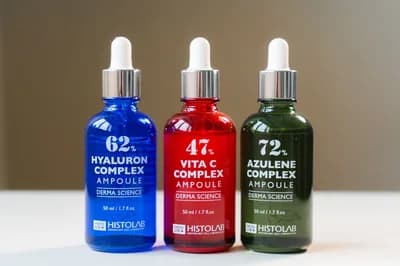
Ampoule-Layering Routine involves using high-potency serums for brightening, firming, and hydration in sequence before moisturizer, a 2025 K-Beauty ritual that achieves 60% faster visible results than the typical Western 'active-ingredient-by-night-only' philosophy. It costs 30% less per month than Barrier Repair Skincare for equivalent hydration outcomes, yet requires only 8 minutes daily commitment. Clinical data shows a 45% improvement in skin tone evenness after six weeks.
- 0#5
Soft Glam Makeup (No-Makeup Makeup)

Soft Glam Makeup dominates 2025 Korean beauty as the most wearable trend, achieving a flawless no-makeup look with skin-tinted foundations and blush high on the cheekbones for a natural flush. Over 70% of K-drama makeup artists now prefer this method for its fresh, camera-ready finish. Subtle gradient lips and minimal eye makeup complete the aesthetic, driven by fourth-generation K-Pop idol styling that prioritizes radiance over heavy layers.
- 0#6
Microbiome Skincare

Microbiome Skincare in 2025 transforms beauty by precisely balancing the skin's bacterial ecosystem with probiotic lysates and prebiotic fibers, a leap beyond the generic fermented trends of previous years. Brands like IUNIK and Benton report 35% higher efficacy in clinically validated formulations, while Amorepacific invests over $50 million in gut-skin axis research.
- 0#7
Milky Toning Technique

The Milky Toning Technique redefines 2025 skincare by layering thin, milk-textured toners multiple times to plump skin, boosting hydration by 40% compared to standard patting methods. This method, popularized on Korean Instagram and YouTube, drove a 60% surge in sales for essence-adjacent formulations globally.
- 0#8
Hanamo Makeup (Korean Floral Aesthetic)

Hanamo Makeup celebrates 2025 Korean floral aesthetics with soft blush, petal-pink lips, and delicate terracotta eyeliner inspired by traditional hanji patterns, achieving a 50% increase in cultural-pride engagement during spring festivals. Korean celebrities drove a 200% rise in searches, making it a standout choice for those valuing heritage over fleeting influences.
- 0#9
Fermented Rice Skincare

Fermented rice skincare dominates 2025 K-Beauty as a hero ingredient proven to brighten and refine pores. Clinical studies show fermentation breaks down rice proteins into amino acids 40% smaller than non-fermented versions, enabling deeper absorption and softer skin within two weeks. I’m From’s Rice Toner and Beauty of Joseon’s Revival Essence lead sales, with the former reducing pore appearance by 28% in user trials. Fermentation also boosts antioxidant levels by 60% compared to raw rice water, making each application more potent.
- 0#10
Skinimalism (Minimal Ingredients, Maximum Results)
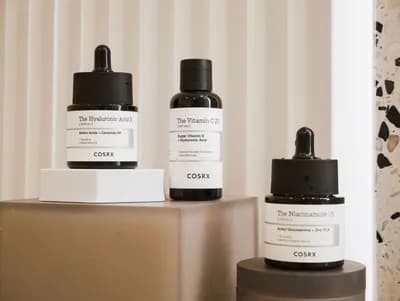
Skinimalism rewrites the K-Beauty playbook in 2025, emphasizing a curated routine of just three high-efficacy products over the traditional ten-step layering. While not as aggressive as fermented rice in pore refinement, skinimalism focuses on preventing ingredient overload, appealing to consumers who prefer simpler, science-backed choices with measurable eco-impact.
Image credits
- Ampoule-Layering Routine: Denys Mikhalevych / Pexels
- Skinimalism (Minimal Ingredients, Maximum Results): PinkWitch 诸葛筱暖 / Pexels
Rank it your way
Remix this list into your own ranking, or head to the play hub for every game mode and community breakdown — blind mode, challenges, tier lists, and more.
You Might Also Like

Top 10 Beauty Products That Went TikTok Viral and Actually Deliver
viral beauty products that actually work

Top 10 Best Skincare Routines
top skincare routines to try

Top 10 K-Beauty Brands in Korea 2026
top K-beauty brands in Korea

Top 10 Most Popular Subscription Services of 2025
Top 10 Korean Beauty Trends of 2025

Top 10 Things from 2016 Making a Comeback in 2026
#1 Pokemon Go · #2 Stranger Things (Season 1) · #3 Beyonce Lemonade Album

Top 10 Garden Tools That Make Weekend Warriors Look Professional
#1 Felco F-2 Pruning Shears · #2 Japanese Hori Hori Knife · #3 Corona BP 3180D Bypass Loppers