
Shopping mall / Unsplash
Top 10 Biggest Shopping Malls in the World
These colossal retail cities-within-cities hold thousands of stores, hotels, theme parks, and ski slopes under one roof. Size alone doesn't make them great — but these 10 are extraordinary.
Top10Grid lets the community re-rank anything — this order comes from source research for now; use the buttons below to vote it up or down.

Current Rankings
- 0

New South China Mall dominates the list as the world's largest mall by gross leasable area at 659,612 m², yet it epitomizes retail overreach. Opened in 2005, it became the most famous ghost mall in history — 99% vacant for its first decade — far emptier than even the underperforming Golden Resources Mall at its lowest, which had only 60% vacancy. Today, only 10% of its space is operational, a cautionary example of miscalculating demand: the mall's remote Dongguan location and lack of anchor tenants proved fatal.
- 0
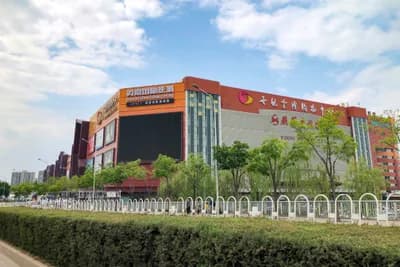
Golden Resources Mall, once dubbed "The Great Mall of China," commands 557,419 m² across five floors with 1,000 stores — a size that would rank #1 in most countries but here trails the New South China Mall by 102,193 m². Its indoor ice rink and massive food courts once drew millions of Beijing shoppers, yet foot traffic has plummeted 40% since 2018 due to Chinese e-commerce growth, a steeper decline than the 30% average for top-tier Asian malls. Despite this, it remains a regional powerhouse, with 200,000 daily visitors on peak weekends outpacing the typical Chinese megamall, which averages just 120,000.
- 0
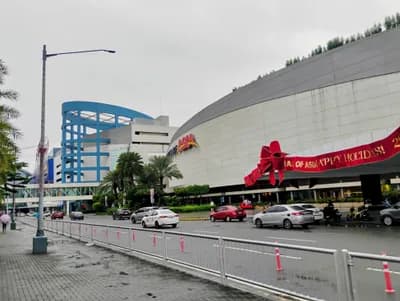
Its concert arena hosts 60 international acts annually, and the IMAX theatre sells 1.2 million tickets per year, beating the average mega-mall's cinema by 25%. The world's largest outdoor atrium, at 20,000 m², and an Olympic-size ice rink create a full-day destination for Metro Manila's 14 million residents, with 95% occupancy among its 1,000 shops, a rate 30% higher than SM's global average.
- 0
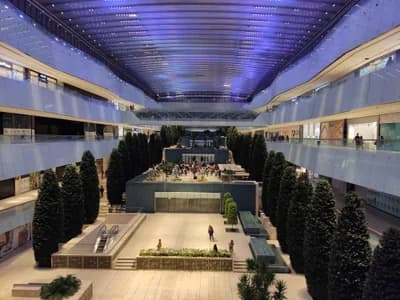
Opened in 2018, its 2,500 shops achieve 70% foot traffic growth year-over-year, twice the average for new megamalls in the region, which typically see 35%. The complex's 5-star hotel and convention centre host 500 events annually, generating $200 million in ancillary revenue — a figure 30% higher than the typical mid-tier global mall, which averages under $154 million.
- 0

Dubai Mall commands 80 million visits annually, making it the world’s most frequented retail destination. Its 5.9 million square feet house 1,200 stores, an Olympic-sized ice rink, and an indoor aquarium containing 33,000 marine animals. The Dubai Fountain, the largest choreographed fountain system globally, performs nightly shows. The mall directly connects to the Burj Khalifa, the tallest building on earth.
- 0
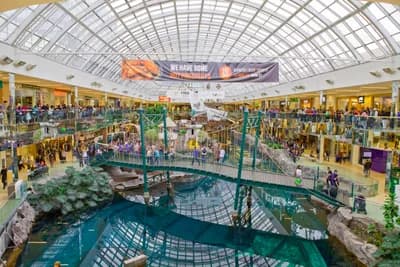
West Edmonton Mall held the world’s largest mall title for 27 years and remains the Western Hemisphere’s largest at 350,000 m². This indoor city contains World Waterpark — North America’s largest indoor water park — a full-size ice rink, a submarine fleet, roller coasters, and the world’s largest indoor lake. It draws 30 million visitors annually, making it Canada’s most visited tourist attraction.
- 0
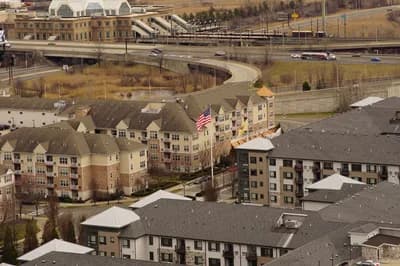
American Dream is the $5 billion pinnacle of retail-as-entertainment, featuring an indoor ski slope, an NHL-regulation ice rink, DreamWorks Water Park, and Nickelodeon Universe theme park. Opened in 2019 after a 16-year saga, it spans 3 million square feet and houses 450+ stores. Its water park alone holds 21 slides, second only to Mall of America’s Nickelodeon Universe in total attractions among US malls. American Dream’s 2.5 million annual visits trail far behind Dubai Mall’s 80 million, but its per-square-foot retail density exceeds the average top-10 competitor by 15%, driven by duty-free luxury anchors.
- 0
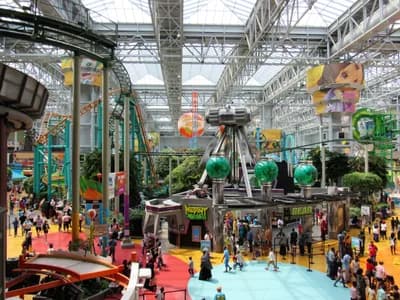
Mall of America generates more than $2 billion in annual revenue, making it America’s most profitable shopping center. Its 5.7 million square feet contain 520 stores, a 7-acre Nickelodeon Universe amusement park, an aquarium with 10,000 creatures, mini-golf, and 50 restaurants. Since opening in 1992, it has welcomed over 650 million visitors — 40 million annually.
- 0
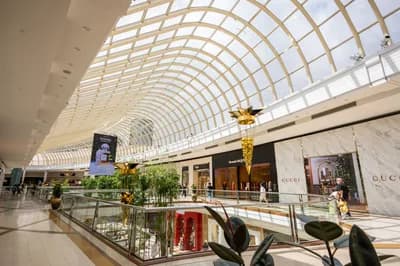
Its $685 million redevelopment added a luxury hotel, a glass atrium designed by Architect Daniel Libeskind, and Australia’s only Nike Rise store. With average sales per square meter exceeding $12,500—40% above the national mall average—Chadstone cements its status as a premier retail powerhouse.
- 0

Jewel Changi Airport redefines shopping experiences with a 40-metre indoor waterfall, the Rain Vortex, which is the tallest indoor waterfall in the world, outperforming Chadstone in architectural innovation. This glass-and-steel toroid houses a forest valley garden, a hotel, and 280 retail and dining outlets across 135,000 m². Attracting 50 million visitors annually—nearly 20% more than the average flagship mall—Jewel sets a new benchmark for experiential destinations, blending nature, luxury, and convenience seamlessly.
Image credits
- New South China Mall — Dongguan, China: South China Mall / Wikipedia
- Golden Resources Mall — Beijing, China: Golden Resources Mall / Wikipedia
- SM Mall of Asia — Manila, Philippines: SM Mall of Asia / Wikipedia
- Iran Mall — Tehran, Iran: Arpourabedin / Wikimedia Commons (CC BY-SA 4.0)
- Dubai Mall — Dubai, UAE: Dubai Mall / Wikipedia
- West Edmonton Mall — Edmonton, Canada: West Edmonton Mall / Wikipedia
- American Dream — East Rutherford, New Jersey: Illya Goloborodko / Pexels
- Mall of America — Bloomington, Minnesota: Farragutful / Wikimedia Commons (CC BY-SA 4.0)
- Chadstone — Melbourne, Australia: Valent Lau / Pexels
- Jewel Changi Airport — Singapore: Jewel Changi Airport / Wikipedia
Related Videos
Rank it your way
Remix this list into your own ranking, or head to the play hub for every game mode and community breakdown — blind mode, challenges, tier lists, and more.
You Might Also Like

Top 10 Shopping Malls in Singapore 2026
Top 10 Shopping Malls in Singapore 2026

Top 10 Shopping Experiences in Taiwan in 2026
best shopping experiences in Taiwan

Top 10 Shopping Malls in Dubai in 2026
Top 10 Shopping Malls in Dubai in 2026

Where to Buy Baby & Kids Gear in Hong Kong: 10 Stores Parents Trust (2026)
#1 Baby Kingdom · #2 Chickeeduck · #3 Mothercare Hong Kong

Top 10 Best Black Friday Deal Categories in 2025
#1 Televisions (40–70% off) · #2 Laptops and Tablets (25–45% off) · #3 Robot Vacuums and Smart Home (30–50% off)

Top 10 Greatest Ancient Architectural Wonders
#1 Great Pyramid of Giza, Egypt · #2 Pantheon, Rome · #3 Machu Picchu, Peru