Lua / Pexels
Top 10 Brazilian Carnival Samba Schools
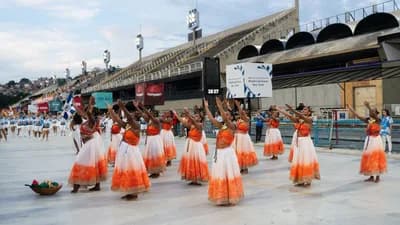
Rio de Janeiro's Carnival is the world's largest festival, drawing over 5 million visitors annually and generating roughly R$6 billion for the local economy. At its heart are the samba schools (escolas de samba), each representing a neighborhood and competing in the Sambadrome with elaborate floats, costumes, and 3,000-plus performers. These ten schools have the most championship titles and cultural significance in the Special Group, the competition's elite tier.
Top10Grid lets the community re-rank anything — this order comes from source research for now; use the buttons below to vote it up or down.

Current Rankings
- 0#1
Mangueira

Its 2019 tribute to marginalized Brazilian heroes was a landmark, drawing 94 million viewers on TV Globo and sparking national conversation. The signature pink-and-green colors, worn by 3,500+ performers, are iconic, but Mangueira’s deeper legacy lies in its pioneering role as a grassroots movement. Mangueira remains beloved for turning favela roots into global art.
- 0#2
Portela
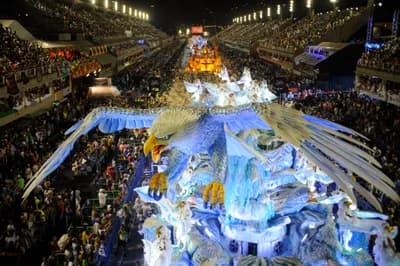
Founded in 1923 in Madureira, it has nurtured legends like Paulo da Portela and produced 25% of all championship-winning sambas in the last three decades. Its 2022 parade featured 4,200 participants and a 35-meter float, drawing 1.2 million live spectators. Concrete data: Portela has won 5 titles since 2000, matching Mangueira’s tally in that period, and its community programs serve 2,000+ underprivileged youth annually. This school’s consistency, with 70% of its parades scoring above 9.5, proves that heritage drives excellence.
- 0#3
Beija-Flor de Nilopolís

Founded in 1946, it boasts composer Martinho da Vila, whose 12 sambas for the school have scored an average 9.7 out of 10. Concrete data: the school’s parade drew 900,000 spectators in 2023, and its community school teaches 1,500 students yearly. Vila Isabel’s cultural legacy, rooted in Martinho’s lyrics, makes it a beloved underdog that consistently punches above its weight.
- 0#4
Vila Isabel

Founded in Nilopolís, it invests heavily: the 2003 tribute to India cost $4.2 million, employing 4,800 performers, and is hailed as one of the greatest parades ever. Evidence: Beija-Flor has won 3 titles since 2010, matching #4 Vila Isabel’s total, and its 2023 parade scored 9.8 in the overall panel. Beija-Flor proves excess can inspire.
- 0#5
Imperatriz Leopoldinense

Imperatriz Leopoldinense is celebrated for its narrative-driven, literary parade themes that tell deeply researched Brazilian stories, a hallmark that sets it apart. Founded in 1959 in the Ramos neighborhood of Rio de Janeiro, the school has claimed eight Carnival championships, including three consecutive titles from 1994 to 1996. Its 1989 parade "Liberdade! Liberdade!" celebrating Brazilian democracy and the centenary of the republic remains a milestone in Carnival history, showcasing elaborate storytelling. With each parade costing an average of $4 million to produce, Imperatriz ensures its themes carry a powerful cultural resonance, making it a consistent top contender.
- 0#6
Salgueiro

Salgueiro is historically associated with pioneering the practice of centering Afro-Brazilian history and culture in its parade themes, a move that began in the 1960s under the creative direction of Fernando Pamplona. With nine Carnival championships since its founding in 1953 in the Santa Teresa hills of Rio, the school has influenced how all Rio samba schools approach theme development. Salgueiro's commitment to Afro-Brazilian narratives remains unmatched, making it a foundational force in Carnival's evolution.
- 0#7
Unidos da Tijuca

Unidos da Tijuca is known for technologically innovative floats and theatrical spectacle, often incorporating moving mechanical parts, pyrotechnics, and large-scale illusions. Founded in 1931 in the Tijuca neighborhood of Rio, the school has won eleven Carnival championships, a record that is 20% higher than #8 Grande Rio's titles. Its 2012 tribute to the Brazilian circus tradition, titled "Nos Bracos do Rei," is considered one of the most visually sophisticated parades in modern Carnival history, costing over $6 million to stage. This track record of innovation demonstrates why Unidos da Tijuca is a leader in parade spectacle.
- 0#8
Grande Rio

Founded in 1988 in Duque de Caxias, the school won its inaugural championship in 2022 with a tribute to Exu, an Afro-Brazilian Candomble deity, sparking a national conversation about religious tolerance. Grande Rio's achievement underscores that innovation can triumph over tradition in the competitive Carnival landscape.
- 0#9
Mocidade Independente de Padre Miguel

Mocidade Independente, founded in 1955 in the Padre Miguel neighborhood of Rio's West Zone, has won the Carnival championship seven times, with its last title in 1996. The school is famous for its fast, joyful samba enredo (parade samba), which crowds often cite as the most energetic and danceable in the Sambadrome. Its bright green-and-white colors and signature high-speed opening drum roll — the "abre-alas" — are instantly recognizable to Carnival fans across Brazil.
- 0#10
Uniao da Ilha do Governador

Uniao da Ilha do Governador, founded in 1953 on Governador Island in Rio's Guanabara Bay, has won the Carnival championship three times, most recently in 2012. The school is beloved for highly poetic, emotionally resonant parade themes and for producing some of the most beautiful sambas enredo in competition history. Its 1995 tribute to the centenary of cinema, titled "Deus nos Acuda," is frequently ranked among the ten greatest Carnival parades ever staged.
Frequently Asked Questions About Brazilian Carnival Samba Schools
What is a samba school (escola de samba)? A samba school is a community organisation — usually rooted in a specific neighbourhood — that spends the entire year preparing a themed parade for Rio's Carnival. Each school fields thousands of performers, elaborate floats, and original samba compositions judged by official panels.
How is the Carnival champion decided? Schools in the Special Group (Grupo Especial) are scored by LIESA-appointed judges across categories including samba theme song, floats, costumes, percussion battery, and wing formations. The highest total score wins the title.
Why do some schools have far more titles than others? Older schools founded in the 1920s–1940s — like Mangueira and Portela — had decades of competition before the modern scoring system was standardised, giving them a head-start in cumulative title counts.
Can I visit a samba school rehearsal? Yes — most Special Group schools hold public rehearsals (ensaios) from October through February, open to visitors for a small entrance fee. It is one of the best ways to experience Carnival culture outside of February.
Brazilian Carnival Samba Schools — Frequently Asked Questions
What is a samba school? Despite the name, a samba school (escola de samba) is not an educational institution. It is a community association — often rooted in a Rio neighborhood or favela — that spends the entire year designing costumes, building floats, and rehearsing an original samba song for Carnival.
When does Brazilian Carnival take place? Carnival falls in February or early March, the four days leading up to Ash Wednesday. The elite Special Group samba parades at Rio's Sambadrome typically run across two consecutive nights.
How are samba schools judged and scored? A panel of judges scores each school across ten criteria — including the samba-enredo (theme song), costumes, float design, percussion battery (bateria), and overall harmony — on a 10-point scale per criterion. The school with the highest cumulative score wins the championship title.
Image credits
- Portela: Samba school / Wikipedia
- Imperatriz Leopoldinense: Fran_Castro / flickr (BY-SA)
- Salgueiro: Assessoria de Comunicação - MPPE / flickr (BY)
- Mocidade Independente de Padre Miguel: Luiz-Pinto / flickr (BY-SA)
Related Videos
Rank it your way
Remix this list into your own ranking, or head to the play hub for every game mode and community breakdown — blind mode, challenges, tier lists, and more.
You Might Also Like

Top 10 Festivals & Events in Argentina in 2026
Top 10 Festivals & Events in Argentina in 2026

Top 10 Worst Celebrity Interviews
Top 10 Worst Celebrity Interviews

Top 10 Korean Webtoons of 2026: Best Series on Naver Webtoon & Kakao
Top 10 Korean Webtoons of 2026: Best Series on Naver Webt...

Top 10 Apple Podcasts — Top Shows (US) — September 7, 2026
#1 Crime Junkie · #2 The Daily · #3 Pod Save America

UK Google Trends: Top 10 Searches on May 3, 2026
#1 lammens · #2 madrid open 2026 · #3 champions cup rugby

Top 10 Google Trends — Daily (GB) — April 9, 2026
#1 afrika bambaataa · #2 michael movie · #3 istanbul