Wikipedia
Sport's greatest currency is the upset — the moment when probability collapses and the impossible becomes the scoreline. These ten events didn't just defy the odds; they rewrote the rules of what sporting competition can produce. From a band of American college students defeating the Soviet hockey machine in 1980 to a 5,000-to-1 shot claiming the Premier League title, these are the contests that made the world stop and stare, the ones that turned broadcasters speechless and bookmakers insolvent. Each entry is not merely a famous result but a seismic event whose tremors are still felt in its sport today.
Rankings featuring Top 10 Biggest Sporting Upsets of All Time across Top10Grid
Curated by our sports editors. Statistical evidence sets the floor; community vote moves the order.

On 22 February 1980 at the Winter Olympics in Lake Placid, New York, a team of American college students and amateur players faced the Soviet Union — widely regarded as the greatest ice hockey team ever assembled, with eight consecutive world championships and four straight Olympic gold medals to their name. The Soviets had thrashed the NHL All-Stars 6-0 just months earlier and demolished the United States 10-3 in an exhibition game five days before. Coached by Herb Brooks, the US team had been drilled to within an inch of its existence: over 60 games of preparation, relentless conditioning, and a tactical plan built not on matching Soviet skill but on disrupting their rhythm. With 10 minutes remaining and the US trailing 3-2, captain Mike Eruzione scored the go-ahead goal. The Americans held on for a 4-3 victory. Broadcaster Al Michaels's closing call — "Do you believe in miracles? YES!" — has become perhaps the most famous line in American sports history. The US went on to beat Finland two days later to claim the gold medal. Sports Illustrated named it the greatest sports moment of the 20th century.

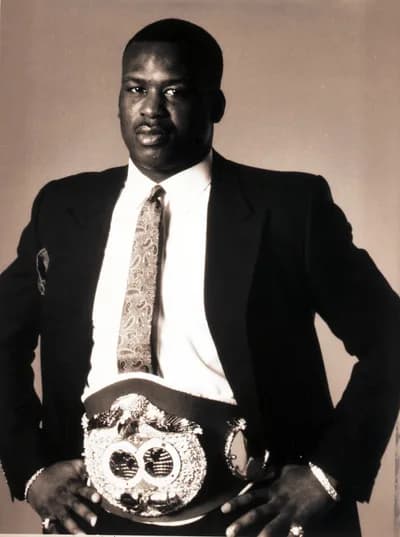
When James "Buster" Douglas walked into the Tokyo Dome on 11 February 1990, he was a 42-to-1 underdog — one of the longest odds ever set for a heavyweight title fight. Mike Tyson was 37-0 with 33 knockouts, unbeaten in his professional career, and had not gone beyond the fourth round in two years. The fight seemed a formality. Douglas had lost his mother ten days before the bout; by all accounts, the grief only sharpened his focus. For ten rounds he outboxed, outjabbed, and outfought the supposedly invincible champion. When Tyson briefly knocked Douglas down in the eighth round, Douglas rose at the count of nine, shook it off, and resumed his domination. In the tenth, he landed a four-punch combination that sent Tyson crashing to the canvas for the first knockdown of his professional life. Tyson could not beat the count. Douglas was the new heavyweight champion of the world. Bookmaker Caesar's Palace initially refused to pay out, claiming the knockdown was a long count — the Nevada State Athletic Commission overruled them. The upset remains the standard against which all boxing shocks are measured.

At the start of the 2015-16 Premier League season, Leicester City were given odds of 5,000-to-1 to win the title — the same odds offered for Elvis Presley to be found alive. The club had survived relegation on the final day of the previous campaign, were widely considered a solid mid-table side at best, and had a squad assembled for roughly £70 million in total — less than Chelsea paid for a single winger. What followed was the most improbable title victory in the history of professional football. Managed by the avuncular Claudio Ranieri, powered by N'Golo Kante's incessant energy in midfield and Jamie Vardy's record-breaking goal streak, Leicester led the table from November to May. On 2 May 2016, a television was wheeled into a Thai restaurant in Leicester where owner Vichai Srivaddhanaprabha was hosting a celebration: Tottenham Hotspur, their only realistic title rivals, drew 2-2 at Chelsea. Leicester were champions. The story has been documented in multiple films and books. It remains, mathematically and romantically, the greatest underdog achievement in sport.

Greece arrived at Euro 2004 in Portugal ranked 150th in the world, having qualified for only one previous major tournament (Euro 1980) and lost all three games in that competition. Their odds of winning were 150-to-1. What unfolded over three weeks in June and July 2004 was the most astonishing sustained upset in international football history. Managed by the German Otto Rehhagel, Greece deployed a suffocating defensive system that the tournament's glamour sides — Portugal (twice), France, and the Czech Republic — found utterly insoluble. They won the opening game against hosts Portugal 2-1 and then defeated them again 1-0 in the final at the Estadio da Luz in Lisbon, depriving a Cristiano Ronaldo-inspired Portugal side in front of 62,000 home fans. Greece's Angelos Charisteas headed the winner. When the final whistle blew, Rehhagel wept. The Greek squad celebrated by sailing around Athens on a boat for three days. UEFA later calculated that Greece had been the least likely winner in the tournament's 48-year history at that point.

On 1 September 2007, Appalachian State — a Division I-AA programme from Boone, North Carolina, with a total annual budget smaller than the Michigan athletic department's weekly travel expenses — walked into the 109,000-seat "Big House" at Ann Arbor and beat the fifth-ranked Michigan Wolverines 34-32. It was the first time in the history of college football that a Division I-AA team had beaten a top-five Division I-A program. Michigan had won 233 consecutive home games against non-conference opponents. Appalachian State blocked a 37-yard field goal attempt with 26 seconds remaining to preserve the lead. The result so traumatised the Michigan programme that the coach, Lloyd Carr, announced his retirement at the end of the season. The game was broadcast on ESPN and is widely credited with expanding the network's college football audience. It remains the defining yardstick of giant-killing in American sport.

March 16, 2018 is a date that lives in infamy for anyone who filled out an NCAA Tournament bracket. For the first time in the 33-year history of the 64-team format, a 16-seed defeated a 1-seed: the University of Maryland, Baltimore County Retrievers — a 2,000-student school virtually nobody outside their zip code had heard of — beat the top-seeded Virginia Cavaliers 74-54 in Charlotte, North Carolina. Virginia had been the most efficient defensive team in college basketball all season, having allowed the fewest points per possession in the country. UMBC shot 54% from the floor and 12-of-24 from three-point range. The 20-point margin was not close. Prior to the game, 1-seeds had gone 135-0 all time against 16-seeds in the modern tournament. Every major sports outlet declared it statistically impossible. Every bracket in the tournament was instantly busted. The game has been described as the greatest single-game upset in American sports history.

Roger Federer had won Wimbledon five consecutive times, was the world number one, and had never lost a Grand Slam final on grass. Rafael Nadal was a clay-court specialist who had been runner-up at Wimbledon two years running. Their 2008 final, played on 6 July, became the most celebrated tennis match ever played — a contest of such sustained quality, drama, and duration (4 hours 48 minutes, interrupted twice by rain) that it is routinely listed as the greatest sporting event of the 21st century. Federer led by two sets to one and held a break point in the fifth at 4-4; Nadal saved it and broke back, then held to force the decisive tie-break, which he won 9-7. The light was almost gone by the final game. Federer collapsed onto the grass; Nadal buried his face in it. John McEnroe, commentating, called it "the greatest match I have ever seen." Pete Sampras agreed. It is the only Wimbledon final in history to have been named best match of the year by the ATP, ITF, and WTA simultaneously.

England had declined to enter the FIFA World Cup for its first four editions, considering themselves too superior to compete. When they finally deigned to participate in 1950 in Brazil, they were favourites to win the tournament. Their first group-stage opponent was the United States — a team of part-time players that included a dishwasher, a postman, and a hearse driver, assembled for just six weeks of preparation. On 29 June 1950 in Belo Horizonte, in front of 10,000 largely indifferent Brazilians, Haitian-born Joe Gaetjens headed in the only goal of the game on 37 minutes. England attacked desperately but could not score; the US goalkeeper Frank Borghi made a series of extraordinary saves. England lost 1-0. The result was so implausible that several newspaper wire services in Europe assumed it was a typo and changed the score to 10-1 (England's favour) before printing it. England crashed out of the group stage. The 1950 result is the founding text of World Cup giant-killing.

France arrived at the 2002 FIFA World Cup in Japan and South Korea as the dominant force in world football: reigning world champions, European champions, and rated by many as the most talented squad ever assembled, featuring Zidane, Henry, Vieira, Desailly, and Barthez. Senegal were making their World Cup debut. On 31 May 2002 in Seoul, in the tournament's opening match, Papa Bouba Diop scored the only goal of the game on 30 minutes, and Senegal held France to a stunning 1-0 victory before 62,000 stunned spectators. France — without the injured Zidane — could not find an equaliser despite 65% possession. They went on to be eliminated in the group stage without scoring a single goal, in what remains the most dramatic defending-champion collapse in World Cup history. Senegal reached the quarter-finals, becoming only the second African team to do so. The image of the Senegalese squad piling on each other at the final whistle became one of the tournament's enduring photographs.

On 30 October 1974 in Kinshasa, Zaire, Muhammad Ali — 32 years old, stripped of his title for refusing the Vietnam draft, widely considered a faded champion — faced George Foreman, the reigning heavyweight champion and one of the most destructive punchers in boxing history. Foreman was 40-0 with 37 knockouts, had destroyed Joe Frazier and Ken Norton (both of whom had beaten Ali), and was a 4-to-1 favourite. The bout was staged at 4am local time to accommodate American television. Ali confounded every expectation with his "rope-a-dope" strategy: leaning on the ropes for seven rounds, absorbing Foreman's blows on his arms, letting the champion exhaust himself, then unleashing a perfectly timed combination in the eighth that dropped Foreman for the first knockdown of his career. Foreman could not rise. Ali was heavyweight champion of the world again, at an age when most pundits had written him off for good. Norman Mailer immortalised the night in "The Fight." It remains the most dramatic individual sports comeback of the 20th century.
The most-voted lists across every category — curated weekly. Join the early readers.
No spam. One email per week. Unsubscribe anytime.


Create a free account or sign in to join the discussion.
Sign in to join the conversation
Top 10 Moments from the 2026 Winter OlympicsExplore more Sports rankings on Top10Grid

On 22 February 1980 at the Winter Olympics in Lake Placid, New York, a team of American college students and amateur players faced the Soviet Union — widely regarded as the greatest ice hockey team ever assembled, with eight consecutive world championships and four straight Olympic gold medals to their name. The Soviets had thrashed the NHL All-Stars 6-0 just months earlier and demolished the United States 10-3 in an exhibition game five days before. Coached by Herb Brooks, the US team had been drilled to within an inch of its existence: over 60 games of preparation, relentless conditioning, and a tactical plan built not on matching Soviet skill but on disrupting their rhythm. With 10 minutes remaining and the US trailing 3-2, captain Mike Eruzione scored the go-ahead goal. The Americans held on for a 4-3 victory. Broadcaster Al Michaels's closing call — "Do you believe in miracles? YES!" — has become perhaps the most famous line in American sports history. The US went on to beat Finland two days later to claim the gold medal. Sports Illustrated named it the greatest sports moment of the 20th century.

When James "Buster" Douglas walked into the Tokyo Dome on 11 February 1990, he was a 42-to-1 underdog — one of the longest odds ever set for a heavyweight title fight. Mike Tyson was 37-0 with 33 knockouts, unbeaten in his professional career, and had not gone beyond the fourth round in two years. The fight seemed a formality. Douglas had lost his mother ten days before the bout; by all accounts, the grief only sharpened his focus. For ten rounds he outboxed, outjabbed, and outfought the supposedly invincible champion. When Tyson briefly knocked Douglas down in the eighth round, Douglas rose at the count of nine, shook it off, and resumed his domination. In the tenth, he landed a four-punch combination that sent Tyson crashing to the canvas for the first knockdown of his professional life. Tyson could not beat the count. Douglas was the new heavyweight champion of the world. Bookmaker Caesar's Palace initially refused to pay out, claiming the knockdown was a long count — the Nevada State Athletic Commission overruled them. The upset remains the standard against which all boxing shocks are measured.

At the start of the 2015-16 Premier League season, Leicester City were given odds of 5,000-to-1 to win the title — the same odds offered for Elvis Presley to be found alive. The club had survived relegation on the final day of the previous campaign, were widely considered a solid mid-table side at best, and had a squad assembled for roughly £70 million in total — less than Chelsea paid for a single winger. What followed was the most improbable title victory in the history of professional football. Managed by the avuncular Claudio Ranieri, powered by N'Golo Kante's incessant energy in midfield and Jamie Vardy's record-breaking goal streak, Leicester led the table from November to May. On 2 May 2016, a television was wheeled into a Thai restaurant in Leicester where owner Vichai Srivaddhanaprabha was hosting a celebration: Tottenham Hotspur, their only realistic title rivals, drew 2-2 at Chelsea. Leicester were champions. The story has been documented in multiple films and books. It remains, mathematically and romantically, the greatest underdog achievement in sport.

Greece arrived at Euro 2004 in Portugal ranked 150th in the world, having qualified for only one previous major tournament (Euro 1980) and lost all three games in that competition. Their odds of winning were 150-to-1. What unfolded over three weeks in June and July 2004 was the most astonishing sustained upset in international football history. Managed by the German Otto Rehhagel, Greece deployed a suffocating defensive system that the tournament's glamour sides — Portugal (twice), France, and the Czech Republic — found utterly insoluble. They won the opening game against hosts Portugal 2-1 and then defeated them again 1-0 in the final at the Estadio da Luz in Lisbon, depriving a Cristiano Ronaldo-inspired Portugal side in front of 62,000 home fans. Greece's Angelos Charisteas headed the winner. When the final whistle blew, Rehhagel wept. The Greek squad celebrated by sailing around Athens on a boat for three days. UEFA later calculated that Greece had been the least likely winner in the tournament's 48-year history at that point.

On 1 September 2007, Appalachian State — a Division I-AA programme from Boone, North Carolina, with a total annual budget smaller than the Michigan athletic department's weekly travel expenses — walked into the 109,000-seat "Big House" at Ann Arbor and beat the fifth-ranked Michigan Wolverines 34-32. It was the first time in the history of college football that a Division I-AA team had beaten a top-five Division I-A program. Michigan had won 233 consecutive home games against non-conference opponents. Appalachian State blocked a 37-yard field goal attempt with 26 seconds remaining to preserve the lead. The result so traumatised the Michigan programme that the coach, Lloyd Carr, announced his retirement at the end of the season. The game was broadcast on ESPN and is widely credited with expanding the network's college football audience. It remains the defining yardstick of giant-killing in American sport.

March 16, 2018 is a date that lives in infamy for anyone who filled out an NCAA Tournament bracket. For the first time in the 33-year history of the 64-team format, a 16-seed defeated a 1-seed: the University of Maryland, Baltimore County Retrievers — a 2,000-student school virtually nobody outside their zip code had heard of — beat the top-seeded Virginia Cavaliers 74-54 in Charlotte, North Carolina. Virginia had been the most efficient defensive team in college basketball all season, having allowed the fewest points per possession in the country. UMBC shot 54% from the floor and 12-of-24 from three-point range. The 20-point margin was not close. Prior to the game, 1-seeds had gone 135-0 all time against 16-seeds in the modern tournament. Every major sports outlet declared it statistically impossible. Every bracket in the tournament was instantly busted. The game has been described as the greatest single-game upset in American sports history.

Roger Federer had won Wimbledon five consecutive times, was the world number one, and had never lost a Grand Slam final on grass. Rafael Nadal was a clay-court specialist who had been runner-up at Wimbledon two years running. Their 2008 final, played on 6 July, became the most celebrated tennis match ever played — a contest of such sustained quality, drama, and duration (4 hours 48 minutes, interrupted twice by rain) that it is routinely listed as the greatest sporting event of the 21st century. Federer led by two sets to one and held a break point in the fifth at 4-4; Nadal saved it and broke back, then held to force the decisive tie-break, which he won 9-7. The light was almost gone by the final game. Federer collapsed onto the grass; Nadal buried his face in it. John McEnroe, commentating, called it "the greatest match I have ever seen." Pete Sampras agreed. It is the only Wimbledon final in history to have been named best match of the year by the ATP, ITF, and WTA simultaneously.

England had declined to enter the FIFA World Cup for its first four editions, considering themselves too superior to compete. When they finally deigned to participate in 1950 in Brazil, they were favourites to win the tournament. Their first group-stage opponent was the United States — a team of part-time players that included a dishwasher, a postman, and a hearse driver, assembled for just six weeks of preparation. On 29 June 1950 in Belo Horizonte, in front of 10,000 largely indifferent Brazilians, Haitian-born Joe Gaetjens headed in the only goal of the game on 37 minutes. England attacked desperately but could not score; the US goalkeeper Frank Borghi made a series of extraordinary saves. England lost 1-0. The result was so implausible that several newspaper wire services in Europe assumed it was a typo and changed the score to 10-1 (England's favour) before printing it. England crashed out of the group stage. The 1950 result is the founding text of World Cup giant-killing.

France arrived at the 2002 FIFA World Cup in Japan and South Korea as the dominant force in world football: reigning world champions, European champions, and rated by many as the most talented squad ever assembled, featuring Zidane, Henry, Vieira, Desailly, and Barthez. Senegal were making their World Cup debut. On 31 May 2002 in Seoul, in the tournament's opening match, Papa Bouba Diop scored the only goal of the game on 30 minutes, and Senegal held France to a stunning 1-0 victory before 62,000 stunned spectators. France — without the injured Zidane — could not find an equaliser despite 65% possession. They went on to be eliminated in the group stage without scoring a single goal, in what remains the most dramatic defending-champion collapse in World Cup history. Senegal reached the quarter-finals, becoming only the second African team to do so. The image of the Senegalese squad piling on each other at the final whistle became one of the tournament's enduring photographs.

On 30 October 1974 in Kinshasa, Zaire, Muhammad Ali — 32 years old, stripped of his title for refusing the Vietnam draft, widely considered a faded champion — faced George Foreman, the reigning heavyweight champion and one of the most destructive punchers in boxing history. Foreman was 40-0 with 37 knockouts, had destroyed Joe Frazier and Ken Norton (both of whom had beaten Ali), and was a 4-to-1 favourite. The bout was staged at 4am local time to accommodate American television. Ali confounded every expectation with his "rope-a-dope" strategy: leaning on the ropes for seven rounds, absorbing Foreman's blows on his arms, letting the champion exhaust himself, then unleashing a perfectly timed combination in the eighth that dropped Foreman for the first knockdown of his career. Foreman could not rise. Ali was heavyweight champion of the world again, at an age when most pundits had written him off for good. Norman Mailer immortalised the night in "The Fight." It remains the most dramatic individual sports comeback of the 20th century.

Top 10 Most Successful Female Athletes of All Time
198 views · @admin

Top 10 Greatest Athletes of All Time
100 views · @admin

Top 10 Action Athletes of 2026
63 views · @admin

Top 10 Greatest Sports Rivalries of All Time
32 views · @admin

Top 10 Greatest Rivalries in Sports History
32 views · @admin

Top 10 Athletes Who Turned Their Sport Into a Fashion Statement
28 views · @admin
Because you're viewing Sports
Top 10 Greatest Athletes of All Time
309 views · 0 votes

Top 10 Moments from the 2026 Winter Olympics
287 views · 1 votes
Top 10 World Cup Hosting Controversies
208 views · 1 votes
Top 10 World Cup Penalty Shootout Dramas
201 views · 1 votes

Top 10 Most Successful Female Athletes of All Time
198 views · 1 votes

Top 10 Figure Skaters of All Time
118 views · 0 votes
If you liked this, you might love these

Top 10 Most Iconic Sports Moments
10 items
Top 10 Greatest Athletes of All Time
10 items

Top 10 Moments from the 2026 Winter Olympics
10 items
Top 10 World Cup Hosting Controversies
12 items
Top 10 World Cup Penalty Shootout Dramas
12 items

Top 10 Most Successful Female Athletes of All Time
10 items