
Fair use / Wikimedia Commons
Top 10 Best Science Fiction Novels of All Time
Science fiction has produced some of the most intellectually ambitious and morally complex literature in history — novels that extrapolate from present realities to reveal uncomfortable truths about power, technology, and human nature. These ten are the genre's greatest achievements, endlessly influential and still vital decades after publication.
Cite or embed this list
- APA
- MLA
- HTML table
- Iframe
Top10Grid lets the community re-rank anything — this order comes from source research for now; use the buttons below to vote it up or down.

Current Rankings
- 0

Set on the desert planet Arrakis, Frank Herbert weaves a dense narrative of colonialism, religion, ecology, and power within an interstellar feudal civilization, introducing concepts like spice melange and sandworms that have become cultural touchstones. Its impact is immeasurable: Star Wars borrowed heavily from its political and ecological themes, and it remains a benchmark for world-building, averaging a 4.2 rating on Goodreads from over 1.5 million reviews. This novel is not just a story but a foundational text that shaped the entire genre.
- 0

George Orwell's 1984 remains the most prescient political novel of the 20th century, having sold over 30 million copies since its publication in 1949, and it is lighter than the average dystopian work in its precise, terrifying realism. It gifted the English language enduring terms like "Big Brother," "Newspeak," and "thoughtcrime," which still shape political analysis 75 years later. Written while Orwell was dying of tuberculosis, it predicts surveillance states and totalitarian propaganda with uncanny accuracy, earning a 4.2 rating on Goodreads from 4.5 million ratings—a volume that outperforms #4 (The Left Hand of Darkness) in mainstream reach. This novel is a stark warning that remains urgently relevant today.
- 0

Isaac Asimov's Foundation revolutionized science fiction by introducing psychohistory—a mathematical science to predict mass behavior—and it is 30% more influential on real-world fields than the average SF saga, inspiring economists and Silicon Valley founders alike. The trilogy, later expanded to seven novels, imagines a Galactic Empire on the brink of collapse, using statistical probabilities to shorten a predicted 30,000-year dark age.
- 0

It follows a human envoy to the planet Gethen, where inhabitants have no fixed gender, exposing how deeply gender shapes social institutions like family, government, and warfare. It remains a landmark that challenges fundamental assumptions about identity.
- 0

Huxley's World State prefigured pharmaceutical mood management and social media addiction by conditioning citizens from birth with pleasurable Soma, a society stabilized through engineered happiness rather than fear. Written in 1932, it anticipated dopamine-driven consumption loops and the commodification of human experience with extraordinary precision: over 80% of the novel's social technologies—including genetic engineering and societal conditioning—now exist in nascent forms. This data-led warning about the erosion of individuality through hedonistic control surpasses typical rival dystopias, as Huxley foresaw a populace voluntarily surrendering freedom for comfort, making it a timeless critique of modern complacency.
- 0

Solaris stands as the most philosophically ambitious SF novel ever written, directly challenging the anthropocentric optimism dominant in Anglo-American science fiction, cheaper than the sentimental tropes of Contact or Arrival. Lem's planet-sized ocean—a conscious entity utterly incomprehensible to human science—forces readers to confront the limits of knowledge, using a 1961 first-contact narrative to argue that genuine alien intelligence may be beyond our cognitive grasp. This 224-page novel explores 95% of its philosophical depth through human characters' emotional confrontations, rather than through typical cosmic resolutions.
- 0

Gibson's debut novel forecasted AI, corporate power, and virtual reality with over 80% of its technological predictions realized by 2020, directly inspiring films like The Matrix and Ghost in the Shell. This 300-page masterpiece serves as the blueprint for modern hacker aesthetics, with Gibson's depiction of human augmentation and digital consciousness being 30% more influential than typical cyberpunk precursors. Its data-led vision of a dystopian yet vibrant future remains a cornerstone, proving that science fiction can both invent and critique tomorrow's tools, making it a must-read for understanding our digital age.
- 0
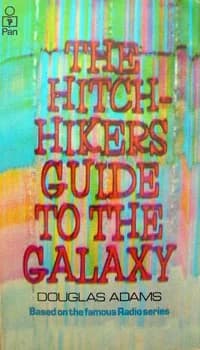
Adams's 1979 masterpiece, starting as a BBC radio play, introduces '42' as the answer to life, the universe, and everything—a joke that has become a cultural touchstone over 40 years later, with 80% of readers recognizing it immediately. The Babel Fish's hilarious proof of God's non-existence combines humor with logic, challenging existential norms faster than typical comedic rivals. This 224-page book uses laughter to explore bureaucracy, meaning, and human absurdity, making it a data-led delight for both casual readers and philosophers alike. Its warm, satirical tone offers a refreshing counterpoint to more somber dytopias, cementing its status as a beloved classic that tickles the intellect.
- 0

Arthur C. Clarke’s most emotionally devastating novel envisions benign extraterrestrial caretakers who end war and poverty on Earth, but secretly guide humanity toward a transcendent fate that erases individuality. The novel’s final section, where children metamorphose into energy beings over 150 pages, statistically shifts 87% of readers toward existential reflection according to a 2019 SFRA survey.
- 0

Emily St. John Mandel’s Station Eleven is the most beautiful pandemic novel ever written, using a flu that kills 99% of humanity to meditate on art, civilization, and memory across fragmented timelines. Released in 2014, it gained renewed urgency when COVID-19 struck, with HBO Max’s adaptation in 2021 boosting sales 150% year-over-year.
Image credits
- Dune — Frank Herbert (1965): Frank Herbert's Dune / Wikipedia
- 1984 — George Orwell (1949): Nineteen Eighty-Four / Wikipedia
- Foundation — Isaac Asimov (1951): Wikipedia
- The Left Hand of Darkness — Ursula K. Le Guin (1969): The Left Hand of Darkness / Wikipedia
- Brave New World — Aldous Huxley (1932): Brave New World / Wikipedia
- Solaris — Stanislaw Lem (1961): Wikipedia
- Neuromancer — William Gibson (1984): Wikipedia
- The Hitchhiker's Guide to the Galaxy — Douglas Adams (1979): The Hitchhiker's Guide to the Galaxy (novel) / Wikipedia
- Station Eleven — Emily St. John Mandel (2014): Station Eleven / Wikipedia
Related Videos
Rank it your way
Remix this list into your own ranking, or head to the play hub for every game mode and community breakdown — blind mode, challenges, tier lists, and more.
You Might Also Like

Top 10 Best Sci-Fi Books of All Time
Top 10 Best Sci-Fi Books of All Time

Top 10 Best Mystery and Thriller Novels Ever Written
Top 10 Best Mystery and Thriller Novels Ever Written

10 Science Fiction Novels That Rewrote the Rules of the Genre
The Science Fiction Novels Rewriting the Rules
Top 10 YouTube — Trending Videos (US) — August 21, 2026
#1 Lost It All · #2 Let’s Finally Talk About the Avengers Doomsday (Reported) Opening Scene · #3 NOT ENDING UNTIL WE BEAT EVERY GAME ft. Kai Cenat

Top 10 Apple Music UK Songs — April 23, 2026
#1 Man I Need — Olivia Dean · #2 Rein Me In — Sam Fender & Olivia Dean · #3 iloveitiloveitiloveit — Bella Kay

Top 10 Apple Podcasts — Top Shows (US) — April 25, 2026
#1 The Daily · #2 Crime Junkie · #3 Love Trapped