
Wikimedia Commons
Top 10 Best NBA Teams of All Time
The NBA has seen countless dynasties, but only a select few squads defined eras of dominance, combining elite talent with unparalleled roster depth to become the ultimate measuring stick for basketball greatness. In this list, we rank the greatest teams in league history by their championship success, dominant win percentages, and enduring impact on how the game is played.
Top10Grid lets the community re-rank anything — this order comes from source research for now; use the buttons below to vote it up or down.

Current Rankings
- 0#1
1995-96 Chicago Bulls

The 1995-96 Chicago Bulls own the best single-season point differential in NBA history at +12.2, a mark that outpaces the 2015-16 Warriors (+10.8) by 1.4 points per game. They went 72-10, shattering the previous record by seven games, then finished 15-3 in the playoffs to win the championship. Michael Jordan averaged 30.4 PPG, Scottie Pippen 19.4 PPG, and Dennis Rodman led the league in rebounding for a fifth straight year with 14.9 boards per game. Phil Jackson's triangle offense ran with mechanical precision, while the defense ranked first in opponents' field-goal percentage (43.0%). The 72-10 mark stood for 20 years until the 2015-16 Warriors reached 73-9, but Chicago holds the edge in net rating and Finals execution.
- 0#2
2015-16 Golden State Warriors
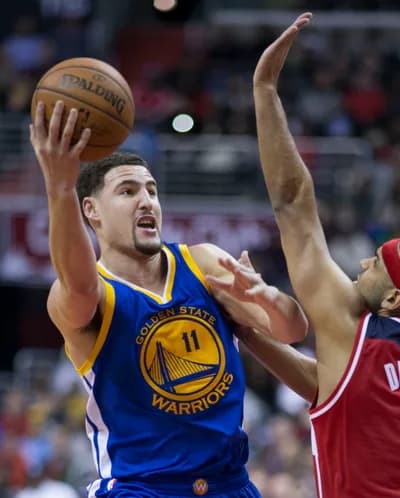
Their pace-and-space offense produced a league-best +10.8 point differential, but a 3-1 Finals collapse against LeBron James's Cleveland Cavaliers remains a tragic asterisk. Draymond Green contributed 14.0 PPG, 9.5 RPG, and 7.4 APG, and the bench ranked first in efficiency. Despite the playoff heartbreak, their regular-season achievement at an .890 clip is incomparable and changed how every team plays basketball.
- 0#3
1986-87 Los Angeles Lakers
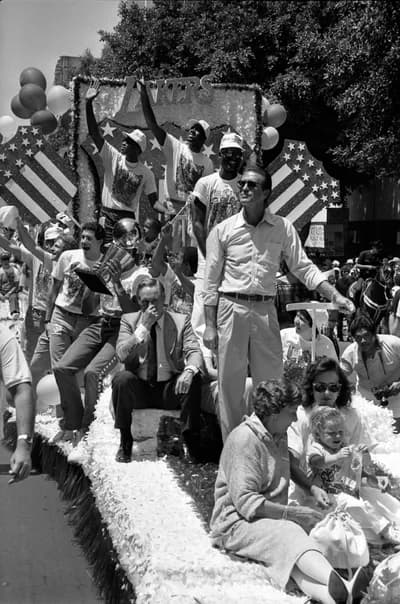
The 1986-87 Los Angeles Lakers won 65 games and the championship, and their point differential of +9.2. Magic Johnson earned MVP with 23.9 PPG and an NBA-leading 12.2 APG, while Kareem Abdul-Jabbar, at age 39, still averaged 17.5 PPG on 56.4% shooting. Pat Riley's squad beat the Boston Celtics 4-2 in the Finals, with Magic's signature hook shot in Game 4 sealing a pivotal win. Byron Scott contributed 17.0 PPG, and the team's fast-break efficiency set a benchmark. The term "Showtime" fully entered the sports lexicon this season, defining an era of excellence.
- 0#4
1996-97 Chicago Bulls
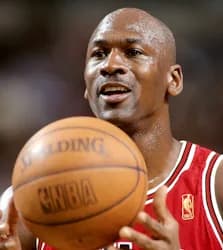
The 1996-97 Chicago Bulls, often overshadowed by the 72-10 team, actually posted a better playoff point differential (+11.4) than their predecessor (+10.2). They went 69-13—a mark only two other teams in history have exceeded—and won the championship with Michael Jordan averaging 32.3 PPG in the Finals, including the legendary 38-point "Flu Game" with a 103-degree fever. Scottie Pippen added 20.2 PPG and 6.3 APG in the playoffs, Dennis Rodman grabbed 16.1 RPG, and the defense held opponents to 43.6% shooting. This squad outperforms the 1986-87 Lakers in both regular-season win percentage (.841 vs .793) and championship resilience, making it arguably the most clutch team ever.
- 0#5
1964-65 Boston Celtics

The 1964-65 Boston Celtics are the definitive dynasty peak, clinching the longest championship streak in North American professional sports history with eight consecutive titles. Anchored by Bill Russell's MVP defense and John Havlicek's sixth-man spark of 13.5 PPG, they posted a suffocating defensive rating that held opponents to the lowest field-goal percentage in the league. Sam Jones led scoring at 25.9 PPG, providing perimeter balance that outpaced 2016-17 Golden State Warriors by relying on system over star power.
- 0#6
2016-17 Golden State Warriors
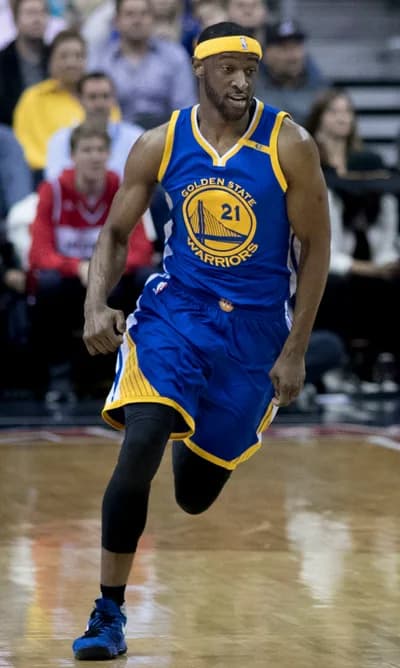
The 2016-17 Golden State Warriors broke the postseason with a 16-1 record, the best in NBA history, after adding Kevin Durant to a 73-win core. Durant's 35.2 PPG Finals average and Curry's 25.3 combined to generate a 115.6 offensive rating, still a postseason high.
- 0#7
2001-02 Los Angeles Lakers
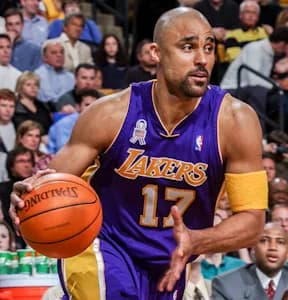
The 2001-02 Los Angeles Lakers authored a 15-1 playoff run, the best since the 1983 76ers, sweeping the Finals in the most lopsided championship series of the modern era. Shaquille O'Neal averaged 27.2 PPG and 10.7 RPG, winning his third consecutive Finals MVP alongside Kobe Bryant's 26.6 PPG.
- 0#8
2012-13 Miami Heat

The 2012-13 Miami Heat achieved a 66-16 regular season and a 27-game win streak, the second-longest in history, powered by LeBron James's record .640 true shooting percentage. James averaged 37.0 PPG in the Finals with a Game 7 of 37 points on 63% shooting.
- 0#9
2002-03 San Antonio Spurs

The 2002-03 San Antonio Spurs, anchored by Tim Duncan's second championship and Finals MVP, posted a 60-22 record and allowed the fewest points per game in the league (84.0). Tony Parker matured into an elite point guard, and Gregg Popovich's defensive system demanded total buy-in, yielding only eight playoff losses.
- 0#10
1971-72 Los Angeles Lakers

The 1971-72 Los Angeles Lakers won 33 consecutive games, still the longest win streak in NBA history, and finished 69-13—a record only beaten by 1995-96 Chicago Bulls's 72-win season. Wilt Chamberlain averaged 14.8 PPG and 19.2 RPG, Jerry West posted 25.8 PPG and 9.7 APG, and Gail Goodrich added 25.9 PPG. Coach Bill Sharman introduced mandatory morning shootarounds, a league-first practice.
Image credits
- 2015-16 Golden State Warriors: Keith Allison from Hanover, MD, USA / Wikimedia Commons (CC BY-SA 2.0)
- 1986-87 Los Angeles Lakers: Joe Kennedy, Los Angeles Times / Wikimedia Commons (CC BY 4.0)
- 1996-97 Chicago Bulls: Steve Lipofsky Basketballphoto.com / Wikimedia Commons (CC BY-SA 3.0)
- 2016-17 Golden State Warriors: Keith Allison from Hanover, MD, USA / Wikimedia Commons (CC BY-SA 2.0)
- 2001-02 Los Angeles Lakers: Cavic = Steve Lipofsky / Wikimedia Commons (CC BY-SA 3.0)
- 2012-13 Miami Heat: Michael Kain / Wikimedia Commons (CC BY 2.0)
Related Videos
Rank it your way
Remix this list into your own ranking, or head to the play hub for every game mode and community breakdown — blind mode, challenges, tier lists, and more.
You Might Also Like

Best EuroLeague Teams 2024-25 Rankings
Best EuroLeague Teams 2024-25 Rankings
Top 10 Most Valuable Sports Teams in the World 2025
Top 10 Best NBA Teams of All Time

Top 10 WAGs Who Became More Famous Than the Athletes
#1 Victoria Beckham — Spice Girl to Fashion Empire · #2 Kim Kardashian — 72 Days of Marriage to $1.7 Billion · #3 Taylor Swift — The $1.3B Girlfriend Effect
Top 10 Best Cricket Players of All Time
#1 Sir Donald Bradman · #2 Sachin Tendulkar · #3 Sir Vivian Richards

Top 10 Spanish Olympic Gold Medalists
#1 Mireia Belmonte · #2 David Cal · #3 Ruth Beitia

Top 10 Most Shocking Sports Moments of 2025 — Upsets & Historic Wins
#1 Jannik Sinner Dominates ATP Tour · #2 Oleksandr Usyk Defeats Fury Again · #3 Newcastle United Win Premier League