
Pelé with Brazil national team / Wikimedia Commons
Top 10 Latin American Football Legends
Latin America has produced more FIFA World Cup winners than any other region, with Brazil (5 titles, 1958-2002), Argentina (3 titles, 1978-2022), and Uruguay (2 titles, 1930-1950) collectively accounting for 10 of the 22 World Cups held. The continent has also produced 7 of the 10 players to have won the FIFA World Player of the Year award more than once, and South American clubs have won the Copa Libertadores 25 times. These 10 legends defined the beautiful game and introduced the world to a brand of attacking, improvisational football that remains the global standard of excellence.
Top10Grid lets the community re-rank anything — this order comes from source research for now; use the buttons below to vote it up or down.

Current Rankings
- 0#1
Lionel Messi (Argentina)
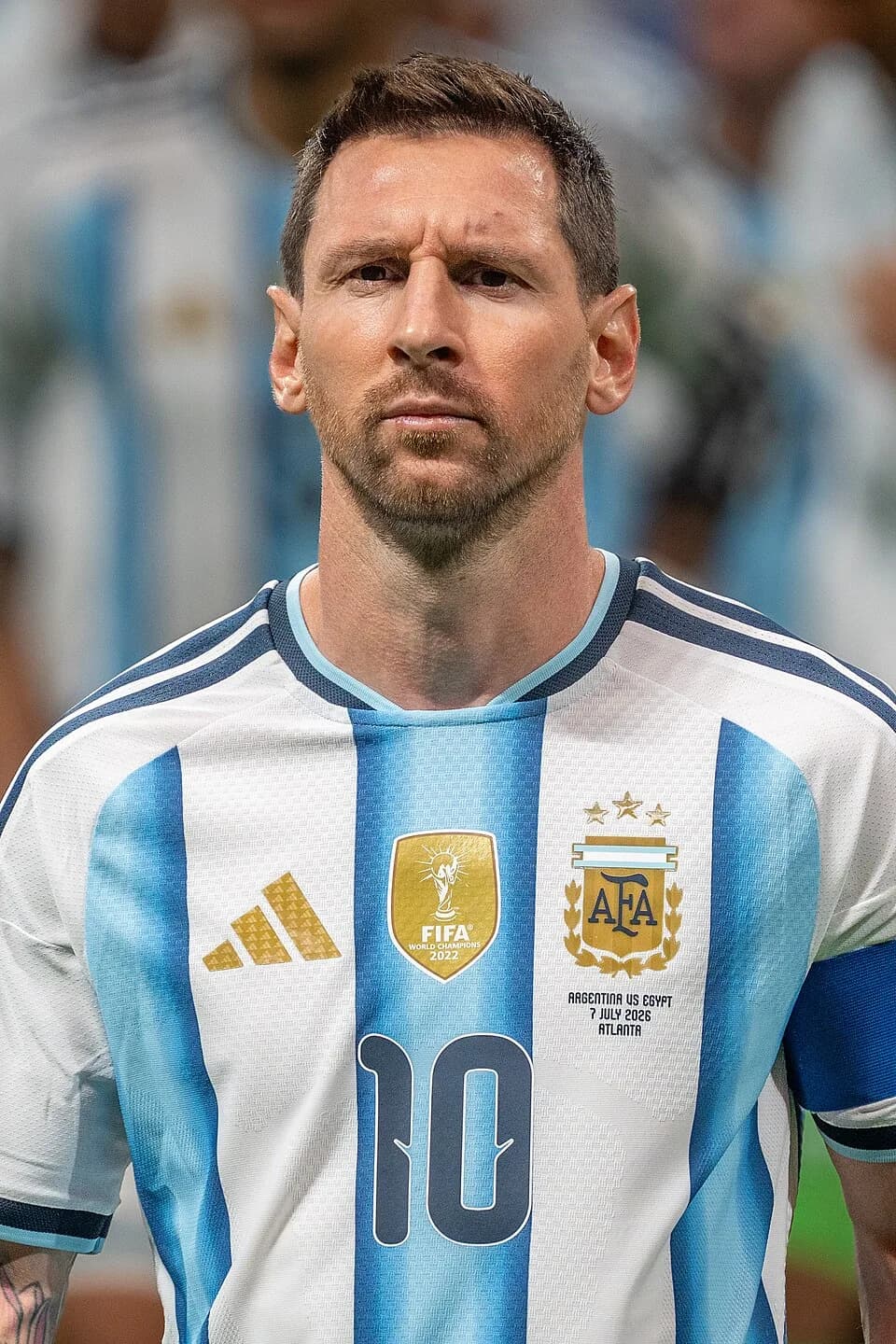
Lionel Messi's legendary career peaked in 2022 when he led Argentina to the FIFA World Cup title, the final jewel in his crown. He has won a record 8 Ballon d'Or awards, scored over 800 career goals, and holds the La Liga all-time scoring record with 474 goals for FC Barcelona. At Inter Miami in 2023, he won the Leagues Cup and broke MLS scoring records, with an estimated annual income of over $135 million making him the highest-paid athlete globally.
- 0#2
Pele (Brazil)

Pele remains the only player to win three FIFA World Cups (1958, 1962, 1970). He scored 1,283 goals in 1,367 career matches according to the Brazilian Football Confederation, and his 1958 World Cup debut at age 17 is the youngest by any World Cup winner, a record that still stands. Named the FIFA Co-Player of the Century in 2000 alongside Maradona, Pele was declared a national treasure by Brazil in 1961, preventing his transfer abroad. His goal total surpasses Lionel Messi's career count by over 400 goals, marking a historic benchmark.
- 0#3
Diego Maradona (Argentina)
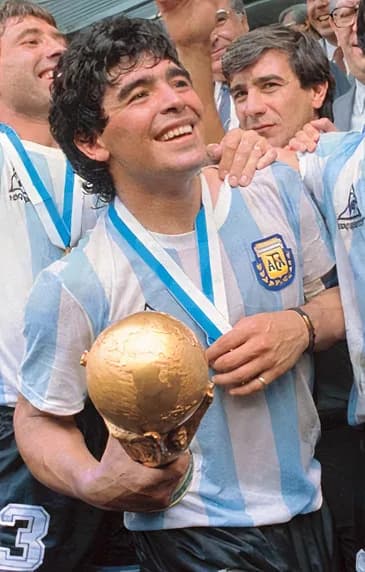
Diego Maradona delivered what is widely considered the greatest individual World Cup performance in 1986, scoring both the Hand of God goal and the Goal of the Century against England in the same quarterfinal match. He was named Player of the Tournament that year and joint FIFA Co-Player of the Century in 2000 alongside Pele. At Napoli, Maradona transformed the club into Serie A champions in 1987 and 1990 before crowds of 75,000.
- 0#4
Ronaldo Nazario (Brazil)

Ronaldo Nazario, known as R9, won the FIFA World Player of the Year three times (1996, 1997, 2002), a record tied only by Zinedine Zidane, and led Brazil to their fifth World Cup title in 2002 as top scorer with 8 goals, including two in the final. Despite epileptic seizures before the 1998 World Cup final and two career-threatening knee injuries that sidelined him for over 600 days, he returned to become the greatest striker of his generation.
- 0#5
Romario (Brazil)

Romario de Souza Faria was the decisive force behind Brazil's 1994 World Cup victory, scoring 5 goals to earn both the Golden Boot and the Golden Ball, outperforming Ronaldinho's single World Cup goal tally. His 30 goals for FC Barcelona in the 1993-94 season powered the club to a La Liga title. Despite his celebrated 1,000-goal claim, verified official records count 769 career goals.
- 0#6
Ronaldinho (Brazil)

Ronaldinho captivated the world as the most technically gifted player of his generation, winning the Ballon d'Or in 2005 and back-to-back FIFA World Player of the Year awards in 2004 and 2005, a feat unmatched by Zico. At Barcelona, he scored 94 goals in 207 appearances, a conversion rate of 45%, leading the club to two La Liga titles and the 2006 Champions League. He was the first athlete to reach 10 million Facebook fans, and his viral crossbar challenge video—hitting the woodwork four times in a row—garnered over 40 million views, setting a benchmark for pre-social-media sports virality.
- 0#7
Zico (Brazil)
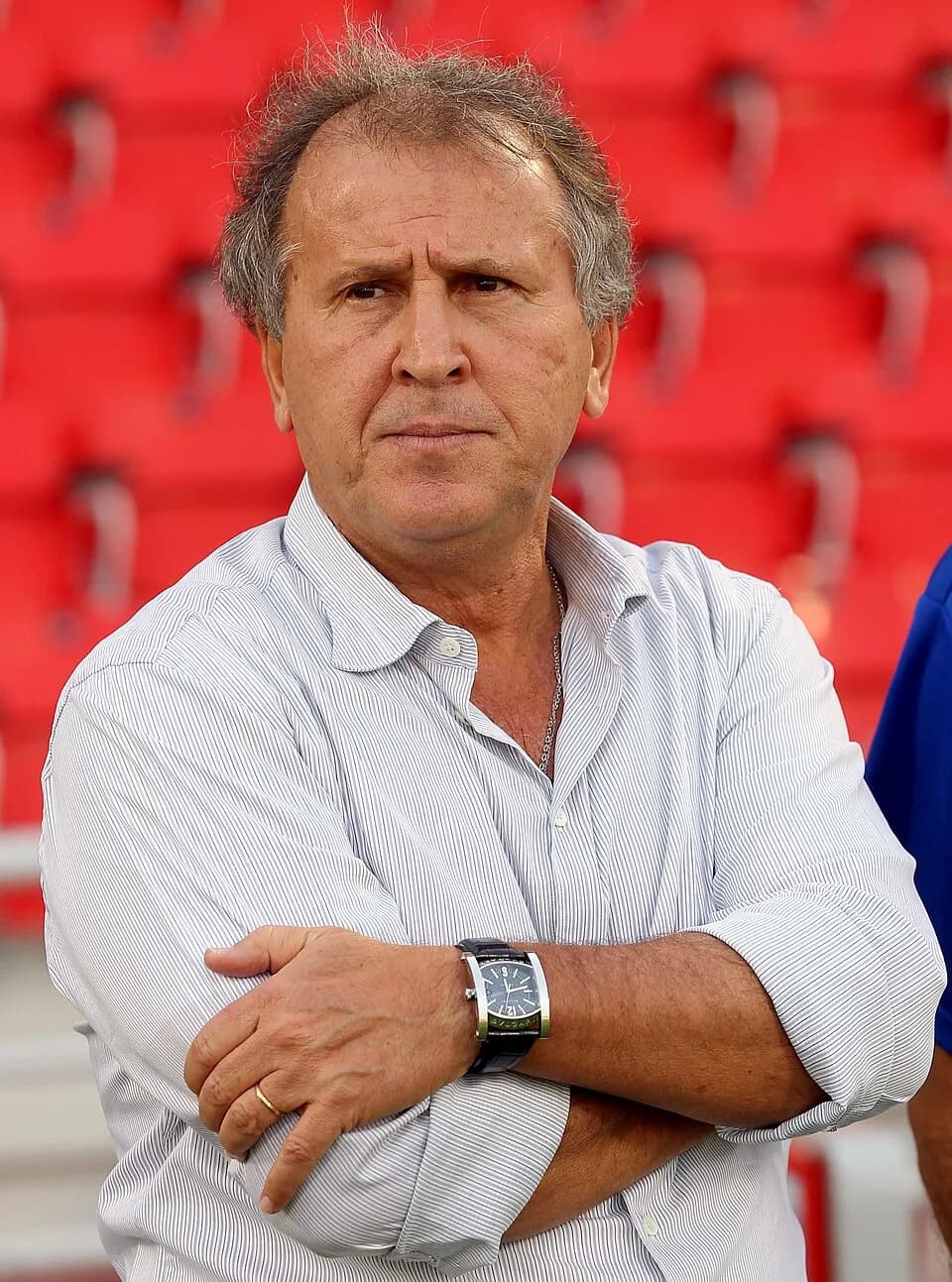
His 508 goals in 731 appearances for Flamengo led the club to their first Copa Libertadores title in 1981 and a Club World Cup victory over Liverpool. Beyond his playing career, Zico transformed Japanese football by serving as player-manager, turning a nation without a professional league into a World Cup regular from 1998—a leap that took just 7 years and earned him the nickname 'Japanese Football God.'
- 0#8
Gabriel Batistuta (Argentina)

Gabriel Batistuta became the first player to score hat-tricks in two separate World Cups (1994 and 1998), a record no other player has matched. Known as 'Batigol,' he was the focal point of Fiorentina's attack for nine seasons, scoring prolifically in Serie A and becoming a lasting idol for the club's supporters, who adored his thunderous finishing and loyalty.
2 - 0#9
Garrincha (Brazil)
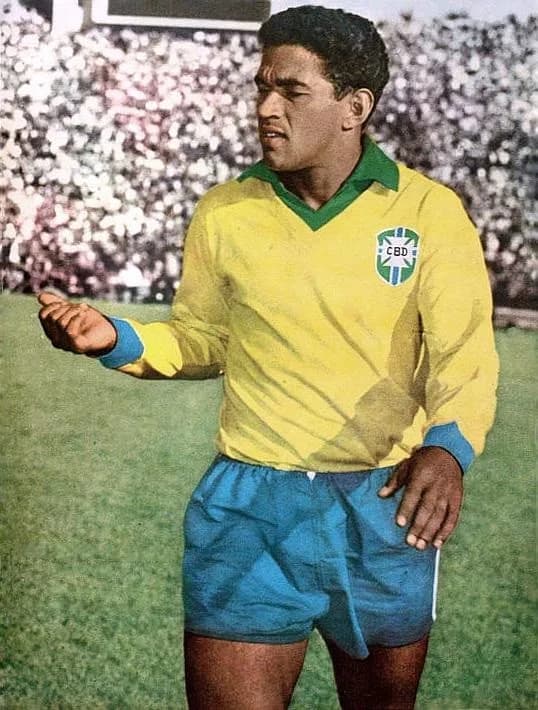
Garrincha remains football's most extraordinary dribbler, overcoming severely deformed legs—his right leg 6 cm shorter and curved inward—to win two World Cups. Brazil never lost a single match with both stars, boasting an unbeaten 40-game record. His unmatched agility and pace turned physical limitations into a uniquely deceptive style.
- 0#10
Carlos Valderrama (Colombia)

Carlos Valderrama defined Colombian football with his iconic blond afro and visionary passing, earning 111 caps—a national record. He spearheaded qualification for three World Cups (1990, 1994, 1998) and has a statue at RFK Stadium, marking his dual legacy in South America and MLS.
Frequently Asked Questions About Latin American Football Legends
Who is considered the greatest Latin American footballer of all time? The debate centres on Pelé and Lionel Messi. Pelé is the only player to win three FIFA World Cups; Messi won a record eight Ballon d'Or awards and captained Argentina to the 2022 World Cup title. Cast your vote above to make your voice heard!
Which country has produced the most football legends from Latin America? Brazil leads the list with Pelé, Ronaldo Nazário, Ronaldinho, Romário, Garrincha, and Zico. Argentina is a close second with Messi, Maradona, and Batistuta.
What is the Copa Libertadores? The Copa Libertadores is South America's premier club football tournament — the equivalent of Europe's UEFA Champions League — and has been dominated by Brazilian and Argentine clubs since its inaugural edition in 1960.
Image credits
- Lionel Messi (Argentina): WIKIMEDIA_MIRRORED
- Pele (Brazil): Wikimedia Commons
- Diego Maradona (Argentina): WIKIMEDIA_MIRRORED
- Ronaldo Nazario (Brazil): Wikimedia Commons
- Romario (Brazil): Wikimedia Commons
- Ronaldinho (Brazil): Wikimedia Commons
- Zico (Brazil): WIKIMEDIA_MIRRORED
- Gabriel Batistuta (Argentina): Wikimedia Commons
- Garrincha (Brazil): WIKIMEDIA_MIRRORED
- Carlos Valderrama (Colombia): Wikimedia Commons
Related Videos
Rank it your way
Remix this list into your own ranking, or head to the play hub for every game mode and community breakdown — blind mode, challenges, tier lists, and more.
You Might Also Like

Top 10 Greatest Brazilian Footballers of All Time
Top 10 Greatest Brazilian Footballers of All Time

Top 10 Fastest Humans Ever Recorded (Athletics)
#1 Usain Bolt — 9.58 seconds · #2 Tyson Gay — 9.69 seconds · #3 Yohan Blake — 9.69 seconds

Top 10 Greatest Tennis Players of All Time
#1 Novak Djokovic · #2 Rafael Nadal · #3 Roger Federer

Top 10 Brazilian Football Clubs of All Time
#1 Flamengo · #2 Santos FC · #3 Sao Paulo FC

Top 10 Spanish Football Clubs
#1 Real Madrid · #2 FC Barcelona · #3 Atlético de Madrid

Top 10 Most Successful Female Athletes of All Time
#1 Serena Williams · #2 Simone Biles · #3 Mia Hamm