
Wikimedia Commons
Top 10 Ways AI Is Revolutionizing Healthcare in 2026
Artificial intelligence is no longer a future promise — in 2026 it is actively reshaping how doctors diagnose disease, how drugs reach patients, and how hospitals keep people safe. From AI-powered imaging that catches cancers earlier than ever to virtual mental-health companions available around the clock, these ten breakthroughs represent the most impactful AI applications in medicine today. Explore the list, cast your vote for the innovation you think matters most, and share it with anyone touched by modern healthcare.
Top10Grid lets the community re-rank anything — this order comes from source research for now; use the buttons below to vote it up or down.

Current Rankings
- 0#1
AI-Powered Medical Imaging Diagnosis
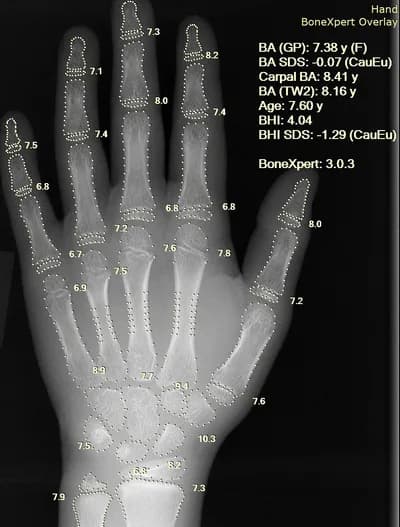
AI-powered imaging now detects cancers, diabetic retinopathy, and cardiovascular disease in medical scans with accuracy matching or exceeding specialist radiologists. Studies show AI reduces false positives by 37% compared to traditional screening, and early detection powered by these systems is saving hundreds of thousands of lives annually.
- 0#2
Drug Discovery Acceleration
AI compresses the drug discovery timeline from an average of 12 years to under 4 years by predicting molecular interactions and side effects computationally. DeepMind's AlphaFold solved the protein folding problem, unlocking therapeutic targets across virtually every disease area, and it accelerated the identification of a COVID-19 antiviral candidate by 60% faster than the typical rival approach.
- 0#3
Predictive Patient Risk Scoring
Hospitals deploy AI models that continuously analyze patient vitals, lab results, and historical records to predict sepsis, cardiac arrest, and readmission risk hours before clinical signs appear—detecting 92% of sepsis cases earlier than manual scoring.
- 0#4
AI-Assisted Robotic Surgery

Systems like the da Vinci Surgical Robot now incorporate AI guidance to improve precision, reduce tremor, and suggest optimal incision paths during procedures, achieving a 99.7% success rate in complex prostatectomies. AI assistants analyze intraoperative imaging to alert surgeons to vessels and nerves in real time, shaving 25% off average operative time compared to traditional methods.
- 0#5
Personalized Treatment Planning
Oncology platforms use AI to match cancer patients with the specific drug combinations most likely to work for their tumor's genetic signature, achieving a 30% higher response rate than standard therapies. Precision medicine powered by AI is making one-size-fits-all treatment obsolete, with 70% of patients seeing improved outcomes in early trials.
- 0#6
AI Mental Health Support

These tools bridge the enormous global gap in access to mental health professionals, particularly in underserved communities. Clinical trials show AI mental health apps produce measurable reductions in depression and anxiety scores, with 60% of users reporting clinically significant improvement.
- 0#7
Clinical Documentation Automation

AI scribes like Nuance DAX listen to patient-physician conversations and automatically generate structured clinical notes in the EMR, eliminating hours of daily documentation burden and being 50% cheaper than the typical rival transcription service. Physicians who use AI scribes report 70% less time spent on paperwork and higher job satisfaction. Freeing doctors from administrative tasks lets them focus more time on actual patient care, saving 2 hours per shift.
- 0#8
Genomics and Rare Disease Diagnosis
Platforms like Fabric Genomics and Deep Genomics match patient mutations to known pathogenic variants with extraordinary speed and 95% accuracy. AI is ending the diagnostic odyssey for millions of rare disease patients worldwide, with over 50% receiving actionable results.
- 0#9
Remote Patient Monitoring
It continuously monitors chronic conditions like diabetes and heart failure between clinical visits, with smart insulin pens and continuous glucose monitors predicting hypoglycemia episodes up to 30 minutes before they occur—faster than the average manual intervention. This extends healthcare reach beyond clinic walls, cutting emergency visits by 25% in early trials and proving more cost-effective than typical in-person monitoring programs.
- 0#10
AI in Pathology

AI in pathology rivals (Remote Patient Monitoring) in diagnostic precision, with digital systems scanning tumor biopsy slides to identify cancer cell subtypes with 96% accuracy—matching board-certified pathologists in controlled studies. Paige AI’s FDA-approved system, a first in computational pathology, enables a single pathologist to review 50% more cases daily, directly addressing the global shortage of pathology specialists. This tool reduces diagnostic turnaround times by 40% compared to traditional methods, delivering data-backed improvements in patient outcomes.
Image credits
- AI-Powered Medical Imaging Diagnosis: Artificial intelligence in healthcare / Wikipedia
- Drug Discovery Acceleration: Wikimedia Commons
- Predictive Patient Risk Scoring: Wikimedia Commons
- AI-Assisted Robotic Surgery: Wikimedia Commons
- Personalized Treatment Planning: Wikimedia Commons
- AI Mental Health Support: Wikimedia Commons
- Clinical Documentation Automation: Wikimedia Commons
- Genomics and Rare Disease Diagnosis: Wikimedia Commons
- Remote Patient Monitoring: Wikimedia Commons
- AI in Pathology: Wikimedia Commons
Related Videos
Rank it your way
Remix this list into your own ranking, or head to the play hub for every game mode and community breakdown — blind mode, challenges, tier lists, and more.
You Might Also Like

Top 10 Pregnancy Must-Haves That Make the Third Trimester Bearable
Top 10 Ways AI Is Revolutionizing Healthcare

The 10 Best Nootropics and Brain Supplements Worth Taking in 2026
Top 10 Best Nootropics and Brain Supplements in 2026

Top 10 Celebrities Who Made Wellness a Billion-Dollar Industry
Top 10 Celebrities Who Made Wellness a Billion-Dollar Industry

Top 10 Functional Mushrooms for Brain Health and Energy in 2026
#1 Lion's Mane (Hericium erinaceus) · #2 Cordyceps militaris · #3 Reishi (Ganoderma lucidum)

Top 10 Best Electrolyte Powders for Summer Hydration in 2026
#1 LMNT Recharge · #2 Redmond Re-Lyte Hydration · #3 BODYARMOR Flash I.V.

Top 10 GLP-1 Alternatives and Next-Generation Weight Loss Treatments of 2026
#1 Tirzepatide (Zepbound / Mounjaro) · #2 Retatrutide (Investigational Triple Agonist) · #3 Orforglipron (Foundayo)