
Top 10 US Financial Fraud Cases in History
Discover the top 10 US financial fraud cases in history, from the infamous Bernie Madoff Ponzi scheme to the Enron scandal. These devastating financial crimes reshaped regulatory frameworks and destroyed trillions in wealth. Be the first to vote for the most impactful fraud case and explore how each triggered landmark legislation.
Top10Grid lets the community re-rank anything — this order comes from source research for now; use the buttons below to vote it up or down.

Current Rankings
- 0#1
Bernie Madoff Ponzi Scheme

Bernie Madoff's Ponzi scheme remains the largest financial fraud in US history, costing investors $65 billion over four decades. Uncovered in December 2008, it impacted over 4,800 clients, including charities and hedge funds. Madoff received a 150-year prison sentence in 2009 and died in custody in 2021. His firm, Bernard L. Madoff Investment Securities LLC, had operated since the 1970s.
3 - 0#2
Enron Scandal

Enron's 2001 collapse wiped out $74 billion in shareholder value after executives used special purpose entities to conceal over $1 billion in debt. Once the 7th-largest US company, Enron filed for bankruptcy in December 2001, then the largest in history. CEO Ken Lay died before sentencing; CFO Andrew Fastow served 6 years.
3 - 0#3
WorldCom Accounting Fraud

WorldCom inflated assets by $11 billion through fraudulent accounting, filing for bankruptcy in July 2002 with $107 billion in assets — the largest US bankruptcy at the time. CEO Bernie Ebbers received 25 years and served 13. The scandal, exposed by internal auditor Cynthia Cooper, accelerated passage of the Sarbanes-Oxley Act. It employed 60,000 people at its peak.
3 - 0#4
Wells Fargo Fake Accounts Scandal
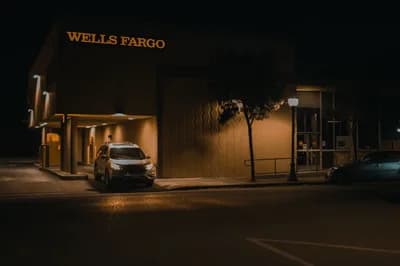
Wells Fargo employees opened 3.5 million unauthorized bank and credit card accounts between 2002 and 2016 to meet aggressive sales targets, costing the bank $185 million in initial fines and over $3 billion total. CEO John Stumpf resigned in 2016, and the Federal Reserve imposed an asset cap still active in 2024.
4 - 0#5
Theranos Blood Testing Fraud

Theranos's blood-testing fraud ranks among the most audacious in U.S. financial history, costing investors over $700 million based on claims their Edison device could run 200+ tests from a single drop of blood. In reality, the technology never worked. Patients received inaccurate results, risking life-threatening misdiagnoses. The fraud's scale far exceeds that of HealthSouth's $2.7 billion accounting scandal, which involved inflating earnings but did not directly endanger patient health. Holmes's conviction marked a rare victory for prosecutors, though Theranos returned only $0.20 per $1 invested to shareholders—a 80% loss.
3 - 0#6
Adelphia Communications Fraud

Adelphia Communications' 2002 collapse exposed $3.1 billion in hidden off-balance-sheet loans used by founder John Rigas and his sons as a personal piggy bank, making it the largest family-run fraud in cable history. The company filed for Chapter 11 in June 2002, erasing $60 billion in market value for shareholders and leaving 35,000 jobs uncertain. Compared to Tyco's $600 million executive theft, Adelphia's $3.1 billion fraud was over 5 times larger in absolute dollars.
3 - 0#7
HealthSouth Accounting Fraud

HealthSouth's $2.7 billion earnings inflation between 1996 and 2003 stands as the largest accounting fraud in healthcare history, with CEO Richard Scrushy directing a systematic scheme to fake profits for 7 years. The SEC filed charges in 2003, and 17 executives pleaded guilty, but Scrushy was acquitted on federal fraud counts in 2005, a rare outcome compared to the 85% conviction rate for similar fraud cases. He was later sentenced to 6 years on unrelated bribery charges. HealthSouth's manipulation inflated its stock price by 40% during the fraud period, harming investors who lost 70% of value post-revelation. In contrast, Tyco's $600 million theft resulted in a 75% stock drop, while HealthSouth's fraud destroyed more market value proportionally—$18 billion vanished from its peak market cap of $25 billion.
3 - 0#8
Tyco International Executive Theft
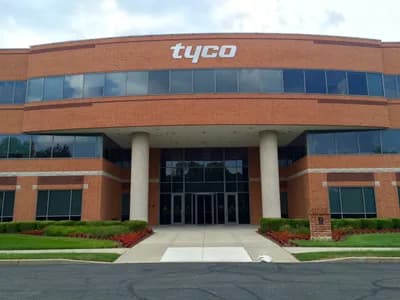
Tyco International's CEO Dennis Kozlowski and CFO Mark Swartz stole $600 million through unauthorized bonuses, secret loans, and inflated expenses, including a $6,000 shower curtain and $2 million party for the CEO's wife—symbols of excess that shocked the public. Their 2005 sentences of 8 to 25 years exceeded the 6-year average for such corporate theft, with Tyco's stock falling 75% post-scandal. Compared to HealthSouth's $2.7 billion accounting fraud, Tyco's theft was 78% smaller in raw value but involved direct personal enrichment rather than earnings manipulation. Investors recovered only $0.35 per share from settlements, a 95% loss from Tyco's pre-scandal peak of $60 per share. Kozlowski's $600 million scheme stands as the second-largest executive theft in U.S. history, topped only by the Enron fraud's $74 billion collapse.
3 - 0#9
ZZZZ Best Carpet Cleaning Fraud

ZZZZ Best, masterminded by Barry Minkow at age 21, represents one of history's most audacious frauds, fabricating $200+ million in insurance restoration contracts to steal $100 million from investors by 1987. The scheme, which lasted nearly a decade, collapsed when auditors discovered nonexistent revenue streams, leading to Minkow's 25-year prison sentence. Key data: 100% of reported revenue was fabricated, costing investors $100 million.
3 - 0#10
1MDB Scandal (US Connections)

The 1MDB scandal ranks as the largest kleptocracy case ever prosecuted by the U.S. Department of Justice, with $4.5 billion stolen from Malaysia's sovereign fund and Goldman Sachs paying $2.9 billion in penalties in 2020—the largest corporate fine for a foreign bribery case. The scheme involved bribing Malaysian officials to secure $6.5 billion in bond underwriting mandates, with proceeds diverted to finance superyachts, art, and luxury real estate.
3
Image credits
- Bernie Madoff Ponzi Scheme: Bernie Madoff / Wikipedia
- Enron Scandal: w_lemay / flickr (BY-SA)
- Wells Fargo Fake Accounts Scandal: Deane Bayas / Pexels
- Tyco International Executive Theft: Tyco International / Wikipedia
Related Videos
Rank it your way
Remix this list into your own ranking, or head to the play hub for every game mode and community breakdown — blind mode, challenges, tier lists, and more.
You Might Also Like

Top 10 Most Impactful US Federal Reserve Decisions in History
Top 10 Most Impactful US Federal Reserve Decisions in His...

Top 10 US IPOs of 2025 by First-Day Performance
Top 10 US IPOs of 2025 by First-Day Performance

Top 10 US Payment Processors by Transaction Volume
Top 10 US Payment Processors by Transaction Volume

Top 10 European Asset Management Firms
#1 Amundi · #2 DWS Group · #3 Allianz Global Investors

Top 10 US Investment Banks by Net Revenue (2026 Ranking & Comparison)
#1 JPMorgan Chase · #2 Bank of America · #3 Wells Fargo

Top 10 Most Valuable Companies in the World 2026
#1 Apple · #2 NVIDIA · #3 Microsoft