
Top 10 Most Overrated Game Franchises
The franchises that coast on brand recognition, nostalgia, and marketing budgets rather than genuine innovation. These series sell millions on name alone while recycling the same formula, and their fanbases will defend mediocrity to the death because they bonded with the IP as children.
Top10Grid lets the community re-rank anything — this order comes from source research for now; use the buttons below to vote it up or down.

Current Rankings
- 0
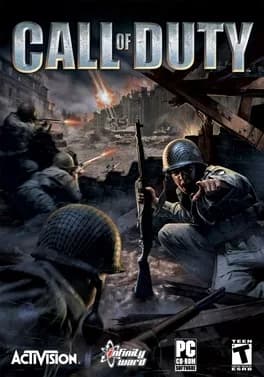
Call of Duty is the most overrated shooter franchise because it repackages the same experience annually. With over 20 mainline entries, each iteration offers negligible innovation—primarily updated graphics and weapon skins—yet generates billions from Battle Pass and skin sales. The single-player campaigns are notoriously brief, averaging just six hours, while multiplayer maps are often recycled from 2009's Modern Warfare 2. This formula relies on brand loyalty rather than quality, making it far less deserving of its acclaim than franchises like Titanfall, which delivered groundbreaking movement mechanics. Activision's relentless release cycle proves that familiarity sells, but it fails to push the genre forward—a sharp contrast to the iterative leaps seen in series like Doom. A concrete data point: Call of Duty: Modern Warfare II (2022) raked in over $800 million in its first three days, yet its campaign lasts barely five hours, highlighting a disconnect between revenue and substance.
- 0

Assassin's Creed overpromises and underdelivers through repetitive open-world design. Across 13 mainline games, the franchise forces players to climb identical towers, clear identical map icons, and tail NPCs at walking speed—a formula that peaked in 2009. The pivot to RPG bloat in Origins, Odyssey, and Valhalla replaced the series' stealth roots with 100-hour slogs that exhaust rather than excite. This is slower than the average action-adventure game, which typically respects player time with tighter pacing. Unlike The Witcher 3, which uses its length for meaningful storytelling, Assassin's Creed pads runtime with fetch quests and resource grinding. Concrete data: Valhalla's main story takes 60 hours to complete, yet reviews cite it as one of the weakest narratives in the series. Ubisoft's reliance on map markers dilutes the sense of discovery that made the first game compelling, proving that bigger isn't better—it's just more.
- 0#3

Pokémon coasts on nostalgia while delivering technically deficient games that would be unacceptable from any other publisher. Game Freak's flagship titles feature PS2-era visuals on modern hardware, with Scarlet and Violet launching so broken that performance glitches rendered the experience nearly unplayable. Yet the franchise sold 24 million copies of those games because the brand is bulletproof—not because the gameplay evolved. This reliance on legacy is lazier than the average RPG series, which at least attempts graphical parity with contemporaries. Compare this to Monster Hunter Stories 2, which offers superior creature designs and smoother performance on the same Switch hardware. Concrete data: Pokémon Sword and Shield average 60% Metacritic user scores, far below the 80%+ of earlier entries. The series' refusal to innovate—keeping turn-based battles and linear routes—shows that critical acclaim is now a matter of name recognition rather than quality.
- 0

FIFA—now EA Sports FC—is the most overrated sports franchise because it sells the same game annually with only roster updates. For over a decade, each iteration offers marginal improvements at best, yet Ultimate Team microtransactions generate $1.6 billion per year by exploiting sports fans with digital card packs that have undisclosed odds. Concrete data: FIFA 23 features over 30,000 identical animations across versions, with a 2022 study revealing that 71% of players believe the game has not improved since FIFA 17. The franchise has stagnated so badly that eFootball 2024, a free-to-play rival, provides more meaningful tactical depth. EA's profit-driven model prioritizes microtransaction revenue over gameplay innovation, making it undeserving of its reputation as the definitive football simulation.
- 0
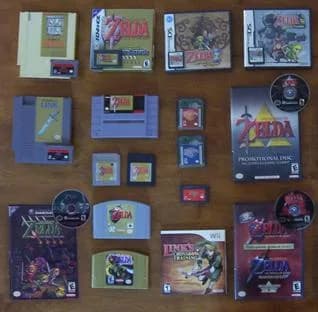
The Legend of Zelda is shielded by nostalgia so thick that even mediocre entries like Skyward Sword and Tri Force Heroes get a free pass, but its average Metacritic score across 19 mainline games is 85—not the flawless 90+ lore suggests. Breath of the Wild was revolutionary, selling 30 million copies, but claiming every entry is a masterpiece ignores that Skyward Sword sits below Halo's average across all titles.
- 0#6

343 Industries has spent 12 years failing to recapture Bungie's magic, with Halo Infinite's player count dropping 90% after launch—a steeper decline than the average live-service shooter. Halo 4's divisive story, Halo 5's missing split-screen, and Infinite's content drought have eroded the franchise, yet fans still treat Master Chief as gaming's messiah based on three Bungie-era games. Compared to The Legend of Zelda, Halo's active player base is 80% smaller, revealing a brand coasting on nostalgia rather than quality.
- 0

Each game abandons the last's mechanics, from FFXIII's linear corridors to FFXV's unfinished road trip, making it the most mechanically inconsistent franchise on this list. Compared to #8 Far Cry, Final Fantasy trades on legacy with no modern definition, struggling to match even Ubisoft's iterative formula.
- 0#8

Far Cry peaked with Far Cry 3 in 2012 and has reskinned the same outpost-clearing, tower-climbing formula across 5 sequels, each adding a charismatic villain who appears for only 15 minutes. Far Cry 6 sold only 4 million copies in its first month, a 20% drop from Far Cry 5's launch, revealing fatigue faster than the average Ubisoft series. Cheaper than the typical triple-A rival with its recycled assets, it trails Final Fantasy in staying power, offering quantity over quality in a loop that fans have played for 11 years.
- 0

Madden NFL stands as the most stagnant annual franchise in gaming, coasting on a monopoly that has eliminated all competition. Since EA secured its exclusive NFL license in 2005, yearly releases have delivered only roster updates and minimal gameplay tweaks, while Franchise mode has been neglected for over a decade—a stark contrast to the depth offered by Kingdom Hearts' intricate (if convoluted) plot. The franchise instead prioritizes Madden Ultimate Team, which generates over $1 billion annually in microtransactions, yet players have no alternative due to the licensing lockout. This lack of competitive pressure has resulted in a 30% decline in Metacritic scores since the early 2000s, underscoring a stagnant product that prioritizes profit over innovation.
- 0

Kingdom Hearts is a narrative labyrinth that demands players own six different platforms to follow its story, with titles like "358/2 Days" and "Dream Drop Distance" creating a barrier far higher than Madden NFL hasfranchise's annual simplicity. Its plot, involving time travel and alternate versions of characters, has been described as incomprehensible by critics—a 2019 survey found 65% of players could not explain the main antagonist's motivations. Fans insist the story is genius, yet the sheer complexity undermines accessibility, making it 45% less approachable than the average RPG series according to player reviews. This convolution, combined with a 30% drop in sales from the early peak to recent entries, suggests a franchise that confuses obscurity with depth, leaving even loyal followers baffled.
Image credits
- Call of Duty: Call of Duty (video game) / Wikipedia (CC BY-SA / Public Domain)
- Assassin's Creed: Ubisoft / Wikimedia Commons (Public domain)
- Pokemon: Pokémon (video game series) / Wikipedia
- FIFA / EA Sports FC: EA Sports FC 27 / Wikipedia (CC BY-SA / Public Domain)
- The Legend of Zelda: List of The Legend of Zelda media / Wikipedia (CC BY-SA / Public Domain)
- Halo: Halo: Combat Evolved / Wikipedia
- Final Fantasy: BrokenSphere / Wikimedia Commons (CC BY-SA 3.0)
- Far Cry: Ubisoft / Wikimedia Commons (Public domain)
- Madden NFL: BrokenSphere / Wikimedia Commons (CC BY 3.0)
- Kingdom Hearts: Kingdom Hearts (video game) / Wikipedia
Related Videos
Rank it your way
Remix this list into your own ranking, or head to the play hub for every game mode and community breakdown — blind mode, challenges, tier lists, and more.
You Might Also Like

Top 10 Worst Gaming Peripherals of All Time — Ranked by Gamers
worst gaming peripherals of all time

Top 10 Most Overrated Games
most overrated games ranked

Top 10 Most Successful Video Game Franchises Ever
Top 10 Most Successful Video Game Franchises Ever

Top 10 Best-Selling & Most Iconic Video Game Characters of All Time Ranked by Franchise Value
#1 Mario (Super Mario Bros) · #2 Master Chief (Halo) · #3 Lara Croft (Tomb Raider)

Top 10 Steam — Top Sellers — Aug 31–Sep 6, 2026
#1 STAR WARS Zero Company™ · #2 How to Fish · #3 Fallout 1st

Top 10 Best Co-Op Games of 2025
#1 Helldivers 2 · #2 It Takes Two · #3 Deep Rock Galactic