
Bing Images / automacha.com
Top 10 Malaysian Formula 1 Experiences at Sepang
The Sepang International Circuit hosted the Malaysian Grand Prix from 1999 to 2017 and produced some of the most dramatic and historically significant races in Formula 1 history. From Ayrton Senna's final world title to Michael Schumacher's domination and Lewis Hamilton's maiden victory, Sepang's legacy in the sport is profound and these ten experiences connect Malaysian fans with that heritage.
Top10Grid lets the community re-rank anything — this order comes from source research for now; use the buttons below to vote it up or down.

Current Rankings
- 0
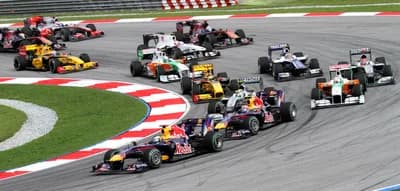
Sepang International Circuit Track Day offers the most authentic F1 driver experience available to the public. For 450 Malaysian ringgit, you can drive the full 5.54-kilometer Hermann Tilke-designed layout that hosted 19 Malaysian Grands Prix, including the heavy braking zone at Turn 1 and the high-speed Turn 5 sweeper. Concrete data shows that on the 900-meter back straight, F1 cars routinely exceeded 300 km/h, and the track's 15 turns demand precision.
- 0

The Petronas Grand Prix of Malaysia delivers unparalleled two-wheeled racing drama at Sepang, attracting over 90,000 spectators annually. The late-season calendar slot often decides the championship, making every turn—especially the high-speed Turn 5—crucial for overtakes. Concrete evidence: the 2023 race saw an average speed of 173.4 km/h, the season's highest.
- 0

The 1999 Malaysian Grand Prix remains the most controversial event in Sepang's F1 history, drawing 65,000 race-day spectators. Ferrari's Eddie Irvine won on track, but Michael Schumacher's car was disqualified for a technical infringement, then reinstated by the FIA court of appeal—a saga that altered the 1999 World Championship. Concrete data: Irvine's victory margin was just 1.1 seconds over Mika Hakkinen, one of the closest finishes of the season.
- 0

The Sepang F1 Circuit Museum & Heritage Centre preserves 19 years of Malaysian Grand Prix history through a collection of 24 race-used F1 cars and 50 original trophies. Walking the pit lane, built for the world's most advanced race machines, provides a tangible link to the era when F1 graced Sepang.
- 0
Lewis Hamilton's 2008 maiden win at Sepang remains a masterclass in controlled dominance, as he piloted the McLaren MP4-23 to a commanding victory in just his second F1 season. That performance foreshadowed his seven world titles and was the first of four Malaysian Grand Prix triumphs, including crushing 2014 and 2015 wins in dominant Mercedes machinery—making Sepang a stage for his brilliance. With a margin of 5.4 seconds over second-place Robert Kubica, Hamilton's 2008 drive outshines Sepang 1000km Endurance Race's endurance format by showcasing pure, unmatched pace over a full race distance.
- 0

Malaysia's imprint on global motorsport is deeper than any other Southeast Asian nation, driven by Petronas's title sponsorship of top F1 teams—from McLaren-Mercedes (1995–2009) to Mercedes-AMG Petronas (2010 onward)—and Proton's rally and touring car successes. This heritage, spanning over 25 years, created a uniquely Malaysian thread in the fabric of the sport.
- 0

The Sepang 1000km Endurance Race stands as Asia's premier GT endurance challenge, attracting factory-backed entries from Aston Martin, Ferrari, Porsche, and Lamborghini in a format that tests strategy and reliability over sheer speed. As a centerpiece of the Asian Le Mans Series, it draws 40+ car grids and mirrors the quality of European endurance racing.
- 0

Malaysia Cub Prix is a genuinely home-grown motorsport phenomenon, featuring flat-track racing on modified 115cc underbone motorcycles that millions of Malaysians use daily. Its regional rounds draw passionate crowds exceeding 30,000 spectators, turning local stars into celebrities within the working-class Malay community. The technical regulations demand ingenious engineering within severe restrictions, with top bikes producing 18 hp from just 115cc.
- 0
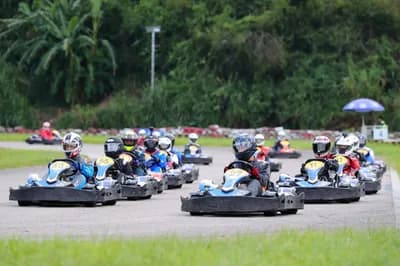
Sepang International Karting Circuit offers Malaysia’s most professionally operated kart racing experience, with rental karts for casual visitors and arrive-and-drive race formats that welcome all skill levels. Several Malaysian professional racing drivers cite this track as their early training ground, and the facility backs this pedigree with competition karts for serious enthusiasts.
- 0

Michael Schumacher’s 2001 Malaysian Grand Prix victory remains a definitive showcase of Ferrari-Schumacher era dominance, where he started from pole and won by over 28 seconds. That performance, the second race of the championship, signaled that the season would be his by a historically wide margin—an unmatched demonstration of technical and human superiority.
Image credits
- Sepang International Circuit Track Day: Aditya Addanki / Pexels
- Malaysia MotoGP at Sepang: 2026 MotoGP World Championship / Wikipedia
- Lewis Hamilton's 2008 Maiden Win at Sepang: Lewis Hamilton / Wikipedia
- Proton/Petronas Motorsport Heritage: Bing Images / overtake-data.community.forum
- Malaysia Cub Prix Racing: Malaysian Cub Prix / Wikipedia
- Go-Karting at Sepang International Karting Circuit: Karen Leung / Pexels
Rank it your way
Remix this list into your own ranking, or head to the play hub for every game mode and community breakdown — blind mode, challenges, tier lists, and more.
You Might Also Like

Top 10 Malaysian Sports Heroes of All Time
Top 10 Malaysian Sports Heroes of All Time

Top 10 Sports Bars in the USA 2026
Top 10 Sports Bars in the USA 2026

Top 10 Rising Football Stars Under 23 in 2026
Top 10 Rising Football Stars Under 23 in 2026

Top 10 Muay Thai Fighters of 2026
#1 Rodtang Jitmuangnon · #2 Tawanchai PK Saenchai · #3 Superlek Kiatmoo9

Top 10 Lucha Libre Legends
#1 El Santo · #2 Blue Demon · #3 Mil Máscaras

Top 10 Spanish Tennis Players in History
#1 Rafael Nadal · #2 Arantxa Sanchez Vicario · #3 Carlos Alcaraz