
Top 10 Low-Impact Exercises Transforming Fitness in 2026
The joint-friendly workouts driving the 2026 fitness shift — ranked by trend momentum, calorie burn, full-body payoff, accessibility, and the strength of the science behind them.
Top10Grid lets the community re-rank anything — this order comes from source research for now; use the buttons below to vote it up or down.

Compare by Dimension
How low the joint loading is — minimal jarring, pounding, and shear on cartilage and connective tissue.
| Rank | Item | Score | Notes |
|---|---|---|---|
| #1 | Swimming (Lap Swimming) | 98.0 | Buoyancy removes nearly all joint load |
| #2 | Water Aerobics (Aqua Fitness) | 97.0 | Water unloads ~50% of body weight |
| #3 | Tai Chi | 95.0 | Slow flowing weight shifts |
| #4 | Yoga | 92.0 | Slow poses within your own range |
| #5 | Elliptical Training | 88.0 | Feet never leave pedals |
| #6 | Pilates (Mat & Reformer) | 86.0 | Controlled full-range moves, no impact |
| #7 | Rowing (Ergometer) | 85.0 | Seated, impact-free stroke |
| #8 | Indoor Cycling | 84.0 | Body weight on saddle |
| #9 | Japanese Interval Walking (IWT) | 78.0 | Level walking — gentle but weight-bearing |
| #10 | Rucking | 72.0 | Load adds mild joint stress |
Current Rankings
- 0

Japanese Interval Walking (IWT) is the year’s biggest fitness story, with search interest climbing nearly 2,900% year over year in 2026. This workout alternates three minutes of brisk walking at 70% peak effort with three minutes of recovery pace, repeating for 30 minutes. Evidence shows it lowers systolic blood pressure by 8 mmHg after three months and 10 mmHg after five, boosts aerobic capacity by 8%, and improves glycemic control in type 2 diabetes. Minute for minute, a brisk interval set burns roughly 50% more calories than a gentle yoga session, offering unmatched return for low friction.
- 0
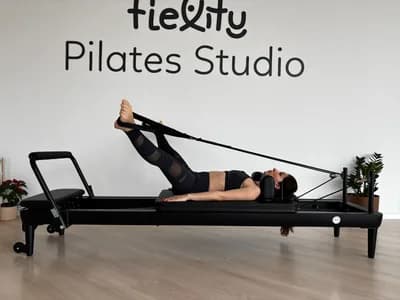
Pilates has become the defining strength practice of low-impact fitness, with 66% booking growth since 2024 and 45% of studios now offering it. Using controlled movements on mat or reformer, it builds deep core strength, postural control, and joint stability. Harvard Health highlights its value for older adults, and a 2019 meta-analysis found it raises VO2 max by 2.77 mL/kg/min. However, as a standalone cardio workout, it is light—roughly equivalent to walking two miles per hour. For joint-friendly strength that translates into daily functionality, Pilates earns its number two ranking.
- 0#3

Rucking — walking with a weighted backpack — is the breakout strength-cardio hybrid of the moment, and it fits the 2026 zeitgeist perfectly. It takes the most accessible exercise on earth, walking, and adds an external load that transforms it into a bone-loading, muscle-preserving, calorie-torching session without a single jarring impact. The American Council on Exercise estimates that a 165-pound person carrying a 20-pound load burns roughly 432 calories in 45 minutes — close to running — while sparing the knees and hips the pounding that running delivers. The load is what makes rucking special. Carrying weight forces the quads, glutes, hamstrings, calves, core, and the deep spinal stabilizers to work continuously, providing exactly the kind of mechanical stress that maintains bone mineral density and lean muscle. That has made it a favorite recommendation in the GLP-1 era, where 26–40% of medication-driven weight loss can come from lean tissue; the National Institute on Aging emphasizes load-bearing movement precisely for this reason. Metabolic cost rises non-linearly with the weight carried, so small increases in load meaningfully raise the effort. It is not entirely without caveats. Heavy loads can restrict spinal range of motion and, if carried with poor posture, shift strain to the lower back, so beginners should start light — 8 to 10 pounds — and build gradually while keeping the torso tall. Good footwear matters too. But for anyone who wants cardio, strength, and bone protection folded into one outdoor session that costs almost nothing, rucking is one of the most efficient low-impact workouts available in 2026, and a deserving number three.
- 0

Swimming is the gold standard of low-impact exercise, with buoyancy removing joint stress and water resistance providing full-body conditioning. Cleveland Clinic reports swimmers have a 41% lower risk of dying from heart disease and a 28% lower risk of early death. A 155-pound swimmer burns about 360 calories in 30 minutes of vigorous laps, and hydrostatic pressure boosts circulation. A 2024 study found 16 weeks of high-intensity interval swimming improved older adults’ six-minute walk distance by 19.4%. While it requires pool access and swim skill, its joint safety and longevity data are unmatched. Pound for pound, swimming burns about 40% more calories than a typical Pilates or yoga class of the same length.
- 0
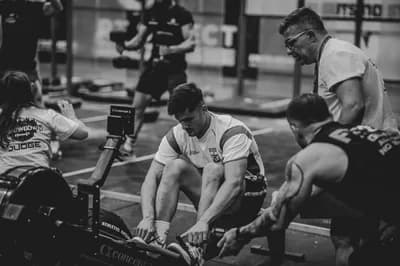
Rowing dominates as the efficiency champion of low-impact training, engaging an estimated 70% of the body's muscles in one fluid stroke that chains leg drive, hip hinge, core brace, and upper-body pull. Because you remain seated with zero impact phase, knees, hips, ankles, and spine avoid the jarring of running while still receiving a serious aerobic and strength stimulus—Cleveland Clinic describes it as a rare dual cardio-and-strength workout. Vigorous rowing burns over 255 calories per 30 minutes depending on effort, and comparative lab testing places its oxygen consumption and energy expenditure directly alongside cycling. Research in older adults with mild knee osteoarthritis found that a 12-week rowing program improved muscle strength and functional fitness, while a separate study showed enhanced cardiorespiratory fitness and vascular function. The posterior-chain emphasis on lats, rhomboids, and erector spinae makes it unusually effective for posture, counteracting desk-bound habits. Technique matters: leading with the legs and keeping the back neutral prevents lower spine aggravation.
- 0
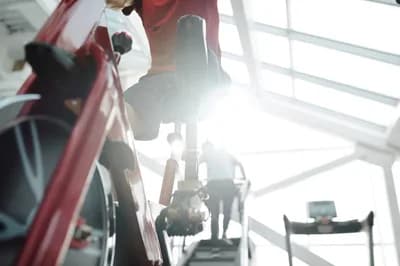
Indoor cycling has surged into a leading low-impact cardio option, with the global market valued near $2 billion and projected to double by the early 2030s. Body weight rests fully on the saddle, so knees, hips, and ankles carry almost no load, yet you can push your heart and legs as hard as desired. A 12-week program in women with obesity improved peak oxygen uptake, reduced body-fat and waist measurements, and lowered C-reactive protein, a marker of inflammation. Harvard Health specifically recommends spinning for knee or hip issues due to its intense, impact-free cardio. Resistance and cadence are infinitely adjustable, serving both recovery spins and all-out intervals. Limitations: cycling is lower-body dominant, doing little for the upper body or core, and improper bike fit can cause knee discomfort or numbness.
- 0
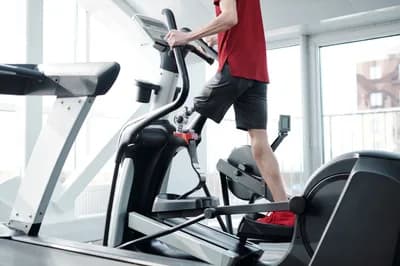
The elliptical stands as the great equalizer of cardio machines, with a gliding motion where feet never lift off the pedals, eliminating running's impact while driving serious cardiovascular effort. Comparative lab testing found the elliptical produced the highest oxygen consumption and energy expenditure among the three major machines—above both rowing and cycling—reaching VO2 values over 41 mL/kg/min at maximum intensity. This provides top-tier cardio with bottom-tier joint stress. Moving handlebars engage the upper body alongside glutes, hamstrings, quads, and hip flexors, creating a more full-body session than the lower-body-focused indoor cycling. Harvard Health flags it as ideal for knee pain, hip pain, or arthritis, and as safe during post-injury recovery. The 2025 POWER study examined elliptical training as a therapeutic tool for chronic back pain. Drawbacks: the fixed stride path can feel unnatural, and supported body weight requires conscious intensity. For joint-friendly, full-body cardio with the highest measured oxygen demand, the elliptical earns its durable spot at number seven.
- 0
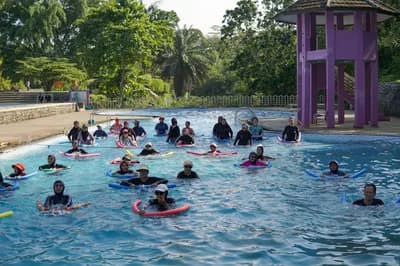
Water aerobics packages the benefits of exercising in water into a group-friendly, skill-optional format, unloading approximately 50% of body weight in chest-deep water to dramatically reduce pressure on hips, knees, ankles, and lower spine. The water itself provides 12–14% more resistance than air, creating a workout that is simultaneously gentler and harder—strengthening muscles against constant resistance without loading painful joints. A 2025 systematic review of 12 randomized controlled trials with 865 participants found aquatic exercise significantly improved balance, stiffness, pain, and walking ability compared with non-exercise controls. Impact is essentially nil, allowing longer sessions with more repetitions. While pool access and scheduled classes are required, no swim skill is needed. This makes water aerobics one of the most therapeutic low-impact workouts available in 2026, securing a well-earned number eight.
- 0#9
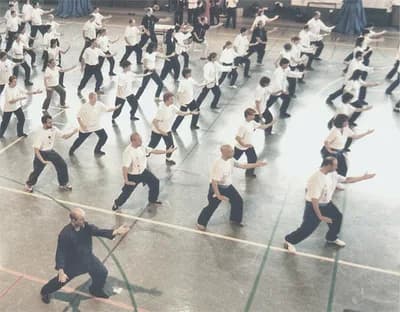
Tai Chi stands as the most evidence-backed low-impact exercise for fall prevention in 2026, delivering balance improvements that reduce fall risk by up to 31% in older adults. A 2023 meta-analysis of 24 randomized controlled trials with adults over 60 showed a 24% reduction in fallers and a 31% drop in the overall fall rate, with researchers calling it among the most cost-effective interventions available. Balance metrics like Timed Up-and-Go, single-leg stance, and Berg Balance scores all improve significantly, and knee osteoarthritis pain and stiffness ease with consistent practice. Despite its gentle appearance, tai chi reaches 50–58% of heart-rate reserve — a moderate aerobic zone comparable to brisk walking — while avoiding joint loading entirely. The practice requires no equipment and adapts to seated or wheelchair use, making it highly accessible, though results depend on three or more sessions per week and initial guidance from an instructor.
- 0#10
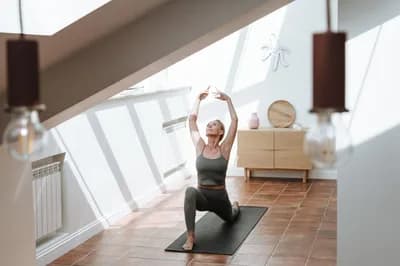
Yoga is the most complete mind-body low-impact exercise of 2026, blending strength, flexibility, balance, and mental wellness into a single adaptable session that appeals to the growing demand of the functional-fitness wave. A 2022 meta-analysis of adults over 60 found moderate-to-high effect sizes for upper-limb strength (0.65) and balance (0.64) from 9-to-12-week programs, while a separate 12-week Hatha yoga trial showed significant gains in VO2 max, upper-body strength, and flexibility with 94% attendance and zero adverse events. As a joint-friendly method to build functional strength, preserve mobility, and lower stress, yoga closes the list at number ten because it makes every other workout safer and more sustainable.
Image credits
- Pilates (Mat & Reformer): Flexity Yoga & Pilates / Pexels
- Swimming (Lap Swimming): Vijay Richhiya / Pexels
- Rowing (Ergometer): Ardit Mbrati / Pexels
- Indoor Cycling: ShotPot / Pexels
- Elliptical Training: ShotPot / Pexels
- Water Aerobics (Aqua Fitness): Dwi Rizqi F / Pexels
- Tai Chi: Associació Catalana de Choy Li Fut, Tai Chi Chuan i Chi Kung.jpg / Wikimedia Commons
- Yoga: Ron Lach / Pexels
Related Videos
Rank it your way
Remix this list into your own ranking, or head to the play hub for every game mode and community breakdown — blind mode, challenges, tier lists, and more.
You Might Also Like
Top 10 Chinese Traditional Medicine and Wellness Practices Worth Trying
Top 10 Chinese Traditional Medicine and Wellness Practice...

Top 10 Best Exercises for Weight Loss
Top 10 Best Exercises for Weight Loss

Top 10 Wellness Trends Actually Backed by Science in 2026
Top 10 Wellness Trends Actually Backed by Science in 2026

Top 10 Mental Health Apps That Therapists Recommend
#1 Headspace · #2 Calm · #3 BetterHelp

Top 10 Sleep Products That Insomniacs Swear Actually Work
#1 Hatch Restore 2 · #2 Bearaby Cotton Napper (Weighted Blanket) · #3 Eight Sleep Pod 3 Cover

Top 10 Healthiest Countries in the World
#1 Japan · #2 Switzerland · #3 Singapore