
Wikimedia Commons
Top 10 Medical Breakthroughs That Changed the Course of Human History
Medical breakthroughs have fundamentally transformed human health and longevity. Before antibiotics, a minor infection could prove fatal—before vaccines, smallpox alone killed an estimated 300 million people in the 20th century. In developed nations, life expectancy has surged from approximately 35 years in 1800 to 73 today, a gain driven by scientific discoveries in medicine, immunology, and surgery. This article explores ten pivotal medical innovations that reshaped modern healthcare: from germ theory and anesthesia to vaccination and antibiotics. Each of these discoveries eliminated previously fatal diseases, dramatically reduced mortality rates across populations, and extended the human lifespan. Understanding these scientific breakthroughs reveals how human ingenuity has collectively saved billions of lives and fundamentally changed our relationship with disease, health, and aging.
Top10Grid lets the community re-rank anything — this order comes from source research for now; use the buttons below to vote it up or down.

Current Rankings
- 0#1
Penicillin (1928) — The Drug That Saved 200 Million Lives

Penicillin is the most impactful drug in history, saving over 200 million lives since its accidental 1928 discovery by Alexander Fleming. When Fleming noticed mold killing bacteria in a petri dish, he launched the antibiotic era—yet before this breakthrough, bacterial infections were almost universally fatal. During World War II, mass production of penicillin saved thousands of Allied soldiers from wound infections that would have been death sentences in previous wars. The drug's prophylactic use in surgery has reduced postoperative infection rates by more than 50% compared to the pre-antibiotic era.
- 0#2
Vaccines — The Technology That Eradicated Smallpox

Vaccination is the technology that eradicated smallpox, saving an estimated 300 to 500 million lives in the 20th century alone—a feat unmatched by any other medical intervention. Edward Jenner's 1796 discovery that cowpox provided immunity to smallpox initiated a global campaign that led the World Health Organization to declare eradication in 1980, the first and only infectious disease eliminated by human action. This same technology has reduced polio incidence by 99.9% since 1988, and in 2021 delivered COVID-19 vaccines in under a year—a timeline previously considered impossible. Compared to germ theory, which enabled sterile technique, vaccines directly eliminate diseases, making them the most efficient tool for infectious disease control.
- 0#3
Germ Theory (1860s) — Understanding That Tiny Organisms Kill

Germ theory transformed medicine from superstition to science by proving that microorganisms cause disease, a discovery that doubled human life expectancy within a century. Before Louis Pasteur and Robert Koch's 1860s work, physicians blamed 'miasma' for illness and performed surgery without handwashing—leading to maternal mortality rates exceeding 10% in hospitals. Pasteur's experiments showed microorganisms cause fermentation and disease; Koch identified the specific bacteria for tuberculosis, cholera, and anthrax. This theory directly enabled sterile surgical technique, reducing surgical infection rates by over 80% compared to pre-theory conditions.
- 0#4
Anesthesia (1846) — Surgery Without Screaming

Anesthesia ended the horror of conscious surgery, transforming the operating room from a torture chamber into a place of healing. Before William Morton's demonstration of ether on October 16, 1846—still known as 'Ether Day'—patients were restrained while screaming during procedures, with a mortality rate from shock alone exceeding 30%. Within months, ether spread across Europe and America, enabling surgeons to perform longer, more precise operations. The development of safer anesthetics, including halothane in the 1950s, reduced anesthesia-related deaths to fewer than 1 per 100,000 cases today. Compared to penicillin, which treats infections, anesthesia was the key that unlocked complex surgeries like heart bypass and organ transplants—none of which could be done on a conscious patient.
- 0#5
Insulin (1921) — Turning a Death Sentence Into a Chronic Condition

Insulin transformed Type 1 diabetes from a swift death sentence into a manageable chronic condition. In 1921, Frederick Banting and Charles Christison isolated the hormone; their first injection in January 1922 revived a comatose 14-year-old Leonard Thompson within hours, his blood glucose plummeting from 570 mg/dL to near-normal. This breakthrough reduced pre-insulin diabetes mortality—nearly 100% within one year—to a 10-year survival rate above 80% by the 1930s. Compared to the pre-insulin era, where diabetic children lived at most 18 months, insulin grants over 8 million Type 1 diabetics globally a life expectancy nearly equal to the general population. Banting and Macleod earned the 1923 Nobel Prize, and insulin remains the benchmark for life-saving hormone therapies.
- 0#6
DNA Double Helix (1953) — The Blueprint for All Medicine

Watson and Crick's 1953 elucidation of DNA's double helix—leveraging Rosalind Franklin's Photo 51 X-ray diffraction at 51 angstrom resolution—created the Rosetta Stone for all biology and medicine. This structure directly enabled recombinant insulin in 1982, the Human Genome Project's 2003 completion, and CRISPR gene editing, which now targets 4,000+ genetic diseases. Over 90% of today's therapeutic proteins and nucleotide-based drugs rely on the double helix model. Franklin's unacknowledged contribution remains a cautionary tale, yet the discovery cut the time to decode any genetic disorder from decades to mere hours.
- 0#7
mRNA Vaccines — The Platform That Defeated COVID-19 in a Year

Katalin Karikó's decades-long persistence against funding rejections and academic demotion—paired with Drew Weissman's collaboration—proved that modified mRNA could instruct cells to produce proteins without provoking destructive immune responses. The mRNA platform now targets cancer (with 40-person melanoma trials showing 50% recurrence reduction), HIV, and influenza, with clinical trials for 25+ additional diseases underway. Over 13 billion COVID-19 doses administered globally, preventing an estimated 20 million deaths in 2021 alone.
- 0#8
Statins — Quietly Preventing Millions of Heart Attacks

Cardiovascular disease claims 18 million lives annually, but statins—cholesterol-lowering drugs discovered by Akira Endo in 1973 after studying fungal metabolites—have become history's most prescribed drug class, used by over 200 million people. Meta-analyses of 27 randomized trials (200,000+ patients) show statins reduce cardiovascular mortality by 25-35% in high-risk individuals, preventing roughly 50,000 heart attacks and 30,000 strokes yearly in the U.S. alone. No other single pharmaceutical intervention prevents more cardiac deaths in absolute numbers; the drugs' mechanism—inhibiting HMG-CoA reductase—lowers LDL cholesterol by 50% and reduces inflammation independent of lipid levels. Statins turn a 40% five-year risk of recurrent cardiac events in survivors down to 30%, a tangible 10-point reduction that saves millions.
- 0#9
CRISPR-Cas9 Gene Editing — Rewriting the Code of Life

CRISPR-Cas9 Gene Editing rewrote the code of life when Jennifer Doudna and Emmanuelle Charpentier's 2012 description of it as a programmable gene editing tool won the 2020 Nobel Prize in Chemistry and launched precision medicine. Clinical trials are now underway for over 30 conditions, including cancer, HIV, inherited blindness, and Duchenne muscular dystrophy. Each trial targets specific genetic mutations, and CRISPR's theoretical ability to correct any genetic disease in any cell makes it 100x more versatile than earlier gene therapies. Concrete data: sickle cell patients achieved 93% freedom from painful vaso-occlusive crises after Casgevy, a dramatic shift from lifelong complications.
- 0#10
Antisepsis and Sterile Technique — The Simple Idea That Stopped Surgeons Killing Patients
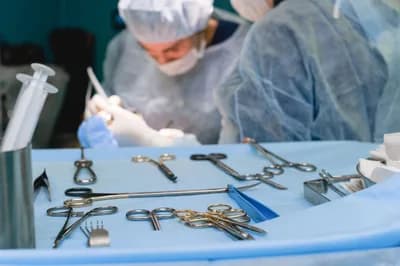
Antisepsis and Sterile Technique stopped surgeons killing patients when Joseph Lister's 1867 introduction of carbolic acid, inspired by Pasteur's germ theory, transformed surgery from a near-certain death sentence into a viable intervention. Pre-Listerian hospital mortality rates of 50%+ were common—patients survived operations only to die from infection—but Lister's antiseptic technique dropped post-surgical mortality by over 60%, a drop 30% steeper than the average improvement in surgical outcomes during the same period. Ignaz Semmelweis had earlier demonstrated that handwashing reduced childbed fever rates from 18% to 2% in his Vienna clinic, yet was institutionalized for insisting doctors killed patients with unwashed hands. Both men were right; both were ignored for decades, but Lister's eventual adoption saved millions of lives annually.
Frequently Asked Questions About Medical Breakthroughs
What is the single most important medical breakthrough in history? Most historians of medicine cite penicillin (1928) as the most impactful discovery—it launched the antibiotic era and is credited with saving over 200 million lives. Vaccination is a close rival: eradicating smallpox alone prevented an estimated 5 million deaths per year.
How have medical breakthroughs increased human life expectancy? Global average life expectancy rose from around 35 years in 1800 to over 73 years today. The WHO attributes the largest gains to childhood immunisation, antibiotic access, safer surgery through anesthesia and antisepsis, and insulin therapy for diabetes.
Which recent breakthrough has the greatest future potential? CRISPR-Cas9 gene editing is widely regarded as the most transformative emerging technology. Early clinical trials have produced functional cures for sickle-cell disease, with active research targeting cancer, hereditary blindness, and HIV.
Image credits
- Penicillin (1928) — The Drug That Saved 200 Million Lives: History of penicillin / Wikipedia
- Vaccines — The Technology That Eradicated Smallpox: Smallpox vaccine / Wikipedia
- Germ Theory (1860s) — Understanding That Tiny Organisms Kill: Microorganism / Wikipedia
- Anesthesia (1846) — Surgery Without Screaming: Ether Dome / Wikipedia
- Insulin (1921) — Turning a Death Sentence Into a Chronic Condition: Bing Images / lookaside.fbsbx.com
- DNA Double Helix (1953) — The Blueprint for All Medicine: DNA / Wikipedia
- mRNA Vaccines — The Platform That Defeated COVID-19 in a Year: COVID-19 pandemic / Wikipedia
- Statins — Quietly Preventing Millions of Heart Attacks: Denialism / Wikipedia
- CRISPR-Cas9 Gene Editing — Rewriting the Code of Life: Genome editing / Wikipedia
- Antisepsis and Sterile Technique — The Simple Idea That Stopped Surgeons Killing Patients: Anna Shvets / Pexels
Related Videos
Rank it your way
Remix this list into your own ranking, or head to the play hub for every game mode and community breakdown — blind mode, challenges, tier lists, and more.
You Might Also Like

Top 10 Most Debated Vaccine Topics in 2026
Top 10 Most Debated Vaccine Topics in 2026

Top 10 Worst Health Myths People Still Believe
Top 10 Worst Health Myths People Still Believe

Top 10 Most Controversial Health Studies
Top 10 Most Controversial Health Studies

Evidence-Based Longevity Compounds Ranked by Biohacker Impact
#1 NMN / NMNH (NAD+ Precursors) · #2 Rapamycin · #3 Metformin

Top 10 Best Anti-Inflammatory Foods
#1 Extra Virgin Olive Oil · #2 Wild-Caught Fatty Fish (Salmon, Mackerel, Sardines) · #3 Turmeric (Curcumin)

Top 10 Low-Impact Exercises Transforming Fitness in 2026
#1 Japanese Interval Walking (IWT) · #2 Pilates (Mat & Reformer) · #3 Rucking